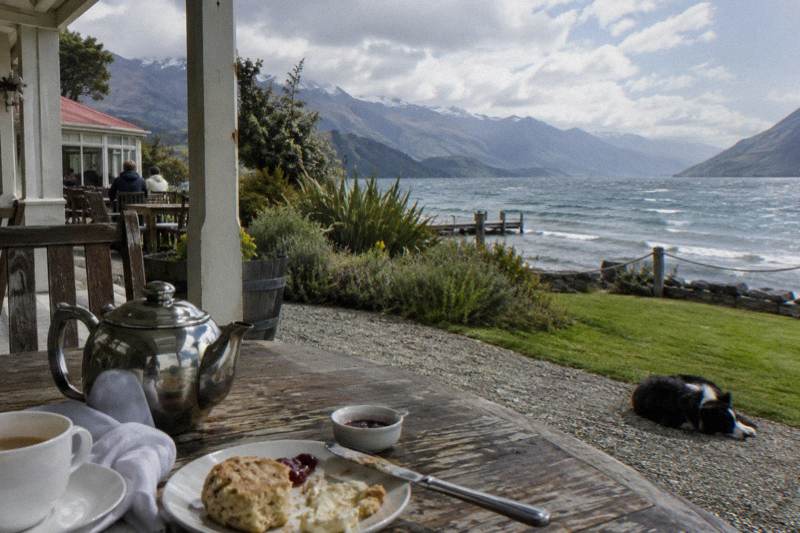
Walter Peak In Winter: What Runs And What Changes
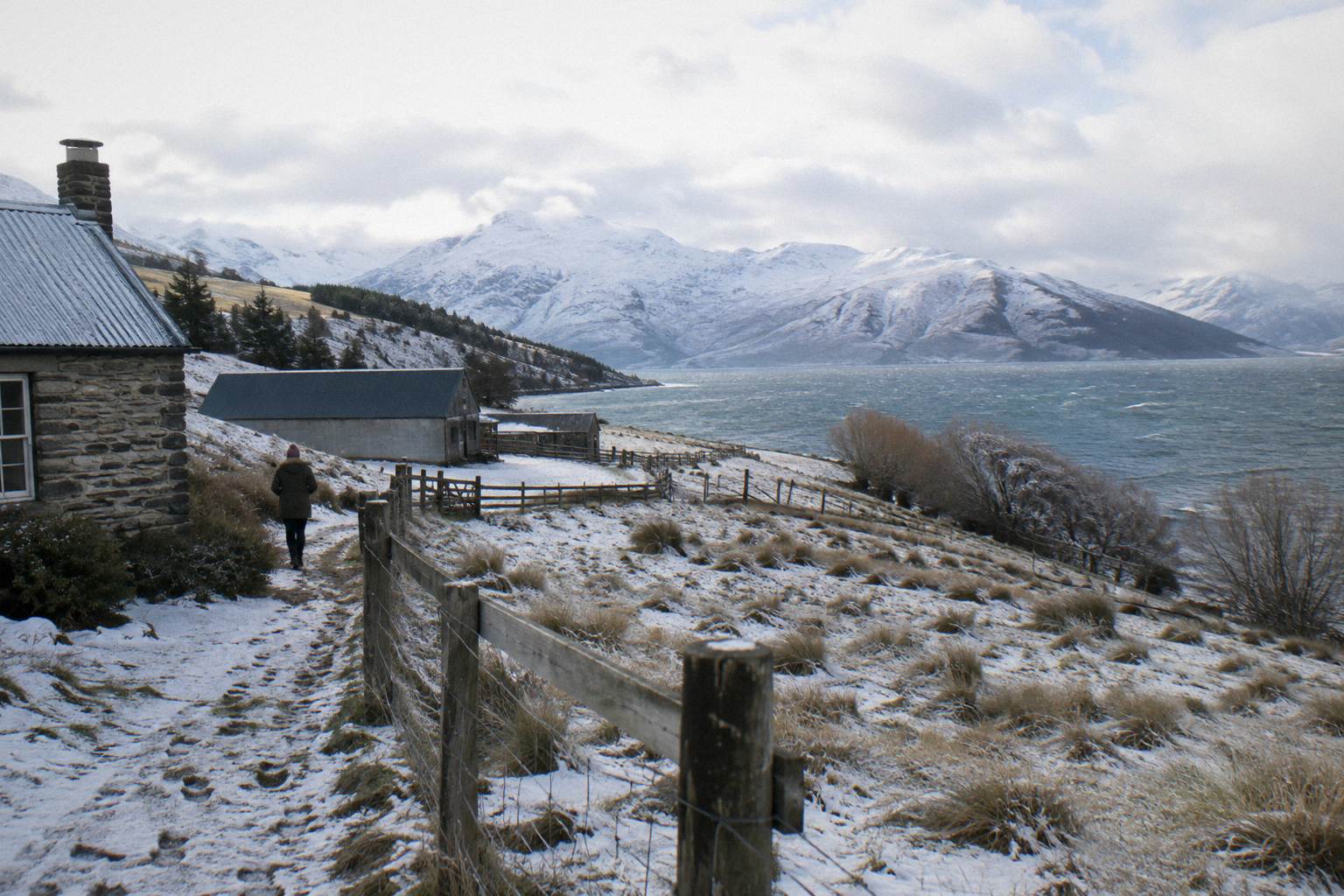
Walter Peak High Country Farm operates year-round, and winter changes the experience more than the itinerary: heavy coats on the animals, a quieter farm, snow on the Remarkables behind the show, and a different vessel on the water during the steamship's annual maintenance window.
Short answer
Yes, Walter Peak runs through winter. The farm operates year-round; in winter the animals carry heavy coats, the farm is quieter and the Remarkables sit snow-capped behind the show, with typical highs of 5 to 10 °C. The TSS Earnslaw crosses in 45 minutes every day except a May to early July maintenance window, when the Spirit of Queenstown takes over in about 30 to 35 minutes. Winter times sit on the booking calendar.
Walter Peak in winter is a different proposition to the peak-summer version, and knowing the differences before you book saves both money and disappointment. The farm experiences keep running through the colder months, from the nature guide farm visit and lake cruise to the BBQ dining products, just with fewer people on the wharf and heavier coats on the animals.
| Fact | Detail |
|---|---|
| Does the farm run in winter? | Yes, the farm operates year-round |
| Typical winter highs in Queenstown | 5 to 10 °C |
| Which boat crosses in winter | TSS Earnslaw, except a May to early July maintenance window served by the Spirit of Queenstown |
| Crossing time | 45 minutes on the Earnslaw, about 30 to 35 minutes on the Spirit of Queenstown |
| What the animals do | Grow heavy winter coats; the farm is quieter |
| Winter departure times | On the booking calendar; no printed winter timetable |
| Meeting point | RealNZ Visitor Centre, Steamer Wharf, 88 Beach Street, Queenstown |
| What to bring | Non-slip shoes or boots, a warm jacket, sunscreen, a camera, personal medication |
Does Walter Peak Actually Run In Winter?
Yes, Walter Peak High Country Farm runs all year, including winter, with scheduled winter season operations rather than a shutdown or reduced service. The farm treats the colder months as a proper season on its calendar, so visitors can still plan a trip during this time. RealNZ, the operator, runs the lake crossings and the farm experiences straight through June, July and August, with the same 3.5 hour trip length the products carry in summer. The TSS Earnslaw is scheduled to sail every day of the year apart from one annual maintenance and survey window, which runs from May into early July; in 2026 that window ran from 18 May to 26 June. Outside it, the steamship crosses the lake as normal, and the farm activities on the far shore continue alongside it.
The differences in winter are atmospheric rather than structural. RealNZ's own seasonal notes describe the animals in heavy coats, the farm quieter than in the school-holiday rush, and the Remarkables snow-capped behind the sheepdog and shearing show in the amphitheatre. Spring brings lambs, so winter visitors see the farm at its most still: fewer passengers on the vessel, more room at the woolshed afternoon tea, and a landscape that photographs sharply in the low light.
Booking behaviour changes too. RealNZ recommends booking ahead year-round because vessel space is limited, and the summer departures that fill first are the midday sittings. In winter the pressure eases, though the same advice holds: the calendar, not a printed timetable, holds every winter departure time, and the date you pick determines both the vessel and the slot. The best time to visit Walter Peak depends on which version of the farm you want, and the winter version rewards travellers who come for quiet rather than warmth.
One practical note on the water: payment on both vessels and at Walter Peak is card only, so leave cash in the hotel safe. Both vessels are boarded via ramps, neither is fully wheelchair accessible, and neither has an accessible toilet on board, a detail that matters more in winter when ramps can be damp underfoot.
What Actually Changes On The Farm In Winter
Three things change at the farm in winter: the animals grow heavy coats, the crowds thin out, and the backdrop picks up snow, while the core itinerary, the lake crossing, the farm show and the meal or tea, runs the same. The farm show in the purpose-built amphitheatre still puts working heading dogs and huntaways through mustering, followed by a live blade-shearing demonstration in the New Zealand blade technique. RealNZ's seasonal description puts snow-capped Remarkables directly behind that amphitheatre, which is the single biggest visual shift between a February and a July visit.
The dining side barely notices the season. BBQ dining happens indoors in the homestead rooms, so weather affects it only at the margins: the walk from the wharf to the building, and the open-air stretch of the dog show. The buffet BBQ over wood fire carries salads, vegetables, meats, seafood, vegetarian dishes and desserts, with the seasonal menu set by executive chef Will Eaglesfield and changing with the season. Tell RealNZ about dietary requirements when you book so the kitchen can prepare.
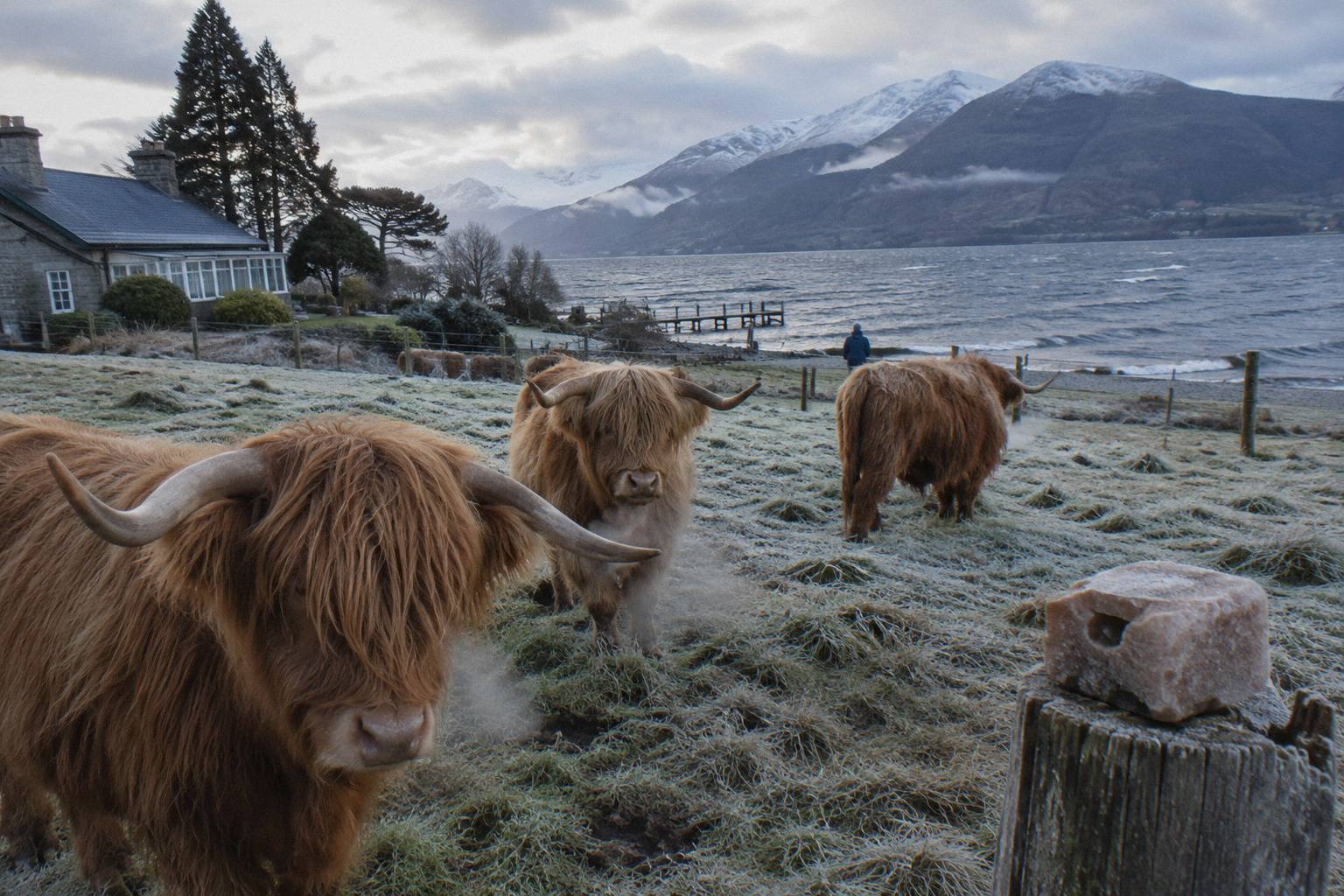
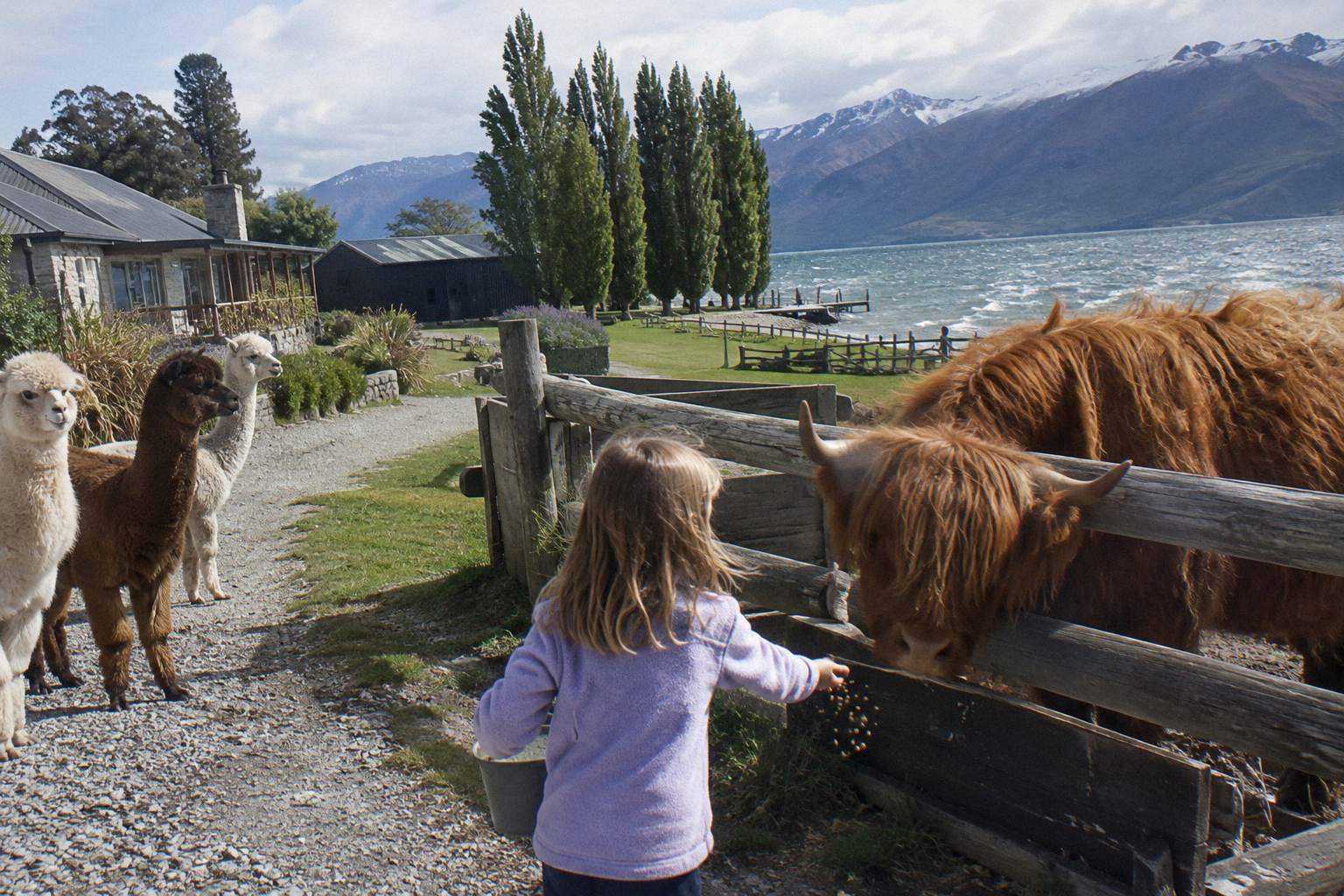
The animal line-up stays the same through the cold months: Highland cattle including the resident cow Dougal, sheep including merinos, alpacas, deer, pigs and donkeys, all named on the operator's pages. Hand-feeding continues on the farm tour, and the woolshed afternoon tea of scones, cakes, slices and sandwiches is served indoors. For the full picture of who you will meet, the Walter Peak farm animals guide covers the herd across every season.
Which Boat Crosses The Lake In Winter?
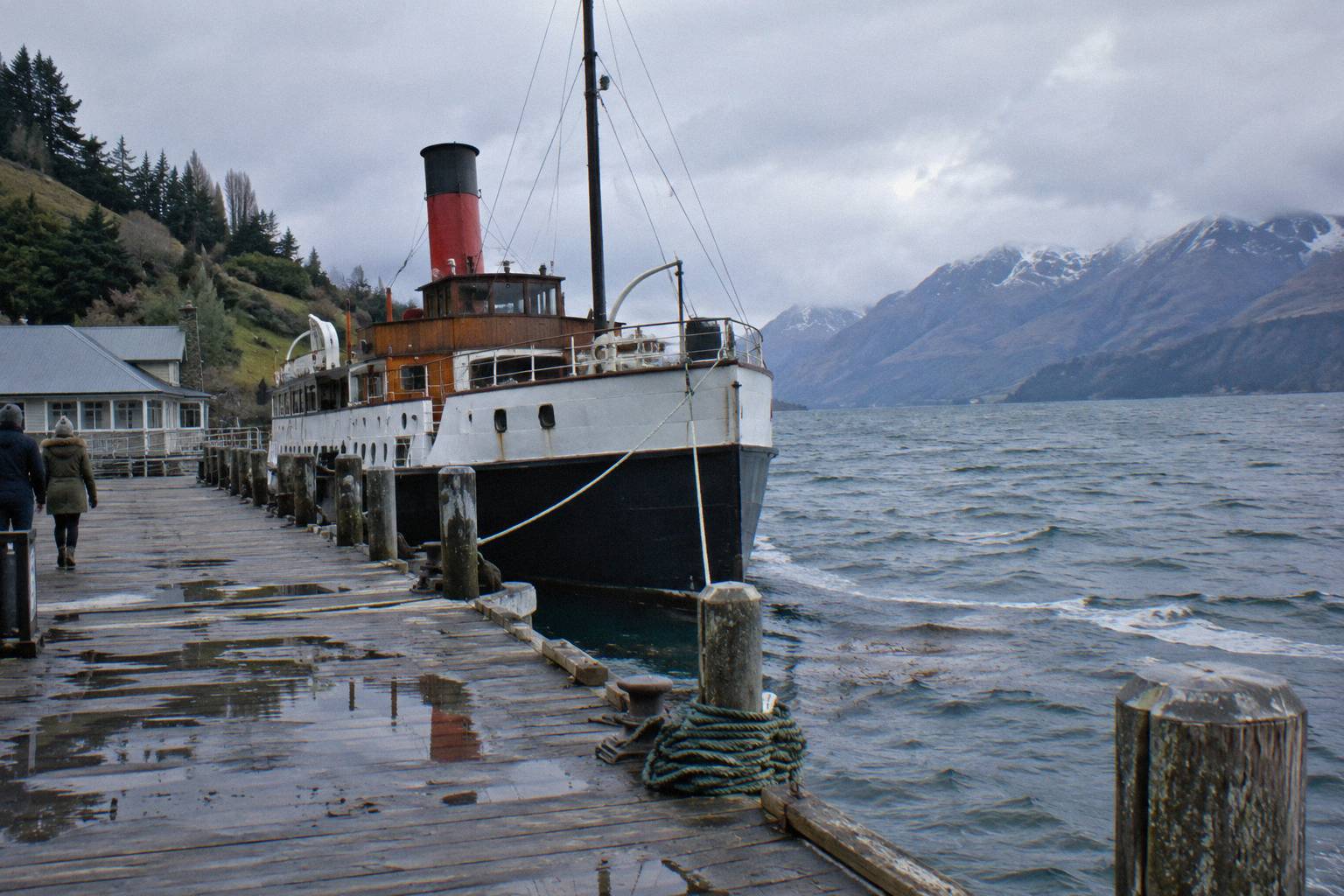
In winter the TSS Earnslaw is the scheduled vessel, crossing Lake Whakatipu to Walter Peak in 45 minutes, except during its annual maintenance window from May into early July, when the modern catamaran Spirit of Queenstown takes the route in about 30 to 35 minutes. RealNZ schedules the Earnslaw to run every day of the year outside that maintenance and survey period; in 2026 it ran from 18 May to 26 June. If your winter trip falls in June, there is a real chance your crossing is on the catamaran rather than the 1912 coal-fired steamship.
The two vessels suit different priorities. The Earnslaw, built in Dunedin in 1912, carries a mini-museum, the Promenade Cafe, a licensed bar and live piano on some sailings, and visitors can go below to the warm, loud engine room and stoker room to watch coal being fired; the Wikipedia entry for the TSS Earnslaw covers the ship's history in full. She burns about 1.5 tonnes of coal per return trip. The Spirit of Queenstown is faster and enclosed, which some travellers prefer when the wind is off the snow, and RealNZ's own comparison of the two crossings sets out the trade-offs on the RealNZ lake cruise comparison page.
| Summer season (October to April) | Winter season | |
|---|---|---|
| Typical Queenstown highs | 19 to 29 °C | 5 to 10 °C |
| Scheduled vessel | TSS Earnslaw | TSS Earnslaw, except May to early July maintenance, then Spirit of Queenstown |
| Crossing time | 45 minutes on the Earnslaw | 45 minutes, or about 30 to 35 minutes on the Spirit |
| Typical departures | 9:00am, 11:00am, 1:00pm, 3:00pm, 5:00pm, 7:00pm | Times on the booking calendar |
| Farm atmosphere | Busy in school holidays and peak summer | Quieter, animals in heavy coats |
| Scenery | Long light, green tussock | Snow-capped Remarkables behind the show |
The vessels themselves divide along these lines:
| TSS Earnslaw | Spirit of Queenstown | |
|---|---|---|
| Type | Coal-fired passenger steamship, built 1912 | Modern catamaran |
| Crossing to Walter Peak | 45 minutes | About 30 to 35 minutes |
| Onboard | Mini-museum, Promenade Cafe, licensed bar, live piano on some sailings, engine room and stoker room visits | Enclosed cabin, faster crossing |
| When it serves Walter Peak | Every day except the May to early July maintenance window | During the Earnslaw maintenance window |
Every product meets at the RealNZ Visitor Centre on Steamer Wharf, 88 Beach Street, Queenstown, or at Steamer Wharf on Beach Street for the Garden To Table and cruise-only products; with pre-purchased tickets, meet in front of the TSS Earnslaw at the dock. Allow 30 extra minutes for parking: free street parking is limited, paid buildings sit on Man Street and Church Street, and the Boundary Street and Ballarat Street car parks are about a 15 minute walk away.
Winter crossings raise one planning question worth answering early: whether to lock in the dining version or the tea-and-tour version.
The Gourmet BBQ, Lake Cruise product, rated 4.8 from 3,272 reviews and from NZ$175 per person for a 3.5 hour trip, pairs the crossing with the wood-fire buffet indoors, which is the weather-proof option of the three. Check the live price for your date before deciding, since amounts vary by date and group. All prices here are New Zealand dollars.
Winter Weather And What To Wear
Queenstown's winter days typically peak at 5 to 10 °C, but the operative fact is four seasons in one day: RealNZ tells visitors the Queenstown forecast is a good guide, and its kit list for the farm is non-slip shoes or boots, a warm jacket, sunscreen, a camera and personal medication. The sunscreen surprises people. The lake light in winter is sharp, UV reflects off snow on the ranges, and the crossing is largely outdoors if you want the deck views.
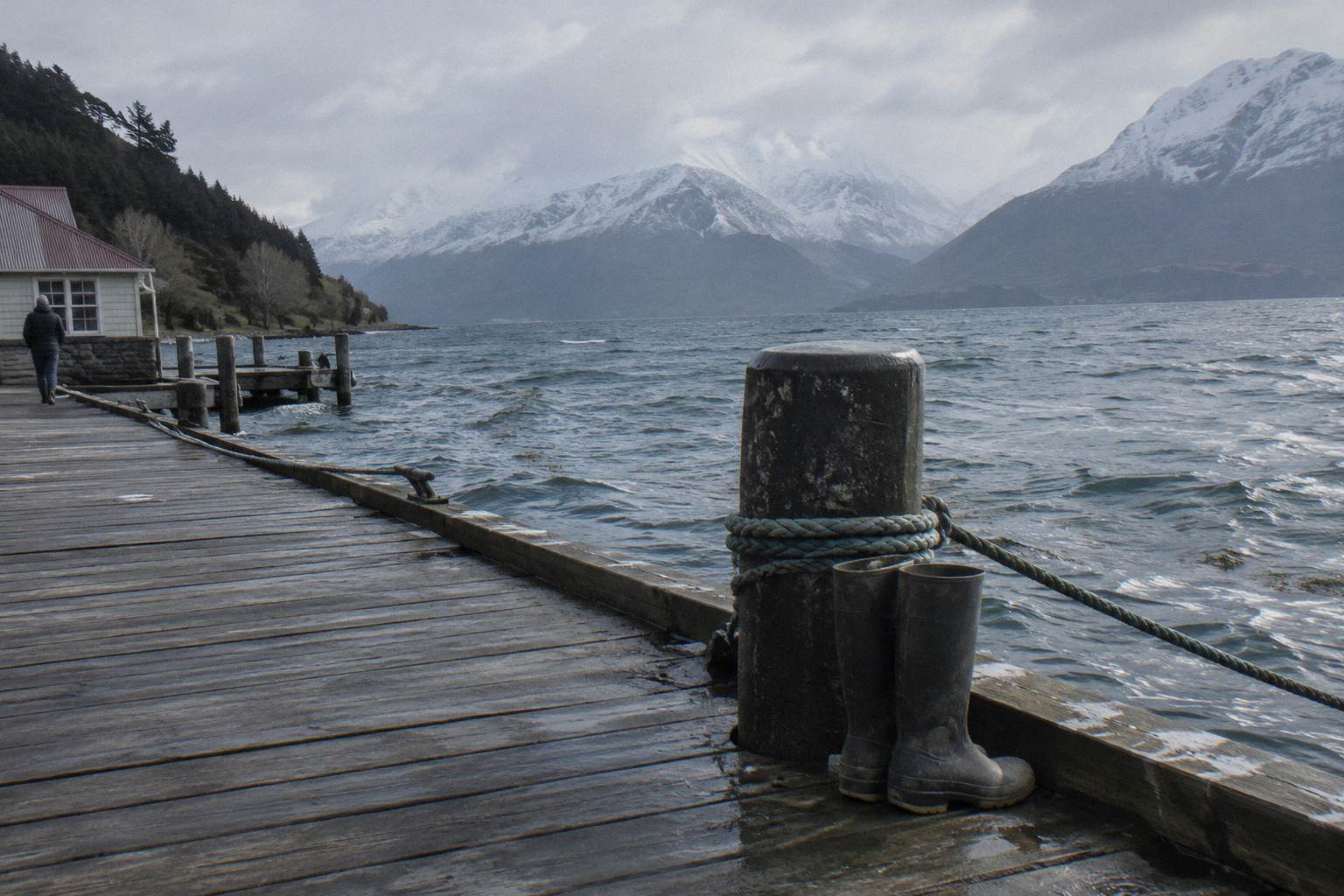
Layers beat a single heavy coat here. The boat can be cold on deck and warm below in the engine room; the farm show sits in an open amphitheatre; the meal or tea is indoors. Footwear matters most of all: paths at the farm are gravel, the wharf ramps can be damp, and non-slip soles are the difference between watching the shearing demonstration and watching your footing. The what to wear and bring guide goes deeper on kit for every season.
Weather rarely cancels anything outright. BBQ dining is indoors and the show runs in the amphitheatre, so the exposure is the walk to the boat and the dog show stretch. What weather does change is the crossing itself, which is the operator's call and the calendar's call, not something to plan around with a rule of thumb. The bad weather trips guide explains the mechanics without inventing promises.
Winter Prices And How Booking Changes
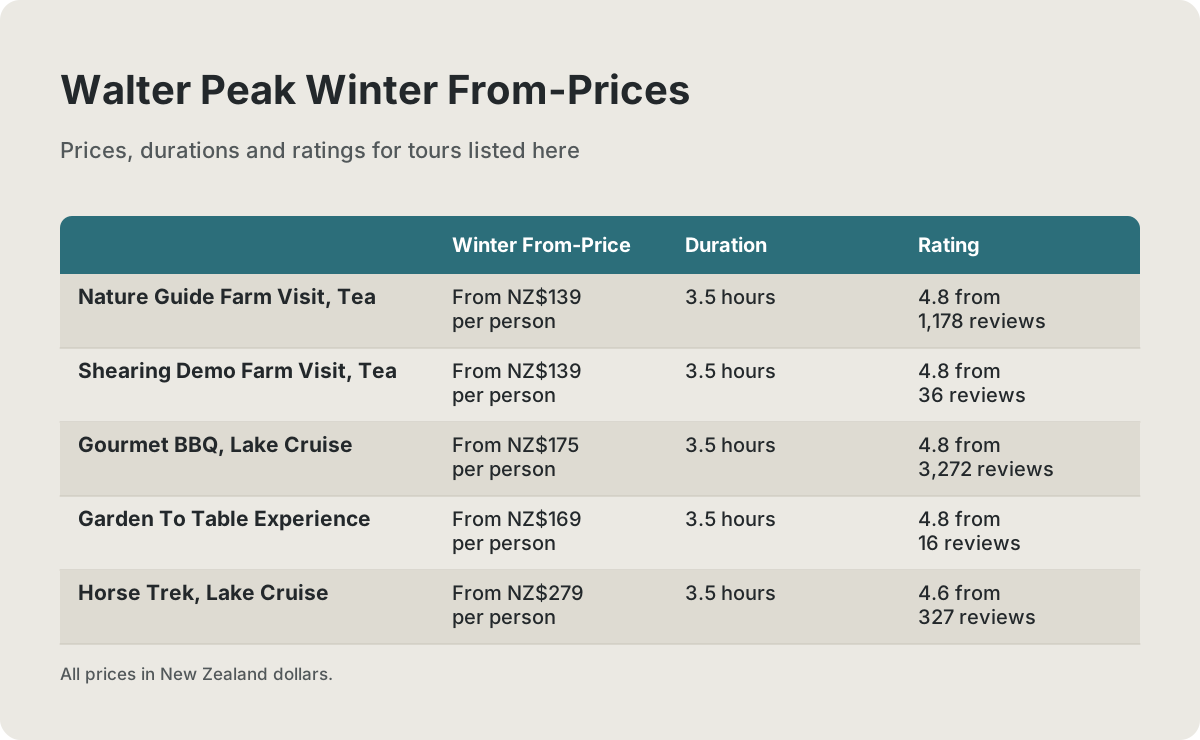
The from-prices hold in winter: the nature-guide farm visit from NZ$139 per person, the Gourmet BBQ from NZ$175, the Garden To Table Experience from NZ$169, and the horse trek from NZ$279, with every date's exact figure shown on the booking page because amounts vary by date and group. Free cancellation up to 24 hours before start applies across the products, which matters in winter when plans shift with the forecast. Nothing on the winter calendar carries a surcharge or a discount that any covered source states, so treat the printed from-prices as the anchor and check the live price for your date.
| Product | Winter from-price | Duration | Rating |
|---|---|---|---|
| Nature Guide Farm Visit, Tea | From NZ$139 per person | 3.5 hours | 4.8 from 1,178 reviews |
| Shearing Demo Farm Visit, Tea | From NZ$139 per person | 3.5 hours | 4.8 from 36 reviews |
| Gourmet BBQ, Lake Cruise | From NZ$175 per person | 3.5 hours | 4.8 from 3,272 reviews |
| Garden To Table Experience | From NZ$169 per person | 3.5 hours | 4.8 from 16 reviews |
| Horse Trek, Lake Cruise | From NZ$279 per person | 3.5 hours | 4.6 from 327 reviews |
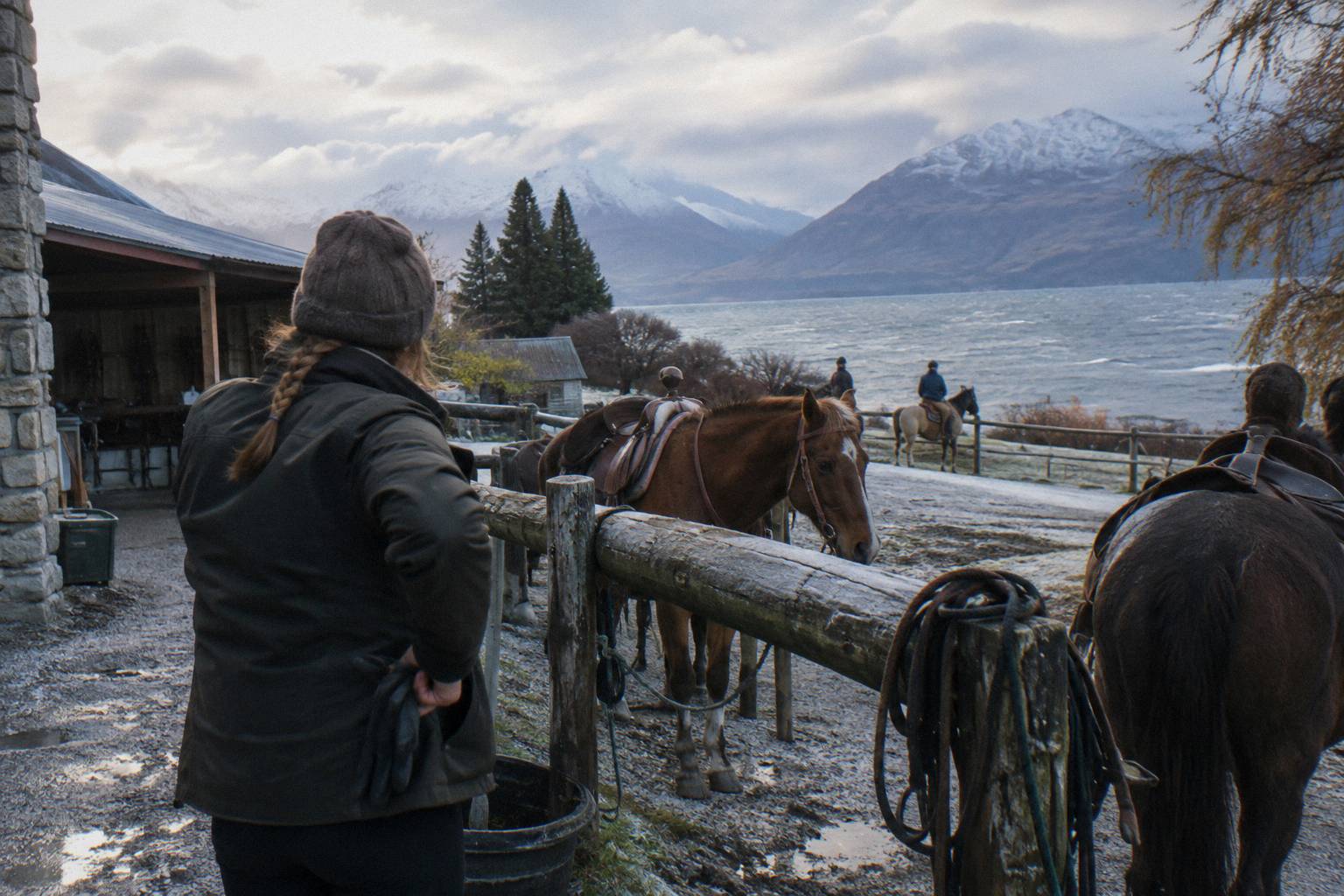
The horse trek deserves a winter-specific note. It is a guided 40 minute ride to a lookout, suitable for all abilities, with helmets and wet-weather clothing provided, and it carries firm limits: minimum age 7, minimum height 120 cm, maximum weight 95 kg, and those belong to the horse products only. Tea at the Colonel's Homestead follows. In winter the wet-weather gear earns its place, and the lookout photographs better with snow on it.
For travellers whose winter priority is the food rather than the saddle, the Garden To Table Experience runs a guided walk through the restaurant garden, a walk along the reforested peninsula, native tree or shrub planting and a garden platter, from NZ$169, though it is not suitable for wheelchair users because of uneven tussock ground. It is the product most shaped by season of anything in the range, since the garden itself is the subject.
Booking ahead is the standing advice from RealNZ because vessel space is limited, and that applies in winter too, even with a quieter farm. School holidays in New Zealand fall in July, and the July fortnight is the one winter stretch where sittings fill the way they do in summer. Outside it, a few days of lead time is usually enough, though the horse trek's small group format and the BBQ sittings are the first to tighten. The booking guide for Walter Peak and Earnslaw tickets walks through the mechanics.
A Winter Half-Day, Hour By Hour
The winter shape of a Walter Peak trip is the same 3.5 hour arc as summer, check-in at Steamer Wharf, a 45 minute crossing, roughly two hours at the farm split between the show and the meal or tea, then the crossing back, with the only seasonal variables being the vessel, the light and the coat you wore. The full breakdown sits in the Walter Peak half-day timeline, and winter shifts it less than most people expect.
Start with the parking buffer. Allow 30 extra minutes on top of check-in, more if you are using the Boundary Street or Ballarat Street car parks with their 15 minute walk. The BBQ buffet product asks travellers to arrive 30 minutes early in any season. With pre-purchased tickets, the meeting point moves to in front of the TSS Earnslaw at the Steamer Wharf dock.
On the water, winter crossing time is unchanged at 45 minutes on the Earnslaw. The engine room is warm and loud, which in winter is a feature rather than a warning, and the mini-museum, Promenade Cafe and licensed bar are all indoors. Live piano plays on some sailings. The how long is the boat ride question is answered the same way in every season, and the RealNZ Walter Peak farm page states the crossing directly.
At the farm, the sequence depends on your product. The farm tour products take the woolshed afternoon tea and the animal hand-feeding; the BBQ products take the homestead buffet followed by the shearing and dog demonstration in the amphitheatre, which RealNZ notes also runs after dark on evening sailings, lit for the purpose. The sheep shearing and sheepdog demonstration guide covers the show itself, and winter adds only the snow behind it.
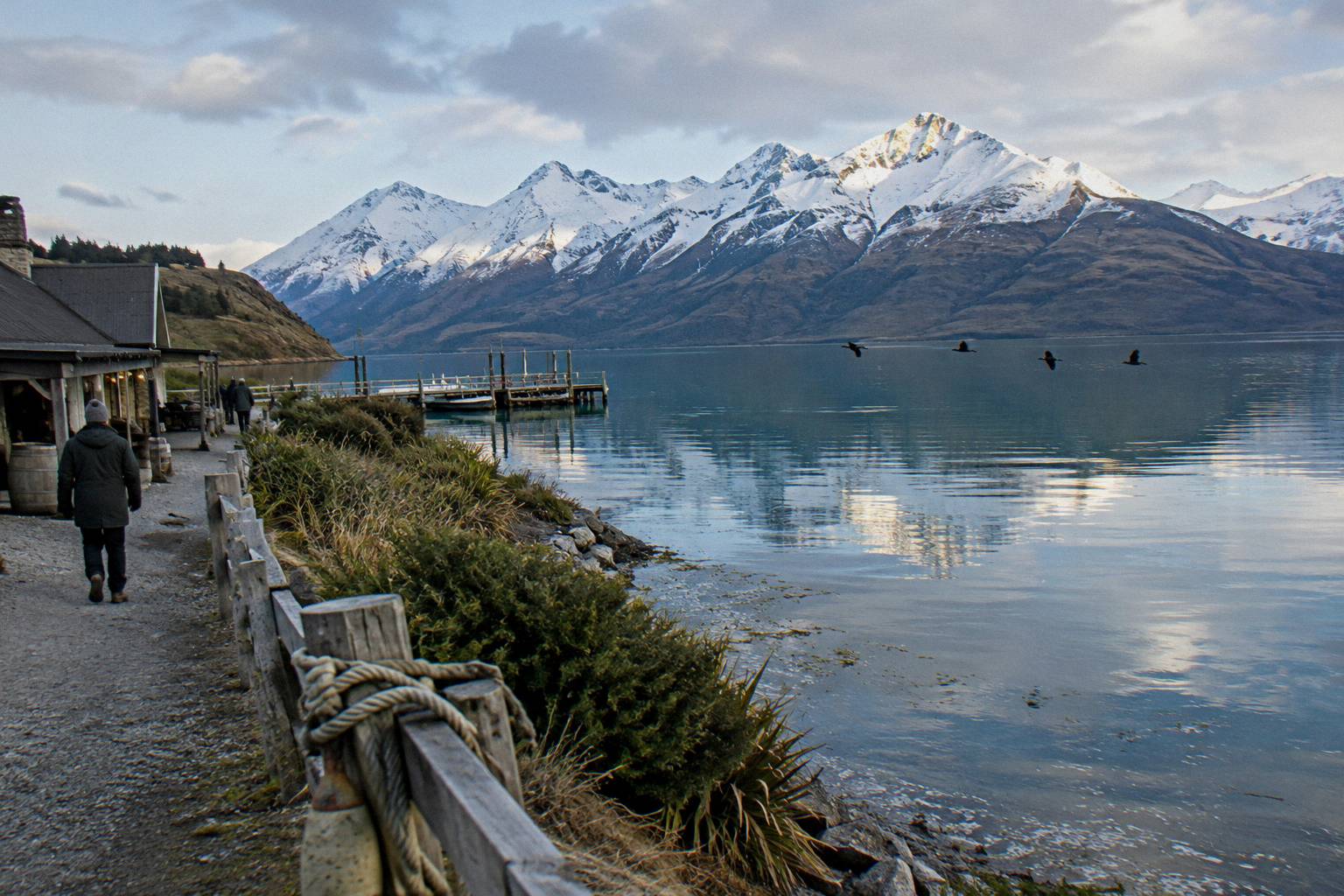
The crossing back lands you in Queenstown in the late afternoon dark of midwinter, with the town's lights across the water, which is the argument for picking a late slot over an early one if photography is the point. The Walter Peak photography spots guide ranks the angles, and winter light sits low enough to change the ranking.
Who Winter At Walter Peak Suits Best
Winter suits travellers who want the farm without the crowds, photographers chasing snow on the Remarkables, and anyone whose priority is the indoor dining or the vessel itself, while it suits families with small children and sun-dependent plans least well. The farm in winter is quieter, and that quiet changes the texture of the animal encounters and the woolshed tea more than any itinerary change does. Travellers who want the busiest, warmest version should aim for the October to April stretch instead.
The vessel decision interacts with the season. If riding the 1912 coal-fired steamship is the reason for the trip, avoid the May to early July maintenance window, because the Spirit of Queenstown stands in and the Earnslaw does not sail. If warmth and speed matter more, the catamaran's 30 to 35 minute crossing in a June gale is a reasonable trade, and the Earnslaw cruise options compared sets out the choice in detail. Walter Peak Farm Tours covers both vessels across the calendar, so the date decides.
Families weigh a different set of factors. The farm visit products have no stated minimum age and the hand-feeding suits children, while the horse trek's age 7 and 120 cm limits exclude the youngest. The Walter Peak with kids guide treats the question in full; winter adds only the clothing burden and shorter daylight for the return walk through town.
Budget-sensitive travellers sometimes find winter friendlier on accommodation in Queenstown, though no covered source states a seasonal pattern in the farm products' own pricing, so treat the from-prices as steady and let the booking page answer for the date. The discounts landscape is covered in the discounts guide, which does not promise a winter deal.
Solo travellers and couples who enjoy the vessel as much as the farm get the best of winter: deck space on the crossing, room at the rails, and an engine room you can actually stand in. The steamship cruise guide frames the sailing itself as the product, which in winter it arguably is.
Whatever the season, the nature-guide farm visit remains the simplest entry point to the winter farm: from NZ$139 per person, 3.5 hours, 4.8 from 1,178 reviews, free cancellation up to 24 hours before start, meeting at the RealNZ Visitor Centre at 88 Beach Street. See dates for the farm visit, or check the live price once you have a window in mind, and check availability for the calendar that holds every winter time.
What Trips People Up Before You Book
The mistakes that cost people money on a winter Walter Peak trip are assuming the Earnslaw sails every day, assuming a printed timetable exists, arriving without a parking buffer, dressing for the forecast high rather than the day's range, and forgetting that everything on the water and at the farm is card only. Each of these has a cheap fix, and none requires changing the plan, only the preparation around it.
The vessel assumption is the biggest. Booking a June date expecting a 1912 steamship and boarding a modern catamaran is not a downgrade, it is the maintenance schedule working as designed, but travellers who only wanted the coal-fired crossing should book outside May to early July. The maintenance dates shift year to year, so ask the operator if the vessel matters to your date.
The timetable assumption follows. Summer carries RealNZ's typical departures of 9:00am, 11:00am, 1:00pm, 3:00pm, 5:00pm and 7:00pm from October to April, with a reduced schedule on Christmas Day, but winter times are held on the booking calendar and nowhere else. Planning a winter day around an assumed 11:00am sailing is the classic error; the calendar decides.
Parking and arrival buffer errors compound in winter, when ice on the walk from the Ballarat Street car park slows the last 15 minutes. Allow the full 30 extra minutes, and 30 minutes early if your product is the BBQ buffet. The Steamer Wharf check-in and parking guide maps the options.
Dressing for the high rather than the range is the comfort mistake. A 10 °C afternoon can start at freezing on the wharf, and the amphitheatre holds the cold. Non-slip boots, a warm jacket and sunscreen cover the operator's own kit list, and the cash-free rule on both vessels and at the farm catches one person per sailing who planned to buy tea with notes.
If winter turns out not to be your season after all, the seasonal picture in the guide to choosing between Walter Peak experiences works through spring lambs, summer light and autumn colour, and every product in this range runs in all of them.
Common Questions About A Cold-Season Farm Visit
Does Walter Peak Run In Winter?
Yes. The farm operates year-round, and RealNZ schedules the TSS Earnslaw to sail every day of the year except an annual maintenance window that runs from May into early July, in 2026 from 18 May to 26 June, when the Spirit of Queenstown serves Walter Peak instead.
Is It Too Cold To Enjoy The Farm In Winter?
Typical Queenstown winter highs are 5 to 10 °C. BBQ dining is indoors in the homestead rooms, and the woolshed afternoon tea is indoors too, so the exposure is the walk to the boat and the open-air dog show stretch. Non-slip shoes, a warm jacket and sunscreen cover the operator's own kit list.
Which Boat Goes To Walter Peak In Winter?
The TSS Earnslaw crosses in 45 minutes, except during its May to early July maintenance window, when the modern catamaran Spirit of Queenstown takes the route in about 30 to 35 minutes. In 2026 the window ran 18 May to 26 June.
What Are The Winter Departure Times?
Winter times sit on the booking calendar; no printed winter timetable exists. The 9:00am to 7:00pm departure pattern RealNZ describes applies to the October to April summer season, with a reduced schedule on Christmas Day.
Are Winter Prices Cheaper At Walter Peak?
The from-prices hold: the farm visit products from NZ$139 per person, the Gourmet BBQ from NZ$175, Garden To Table from NZ$169 and the horse trek from NZ$279. Amounts vary by date and group, and the booking page shows the price for your date.
What Should You Wear For A Winter Walter Peak Trip?
Layers, non-slip shoes or boots, a warm jacket, sunscreen, a camera and personal medication. Queenstown runs four seasons in a day and the forecast is a good guide; the crossing deck, the gravel farm paths and the open amphitheatre are the three cold exposures.