Animals At Walter Peak: What You Can See And Feed
Walter Peak High Country Farm names six kinds of animals on its pages: Highland cattle, sheep including merino, alpacas, deer, pigs and donkeys. Here is where you meet each one, what hand-feeding involves, and which boat trips include the farm visit.
Short answer
The animals named by RealNZ at Walter Peak are Highland cattle, sheep including merino, alpacas, deer, pigs and donkeys, and the resident Highland cow is Dougal. Hand-feeding happens on the farm tour, from NZ$139 per person, and the sheepdog muster and blade-shearing demonstration run in a purpose-built amphitheatre. The whole trip takes about 3.5 hours including the cruise.
Walter Peak High Country Farm is a working high-country sheep and cattle property on the western shore of Lake Whakatipu, and the animals are the reason most people cross the lake. If you are weighing which product to book, the featured farm visit is the Queenstown Lake Cruise and Walter Peak Farm Tour, where the card lists its own price, duration and inclusions alongside the other farm-landing options.
| Fact | Detail |
|---|---|
| Farm | Walter Peak High Country Farm, 155 hectares at the base of Walter Peak |
| Operator | RealNZ |
| Animals named by RealNZ | Highland cattle, sheep including merino, alpacas, deer, pigs, donkeys |
| Resident character | Dougal, a Highland cow |
| Hand-feeding | Included on the guided farm tour |
| Farm show | Heading dogs and huntaways muster sheep, then a blade-shearing demonstration |
| Farm tour refreshment | Afternoon or morning tea of scones, cakes, slices and sandwiches in the woolshed |
| Whole trip length | About 3.5 hours including the cruise |
What Animals Live At Walter Peak High Country Farm?
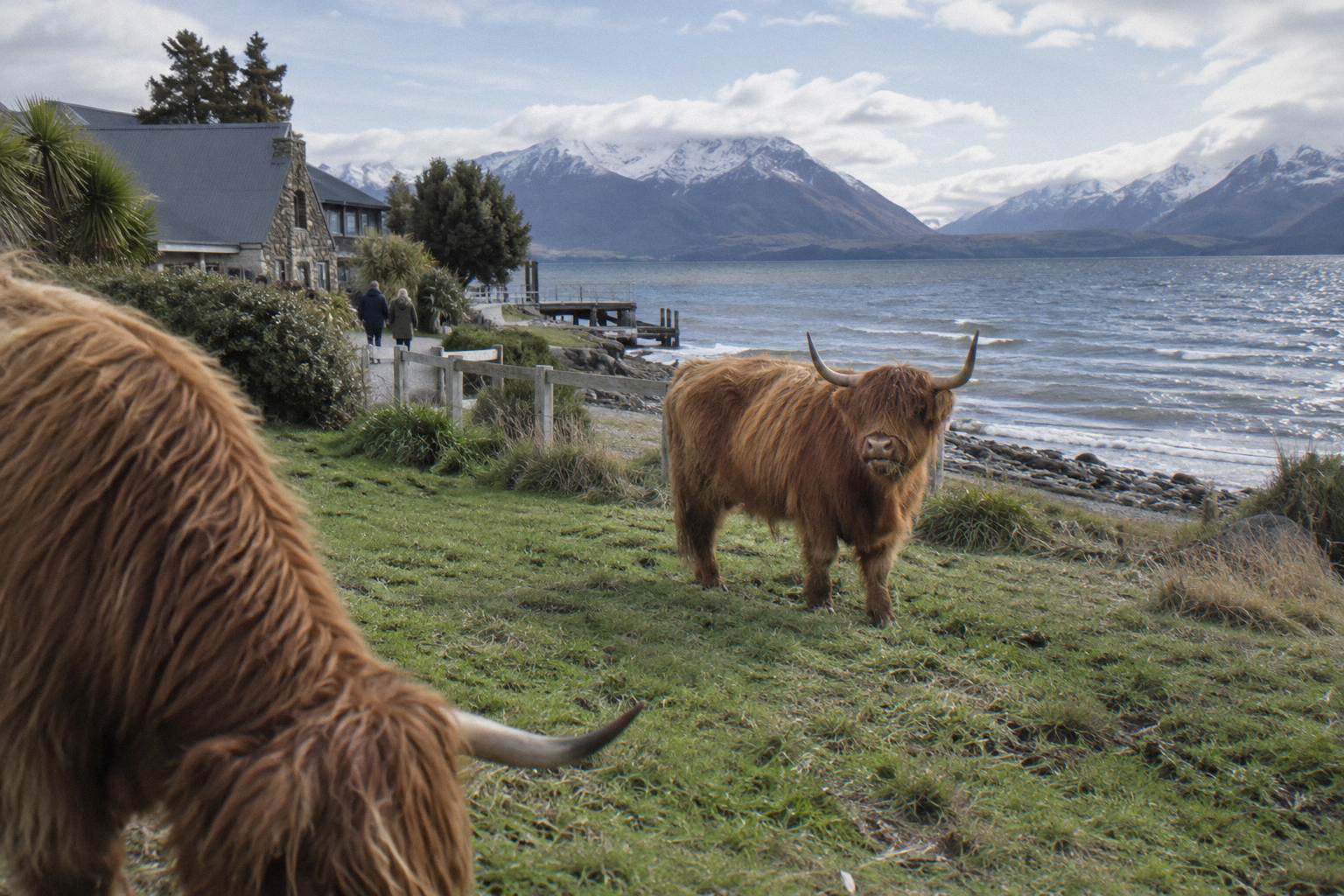
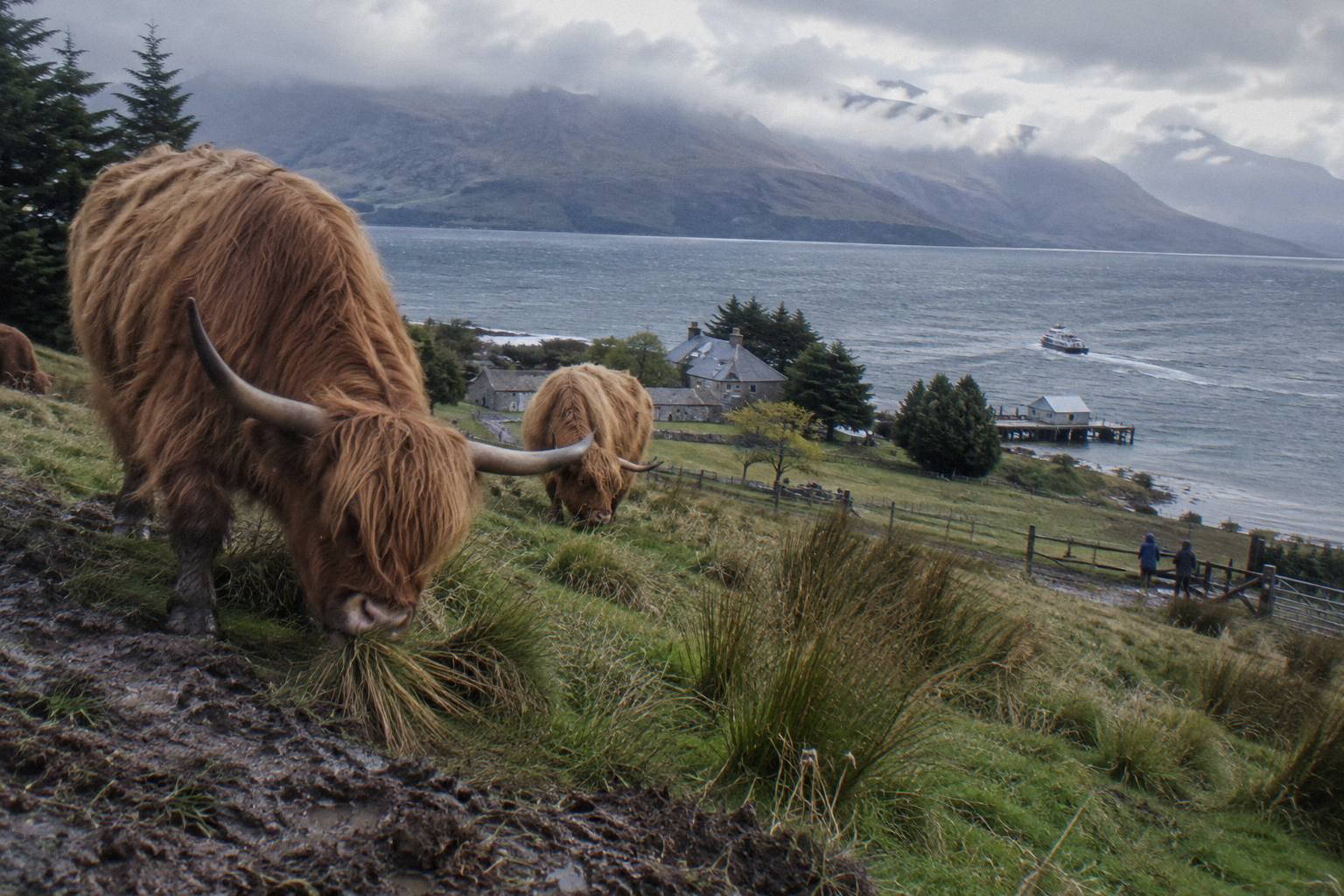
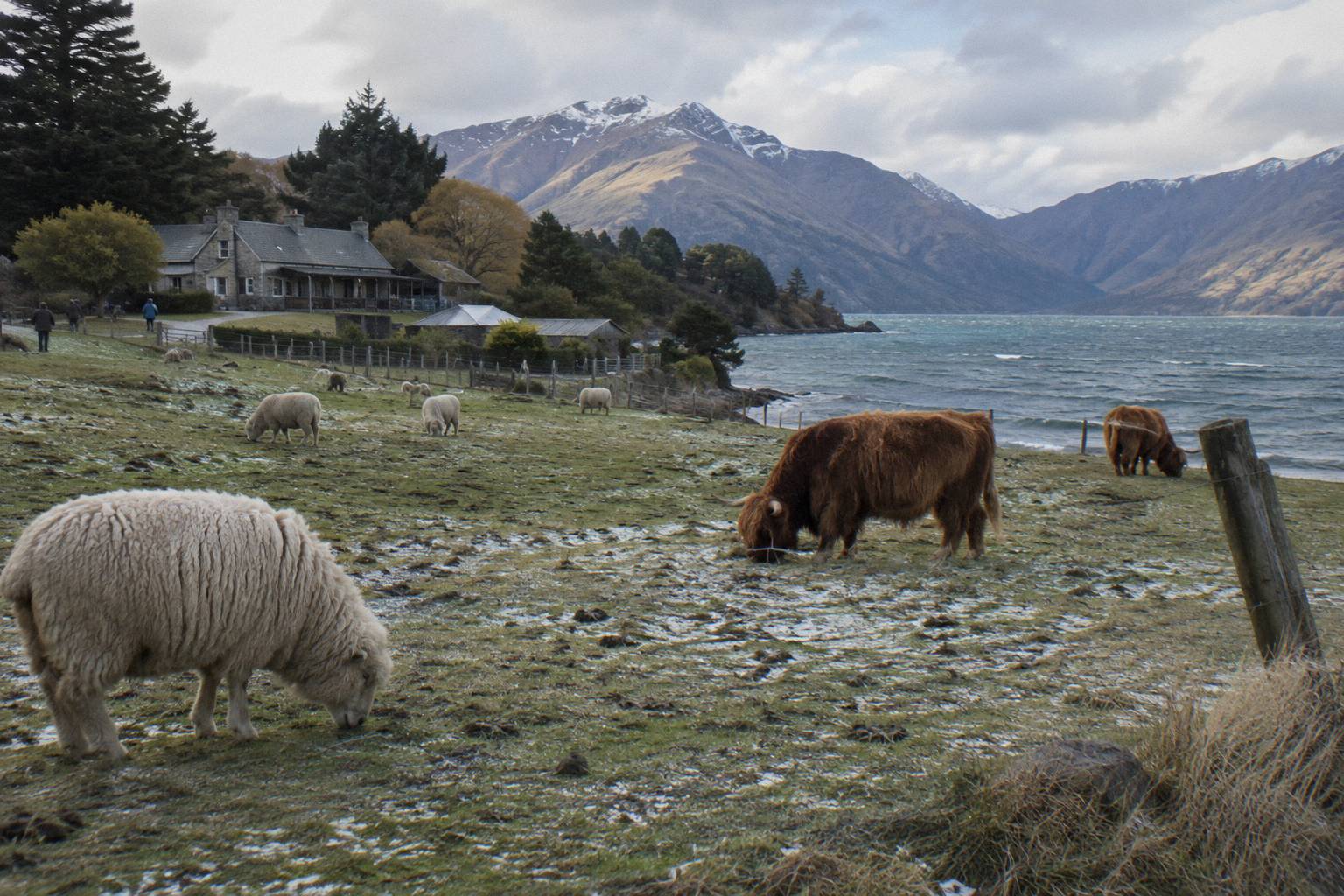
Six kinds of animals are named on RealNZ's own pages for the farm: Highland cattle, sheep including merino, alpacas, deer, pigs and donkeys. Dougal, a Highland cow, is the resident animal visitors hear about most. Beyond that named list, RealNZ publishes no further species for the visitor operation, so it pays to plan around exactly these animals rather than a longer wish list from memory or secondhand posts.
The farm itself is a 155 hectare property at Beach Bay on the lake's western shore, run by RealNZ under a pastoral lease secured in 1987. The wider station history runs back to the Mackenzie family in the late 1880s, who farmed the area for roughly 80 years and are credited by the RealNZ history blog with developing many of the principles of successful high-country farming. At its peak the station ran 40,000 sheep across 170,000 acres with up to 50 full-time staff, which explains why sheep remain the backbone of what you see on the ground today.
Merino has a specific claim to fame here. Walter Peak merino fleece topped wool sales in New Zealand and Australia three times in the 1930s, a detail from the station's commercial peak that RealNZ still retells. The sheep you meet on the tour include merino and other breeds, so the fleece story connects directly to the animals in front of you rather than sitting in a display case. A merino fleece is fine enough that it earned those wool-sale records on quality, not volume, and the breeds you pass in the paddocks carry that lineage into the present day.
The mix of species is itself unusual for a single stop. Plenty of farms show sheep, and plenty show cattle, but the combination of Highland cattle, alpacas, deer, pigs and donkeys alongside a working merino flock means a short walk passes a wide cross-section of New Zealand farmland in one loop. Deer in particular are farmed commercially across the country yet seldom appear on visitor itineraries, so Walter Peak is one of the easier places to stand near a herd without driving to a dedicated deer operation.
| Animal | Where You Meet It | What You Might Do |
|---|---|---|
| Highland cattle, including Dougal | Farm paddocks on the guided walk | See at close quarters, hear the guide's introduction |
| Sheep, including merino | Paddocks and the amphitheatre | Hand-feed on the tour, watch the muster and shearing |
| Alpacas | Farm paddocks | See and photograph |
| Deer | Farm paddocks | See from the guided route |
| Pigs | Farm paddocks | See from the guided route |
| Donkeys | Farm paddocks | See and photograph |
| Heading dogs and huntaways | Purpose-built amphitheatre | Watch the working muster |
One boundary worth drawing early: the named animal list belongs to the visitor farm. Walter Peak Station next door is a separate property with separate owners, and the Wikipedia entry for Walter Peak covers the peak itself, named in 1862 after Cecil Walter Rees, son of Queenstown founder William Rees. The peak stands 1,800 metres above the shoreline pastures.
Can You Hand-Feed The Animals At Walter Peak?
Yes, on the guided farm tour. RealNZ states that hand-feeding of the farm animals is part of the farm visit, alongside the walk through the paddocks and the woolshed tea of scones, cakes, slices and sandwiches. Hand-feeding is tied to that guided product rather than being a free-range activity, so if feeding an animal matters to you, book a trip that includes the farm tour component rather than a cruise-only ticket.
The practical version of the tour works like this: you cross the lake, meet your guide, walk the gravel farm paths past the paddocks where the cattle, sheep, alpacas, deer, pigs and donkeys live, and stop where feeding is allowed. The tour then finishes with tea in the woolshed. The paths are gravel throughout, and RealNZ notes that an unaided wheelchair user cannot tour the farm, a point covered in more detail in the Walter Peak accessibility guide.
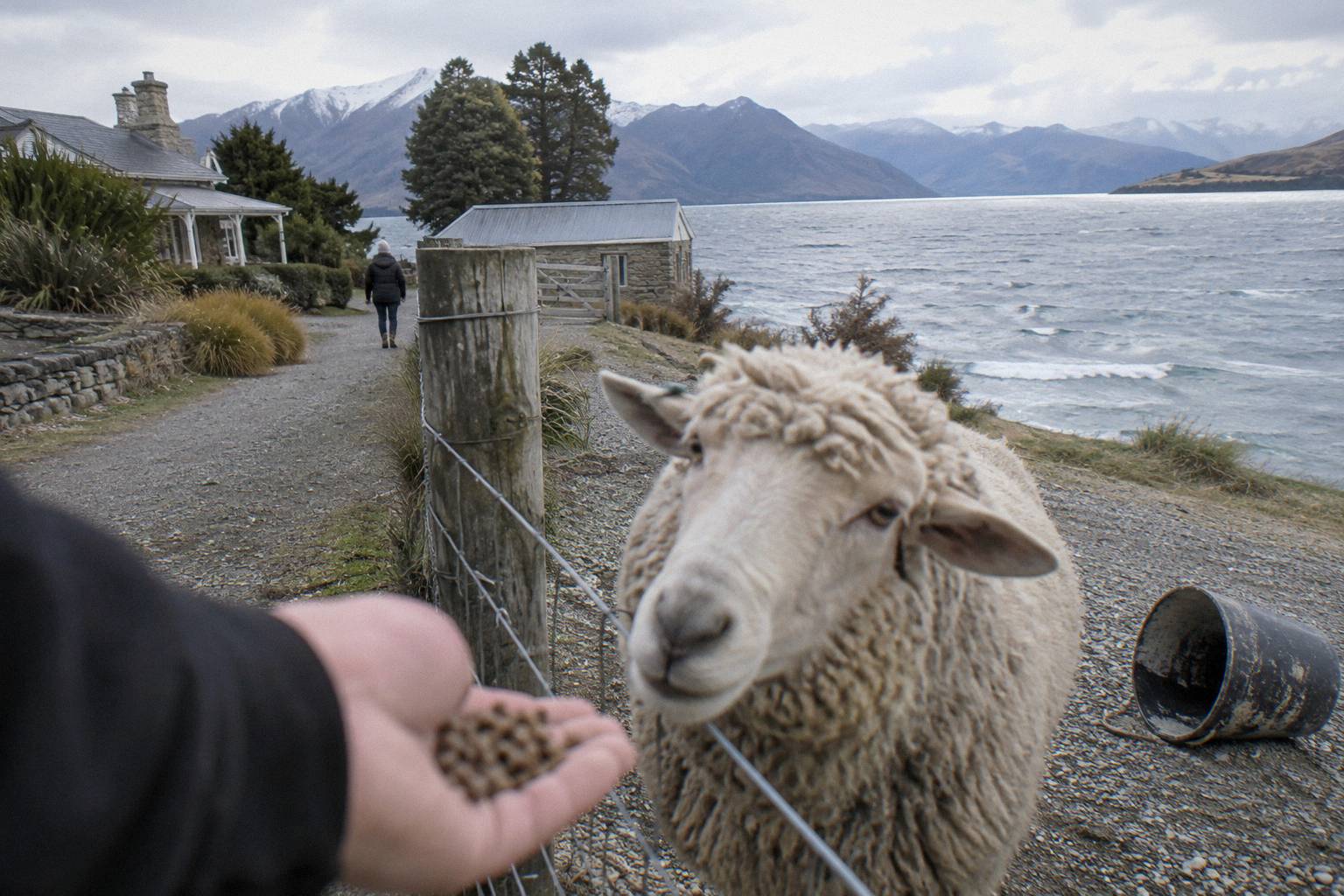
Guides, not visitors, decide where the feeding happens, which keeps both the animals and the traffic flow settled. If you are travelling with children and wondering whether the whole day holds up, the Walter Peak with kids guide walks through the same question from a family angle, including what the boat ride and the farm show demand of short attention spans.
Feeding is a small part of a bigger loop, and the loop sells out first. The featured farm visit is the "Queenstown Lake Cruise and Walter Peak Farm Tour", rated 4.8 from 1,178 reviews, from NZ$139 per person for 3.5 hours with free cancellation up to 24 hours before the start, and the booking calendar shows dates and availability.
If you would rather combine the animals with a full cooked meal, the "Gourmet BBQ, Lake Cruise" product at from NZ$175 per person pairs the lake crossing with the homestead's wood-fire buffet BBQ, rated 4.8 from 3,272 reviews. The farm show follows the BBQ meal, so the animal content arrives after you have eaten rather than before. The kitchen serves vegetarian dishes on the buffet, and RealNZ asks that you tell them about dietary requirements at the time of booking so the kitchen can prepare.
Which Trips Get You Closest To The Animals?
Two things decide how close you get: whether the product includes the guided farm walk, and whether it includes the farm show. The nature-guide farm visit products include the walk with hand-feeding and woolshed tea from NZ$139 per person; the BBQ dining products include the show after the meal; the cruise-only steamship product includes neither, because it never lands at the farm. Match the card to the animal experience you actually want.
The distinction trips people up because every product shares the same boat ride. The crossing on the TSS Earnslaw takes 45 minutes each way, and the RealNZ lake cruise comparison blog notes the modern catamaran Spirit of Queenstown does it in about 30 to 35 minutes. But the lake crossing is transport; the animals are on shore, and only products that land and tour deliver them.
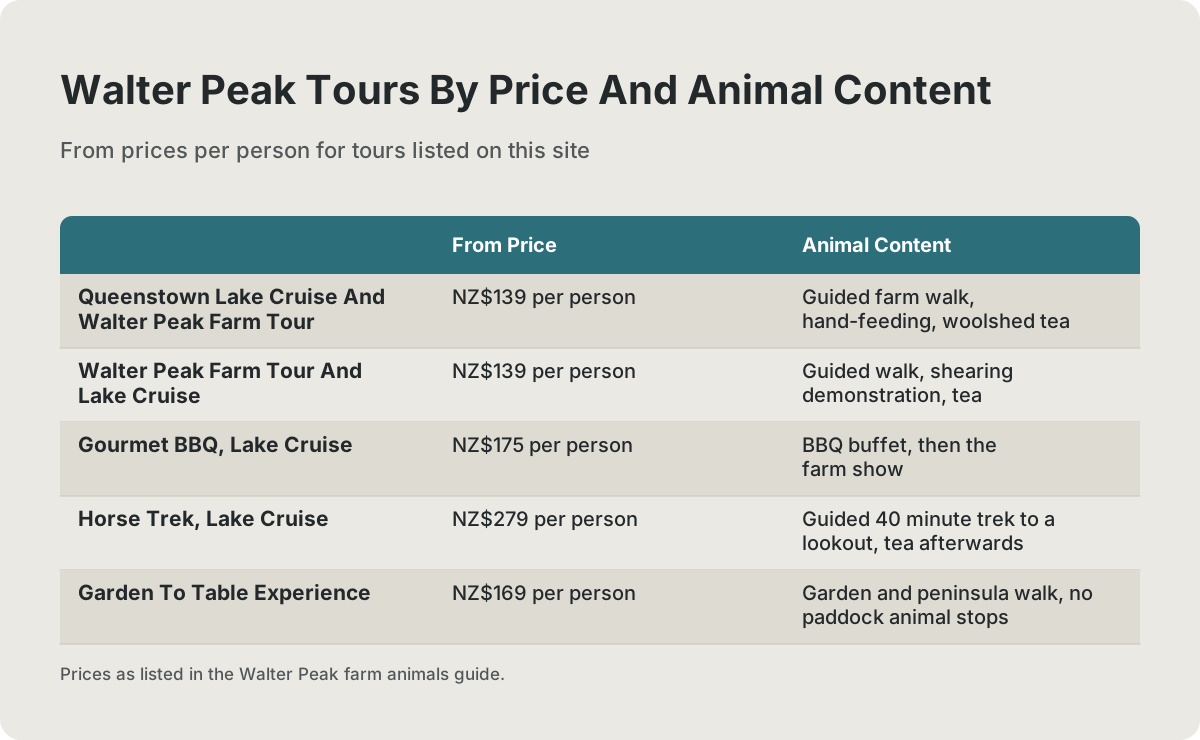
Here is how the animal content breaks down across the products with printed prices. All amounts are New Zealand dollars, and every price varies by date, so the booking page for each product shows the amount for the day you choose.
| Product | From Price | Animal Content |
|---|---|---|
| Queenstown Lake Cruise and Walter Peak Farm Tour | NZ$139 per person | Guided farm walk, hand-feeding, woolshed tea |
| Walter Peak Farm Tour and Lake Cruise | NZ$139 per person | Guided farm walk, shearing demonstration, tea |
| Gourmet BBQ, Lake Cruise | NZ$175 per person | BBQ buffet, then the farm show |
| Horse Trek, Lake Cruise | NZ$279 per person | Guided 40 minute trek to a lookout, tea afterwards |
| Garden To Table Experience | NZ$169 per person | Garden and reforested peninsula walk, no paddock animal stops |
| Steamship Cruise Only, 1.5 Hours | Booking page shows the price | No farm landing, no animals |
Two of those deserve a note. The horse trek is the only product that puts you on an animal rather than beside them, with a guided 40 minute ride to a lookout, helmets and wet-weather clothing provided, and tea at the Colonel's Homestead afterwards. The trek suits all abilities per RealNZ, but its limits are firm: minimum age 7, minimum height 120 centimetres, maximum weight 95 kilograms. The Garden To Table Experience is the odd one out for animal seekers: it centres on the restaurant garden, a walk along the reforested peninsula and planting a native tree or shrub, so book it for the garden and the planting, not for the paddocks.
A third path suits visitors who want the show without the walk. The BBQ dining products deliver the amphitheatre muster and shearing after the meal, and the homestead dining rooms sit at the end of an inclined gravel path from the wharf that wheelchair users can manage, where the paddock walk itself is off the table. That single distinction lets some travellers keep the animal content of the day while dropping the part their mobility rules out.
What Happens At The Sheepdog Show And Shearing?
The farm show runs in a purpose-built amphitheatre, where working heading dogs and huntaways muster sheep in front of the crowd, followed by a live blade-shearing demonstration in the New Zealand blade technique. The dogs are working farm dogs doing a real job in miniature, and the sheep are mustered, not performing. RealNZ publishes no duration for the show, so plan for it as a segment of your visit rather than a timed event.
Heading dogs and huntaways are two distinct tools in New Zealand mustering. Heading dogs, typically border collie types, circle and direct sheep with eye and movement; huntaways bark sheep forward over steep country where a silent dog would lose them. Watching both work in the amphitheatre is the closest a short visit gets to seeing how this farm actually moves stock across high country, which is the tradition the Mackenzies built over eight decades here.
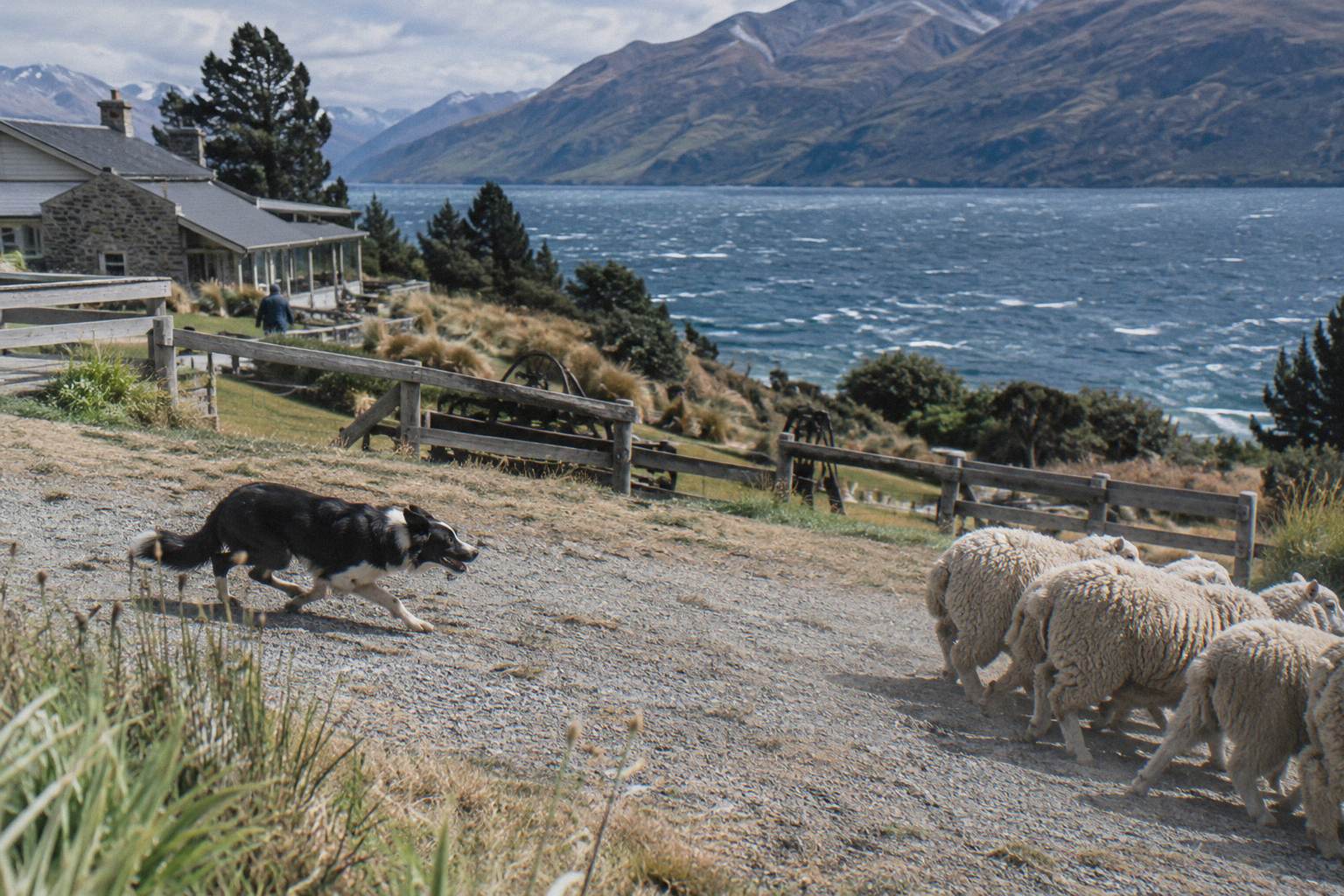
The blade-shearing demonstration shows the hand technique used before and alongside machine shearing. The New Zealand blade method is a physical skill with real sheep and real blades, and it happens whatever the weather, since the show sits in the amphitheatre and the BBQ dining runs indoors in the homestead rooms. A guest review notes the demonstration also runs in the dark on evening departures, lit for viewing.
Which products deliver the show? The two farm-visit products and the BBQ dining products include the demonstration on their itineraries, while the horse trek and the Garden To Table Experience do not list it. The evening dinner product, the only evening option, pairs the homestead dinner with the crossing, and the demonstration follows the meal. The sheep shearing and sheepdog guide goes deeper on the show itself if that is the part pulling you across the lake.
How Do The Seasons Change The Animal Visit?
RealNZ says the farm operates year-round, and each season changes what the animals look like and do. In winter the animals carry heavy coats and the farm is quieter, with the Remarkables snow-capped behind the amphitheatre; spring brings lambs. Summer runs hot in Queenstown terms at 19 to 29 degrees, so the animals, and the walking between them, sit in whatever the day serves up, and the four-seasons-in-one-day reputation of the region applies.
The seasonal menu at the homestead shifts alongside all this, with the executive chef running a seasonal buffet over a wood fire, but the animals follow the calendar rather than the kitchen. Winter visits trade crowds for woolly Highland cattle and sheep in full fleece, which is exactly what you want in front of a camera. The best time to visit guide and the Walter Peak in winter guide cover the calendar trade-offs in full.
Departure frequency follows the seasons too. RealNZ's typical summer schedule, October to April, runs Earnslaw sailings at 9:00am, 11:00am, 1:00pm, 3:00pm, 5:00pm and 7:00pm, with a reduced schedule on Christmas Day. Booking ahead is recommended because vessel space is limited, and dining sittings fill during school holidays and peak summer. If you are chasing lambs or snow-capped amphitheatre backdrops, pick the date first, then the product, then the sailing. Other pages covering the same trip are gathered on Walter Peak Farm Tours.
| Season | What It Means For The Animals |
|---|---|
| Summer, October to April | Full sailing schedule; warm days at 19 to 29 degrees; peak demand for sittings |
| Autumn | 15 to 25 degrees; thinner crowds around the paddocks |
| Winter | Animals in heavy coats; quieter farm; Remarkables snow behind the show |
| Spring | Lambs; 9 to 15 degrees and changeable |
Is Walter Peak A Real Working Farm Or A Petting Zoo?
It is a working high-country farm that runs a visitor operation, not a petting zoo. The sheep are mustered by real heading dogs and huntaways and shorn with blades in front of you; the station around it has a commercial grazing history back to the 1860s and a wool record from the 1930s. Hand-feeding is a guided moment inside that setting, and the amphitheatre show demonstrates genuine stock-work technique rather than trained-animal theatre.
The distinction matters for what you expect. You are not walking into an enclosure with tame animals at random; you are walking a guided route on gravel paths past paddocks of animals that live on a 155 hectare property RealNZ has run as a visitor base since buying it, with the homestead, in December 2013. The RealNZ Walter Peak farm page and the RealNZ ultimate guide to the farm both frame the day around the working-farm reality.
The land itself carries the story further. Since 2014 the Walter Peak Land Restoration Project has cleared the 155 hectares of invasive non-native trees and weeds, replanted natives, and opened a public walkway along the foreshore to Beach Point. The Garden To Table Experience, from NZ$169 per person, rated 4.8 from 16 reviews, is the product that engages that restoration directly, walking the garden and peninsula and planting a native tree or shrub, with drinks costing extra.
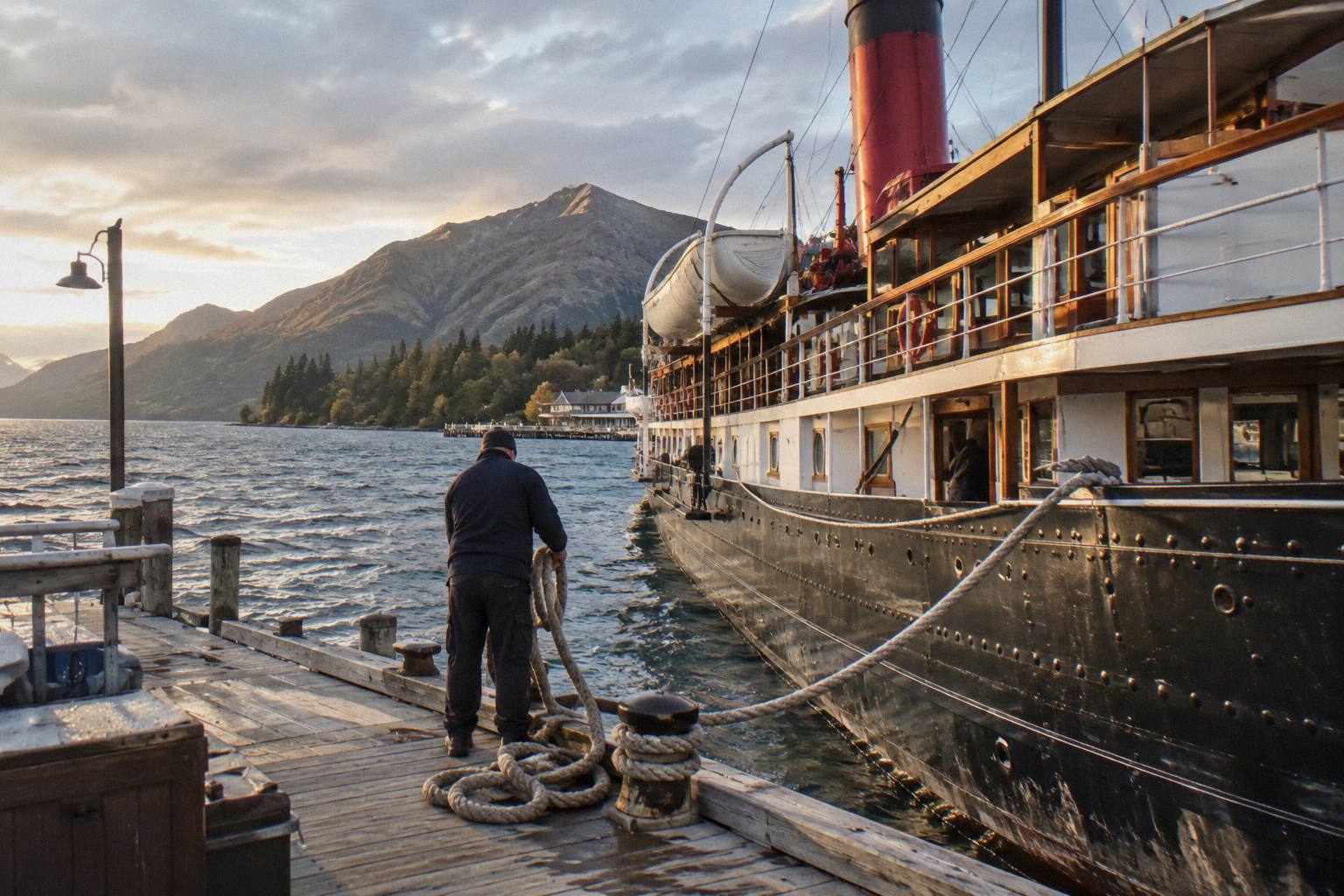
For background on the vessel that carries every one of these trips across the lake, the TSS Earnslaw cruise guide covers the 1912 coal-fired steamship, its engine room visits and its about 1.5 tonnes of coal per return trip. Walter Peak Farm Tours exists because that boat and this farm share a shoreline.
What Should You Know Before Going To See The Animals?
Bring non-slip shoes or boots, a warm jacket, sunscreen and a camera; pay by card because the vessels and the farm are cash-free; and allow 30 extra minutes for parking before check-in. The whole animal loop, cruise plus farm, runs about 3.5 hours. Wheelchair users can reach the BBQ restaurant via an inclined gravel path from the wharf, but the farm tour on gravel paths is not possible for an unaided wheelchair user.
The meeting point is the RealNZ Visitor Centre at 88 Beach Street on Steamer Wharf, or in front of the TSS Earnslaw itself with pre-purchased tickets. Parking in central Queenstown is tight: free street parking is limited, paid buildings sit at Man Street and Church Street, and the Boundary Street and Ballarat Street car parks are about 15 minutes on foot. The Steamer Wharf check-in and parking guide maps the options.
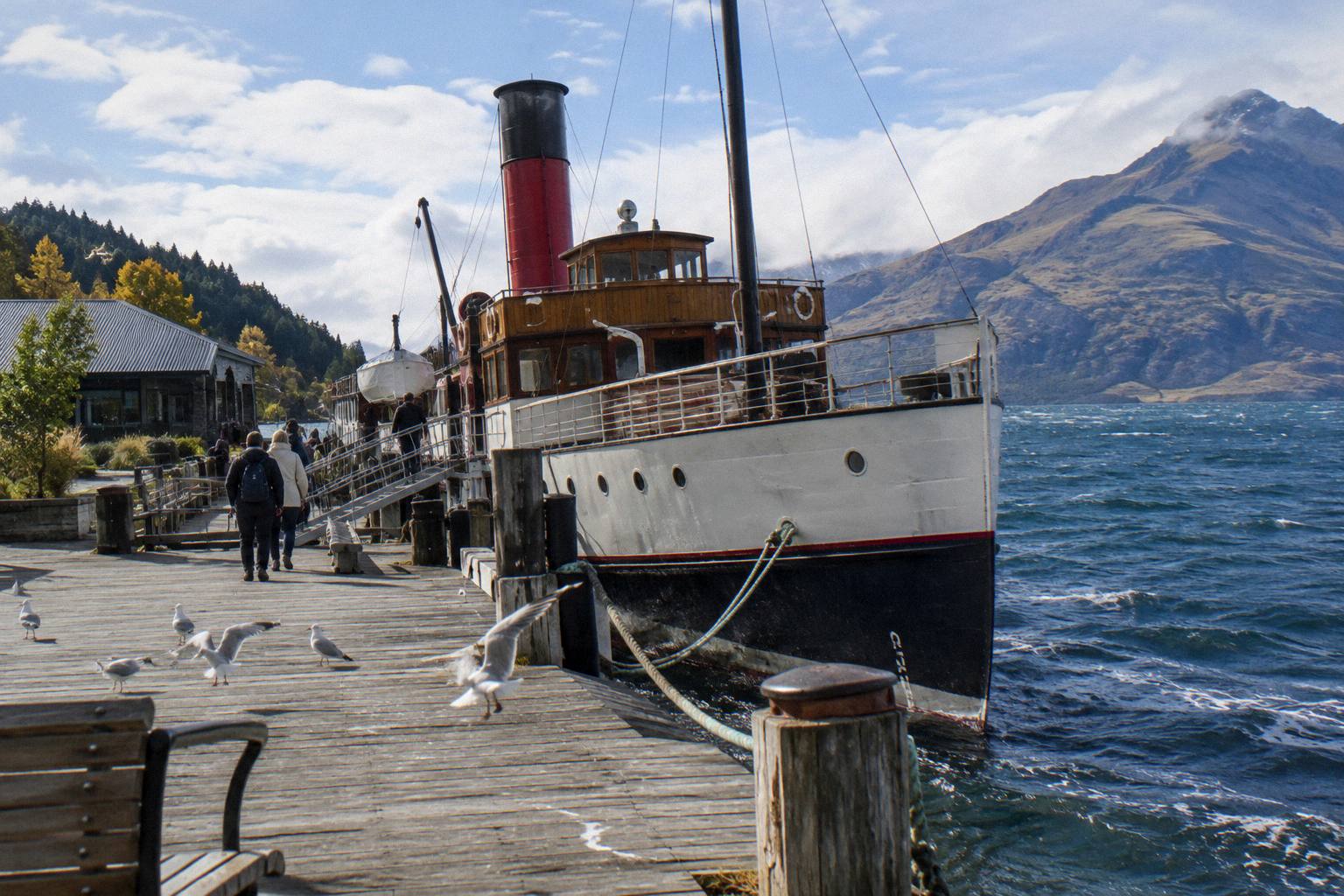
Neither vessel is fully wheelchair accessible and neither has an accessible toilet, since both are boarded via ramps. The BBQ restaurant itself is wheelchair accessible, so travellers who cannot tour the paddocks can still do a dining product with the amphitheatre show after the meal. Weather barely affects the BBQ dining, which runs indoors in the homestead rooms, though the walk to the boat and the dog show sit outside in whatever the day delivers, a point the bad weather guide expands on.
Personal medication rounds out the operator's packing list, and it is the item most often skipped. A farm loop of a few hours across gravel paths, plus a boat each way, sits far from a pharmacy, so whatever you carry daily should travel with you. Children and older walkers benefit from the non-slip footwear advice in particular, since the gravel is loose in patches near the paddocks.
Booking ahead is the single most repeated piece of operator advice, and the do you need to book in advance post tests it against each product. See dates on the booking calendar before locking accommodation around a sailing, and check the live price for your group size, since amounts vary by date.
What Trips People Up Before You Book
Most disappointment around the animals comes from three mismatches: booking a cruise-only ticket and expecting a farm landing, assuming hand-feeding happens on every product, and forgetting that the show sits after the BBQ meal rather than before the crossing. Each of these is a card-reading problem, not an operator problem, and each is avoidable by matching the product to the animal experience before paying.
The cruise-only trap is the expensive one. The steamship-only product is a 1.5 hour lake cruise with no farm landing, no animals and no meal, and the booking page shows the price for the date. It is a fine product, but it belongs in a vessel-context decision, not an animal one.
Hand-feeding belongs to the guided farm tour products. If feeding a sheep or standing beside Dougal is the reason for the trip, book one of the farm visit cards from NZ$139 per person, not a dining or cruise card, and confirm the inclusions on the product page when you check dates. The two farm-visit products differ in detail: the Shearing Demo Farm Visit adds a sheep shearing demonstration and the Nature Guide Farm Visit adds a nature guide, so compare the cards side by side rather than by price alone.
Finally, mind the clock and the calendar. Summer sailings cluster around six typical departure times from October to April, but your start time is chosen on the booking calendar, never assumed. And dietary needs for the BBQ go to RealNZ at booking, not at the wharf, because the kitchen prepares in advance.
Common Questions About The Farm Animals
What Animals Are At Walter Peak?
RealNZ names Highland cattle, sheep including merino, alpacas, deer, pigs and donkeys on its pages for the farm, and the resident Highland cow is Dougal. Heading dogs and huntaways work the amphitheatre show. No other species are published for the visitor operation.
Can You Feed The Animals At Walter Peak?
Yes, on the guided farm tour. Hand-feeding is part of the farm visit products, from NZ$139 per person, along with the paddock walk and tea in the woolshed. Guides manage where feeding happens.
Is There A Shearing Show At Walter Peak?
Yes. A live blade-shearing demonstration in the New Zealand blade technique follows a muster by working heading dogs and huntaways in a purpose-built amphitheatre. The farm visit products and the BBQ dining products include it.
Is Walter Peak A Working Farm?
Yes. Walter Peak High Country Farm is a 155 hectare working high-country farm run by RealNZ, with a station history of sheep grazing back to the 1860s and a merino wool sales record from the 1930s. The visitor tour operates inside that working setting.
Can You See The Animals On The BBQ Dinner Trip?
The amphitheatre farm show follows the BBQ meal, so the muster and blade-shearing are included, but the guided paddock walk with hand-feeding belongs to the farm tour products. A guest review notes the demonstration also runs in the dark on evening departures, lit for viewing.
Are The Walter Peak Animals There In Winter?
Yes. The farm operates year-round, and in winter RealNZ says the animals carry heavy coats, the farm is quieter, and the Remarkables sit snow-capped behind the show. Spring brings lambs.