Sheep Shearing And Sheepdog Demonstration At Walter Peak
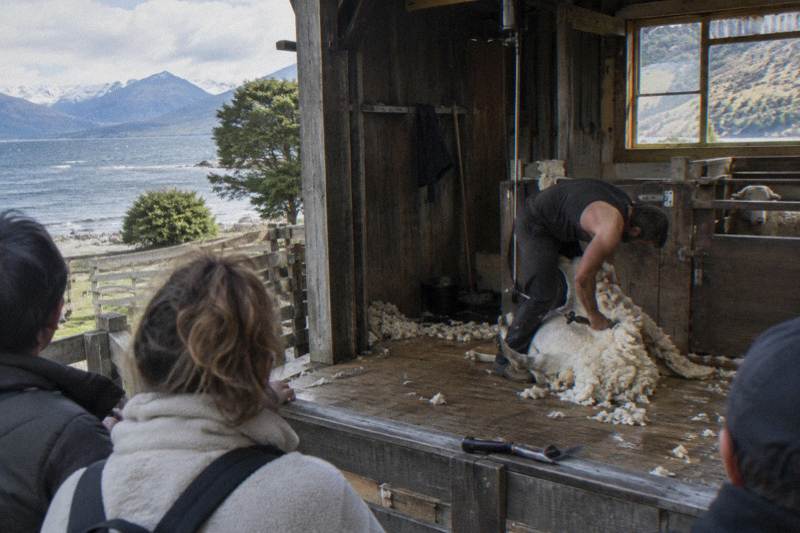
The sheepdog demonstration is the centrepiece of the Walter Peak farm visit: heading dogs and huntaways mustering sheep in a purpose-built amphitheatre, followed by a live blade-shearing demonstration in the New Zealand style.
Short answer
The demonstration runs inside most Walter Peak farm experiences. Working heading dogs and huntaways muster sheep in a purpose-built amphitheatre, then a shearer gives a live blade-shearing demonstration in the New Zealand blade technique. Farm-visit trips that include the show start from NZ$139 per person and run about 3.5 hours including the cruise, with free cancellation up to 24 hours before.
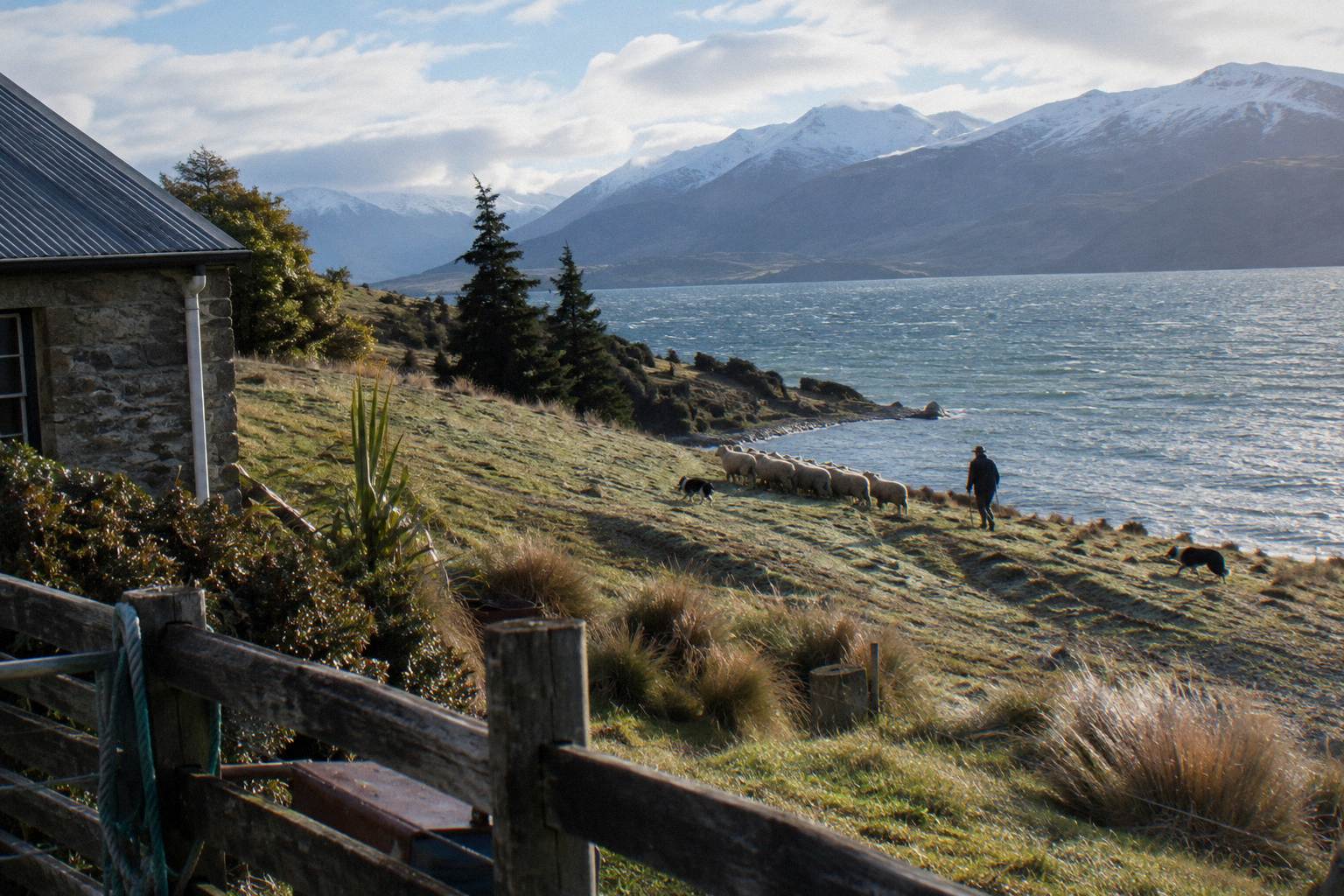
Walter Peak High Country Farm sits on the western shore of Lake Whakatipu, a 45 minute steamship crossing from Queenstown, and the reason most visitors make that crossing is the farm show. This page covers the sheepdog muster and blade-shearing demonstration in detail: what actually happens in the amphitheatre, which bookable trips include it, and what to sort out before you go. It sits alongside the flagship farm visit itself, the shearing demo farm visit and lake cruise, which puts the amphitheatre show at the centre of the day.
| Fact | Detail |
|---|---|
| What the show is | Working heading dogs and huntaways mustering sheep, followed by a live blade-shearing demonstration |
| Where it happens | A purpose-built amphitheatre at Walter Peak High Country Farm |
| Shearing style | New Zealand blade technique, demonstrated live |
| Trips that include it | The farm-visit products and the BBQ dining products |
| Whole trip length | About 3.5 hours including the lake cruise |
| Farm-visit price | From NZ$139 per person |
| Cancellation | Free up to 24 hours before start |
| Terrain | Gravel paths; an unaided wheelchair user cannot tour the farm |
What The Sheepdog Demonstration At Walter Peak Actually Is
The sheepdog demonstration is a live working-dog display in a purpose-built amphitheatre at Walter Peak High Country Farm. Heading dogs and huntaways muster sheep in front of the audience, followed by a blade-shearing demonstration in the New Zealand style. RealNZ, the operator, runs it as part of its farm experiences rather than as a standalone ticket, and the animals are working farm stock, not a trained show troupe.
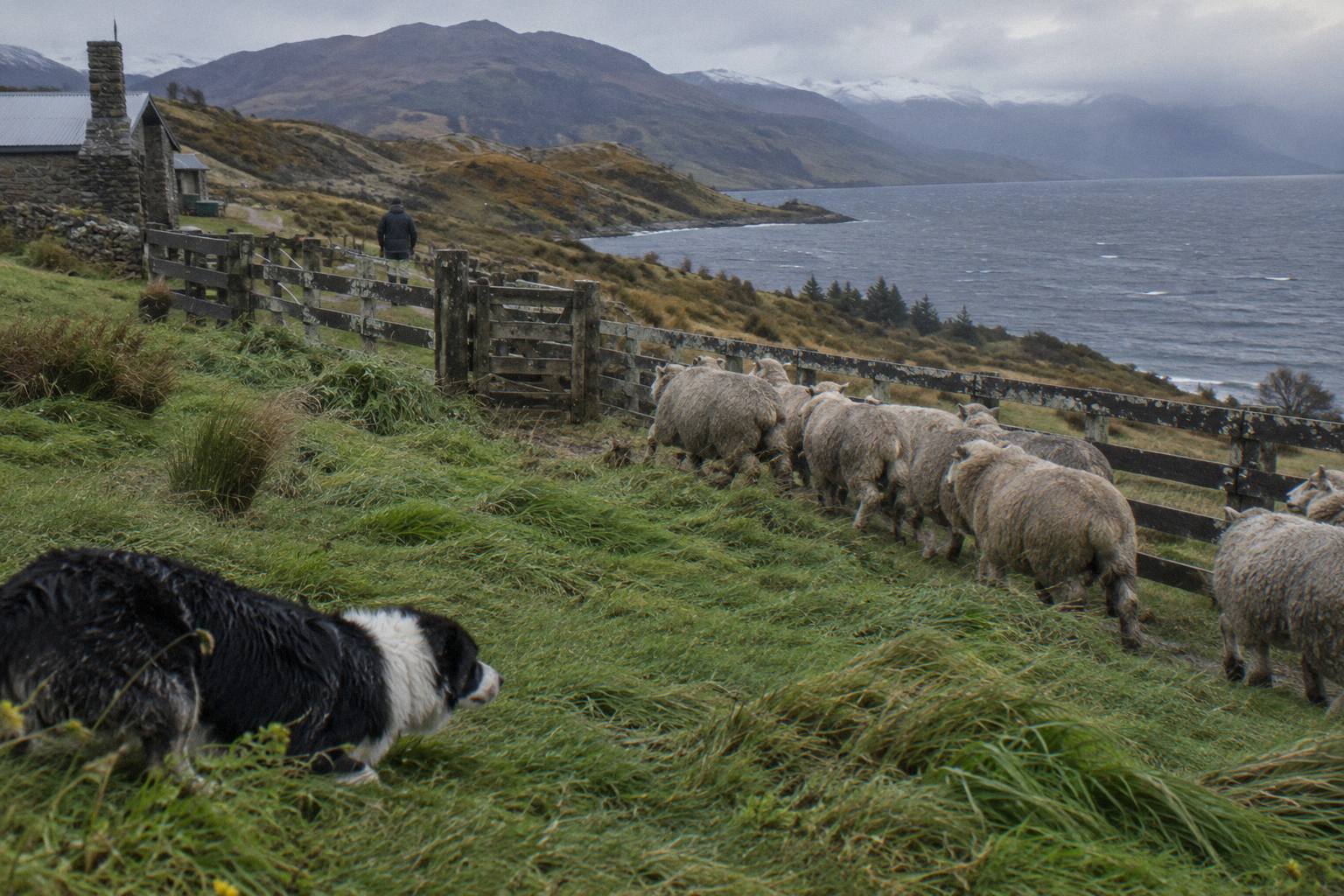
The demonstration has two halves. In the first, a handler works a team of dogs through the sheep: heading dogs, which cast wide and circle the flock, and huntaways, which use their deep bark to push sheep forward from behind. Both types are standard working dogs on New Zealand sheep stations, and the amphitheatre setting lets the audience see the whole movement unfold rather than catching fragments of it across a paddock. The second half is shearing. A shearer takes a sheep through a live blade-shearing demonstration using the New Zealand blade technique, which works with hand blades rather than machine clippers.
The setting matters as much as the content. The amphitheatre is purpose-built for the display, carved into the hillside of the 155 hectare farm at the base of Walter Peak, and the show runs outdoors on gravel and grass. RealNZ's own Walter Peak High Country Farm page describes the farm, the crossing, and the experiences that land there. Because the farm is a working high-country property rather than a purpose-built attraction, the animals on show are the farm's own stock, and the demonstration doubles as a genuine piece of station work.
A note on scope: the demonstration is not sold on its own. There is no ticket that covers only the amphitheatre. Every product that includes the show also includes the lake crossing from Queenstown, and most add either the woolshed tea or a full BBQ meal at the Colonel's Homestead. The practical question is therefore not whether to see the show but which of the show-bearing trips fits your day, and the next section works through that choice.
Which Walter Peak Trips Include The Sheepdog Show
The show is included in the farm-visit products and the BBQ dining products. On the farm-visit side, the "Queenstown: Walter Peak Farm Tour and Lake Cruise" and the "Queenstown: Queenstown Lake Cruise and Walter Peak Farm Tour" both include the amphitheatre demonstration plus a woolshed tea. On the dining side, the BBQ products include the show around the meal, with the demonstration following the food on the evening trip. No product sells the show alone.
The clearest way to compare them is a table. What follows covers every show-bearing trip listed here, with its price where one is published and its meal format. Amounts are New Zealand dollars, and prices vary by date and group; the booking page shows the price for the date you choose.
| Trip | Show | Meal | Price From | Duration |
|---|---|---|---|---|
| Shearing Demo Farm Visit, Tea | Included | Woolshed tea of scones, cakes, slices and sandwiches | NZ$139 per person | 3.5 hours |
| Nature Guide Farm Visit, Tea | Included | Woolshed tea | NZ$139 per person | 3.5 hours |
| Gourmet BBQ, Lake Cruise | Included | Buffet BBQ at the Colonel's Homestead | NZ$175 per person | 3.5 hours |
| BBQ Buffet, Lake Cruise | Included | Buffet BBQ | NZ$175 per person | 3.5 hours |
| Gourmet BBQ Lunch, GST Included | Included | Buffet BBQ lunch | Booking page shows it for the date | 3.5 hours |
| Evening Dinner, Wakatipu Cruise | Included, after the meal | Evening BBQ dinner | Booking page shows it for the date | About 4 hours |
Two distinctions are worth pinning down. First, the two NZ$139 farm-visit products are separate bookable cards with the same price and duration; the Shearing Demo Farm Visit adds a named sheep shearing demonstration and the Spirit of Queenstown crossing, while both it and the Nature Guide Farm Visit meet at the RealNZ Visitor Centre, 88 Beach Street. Second, the evening dinner product is the only evening option, and on that trip the demonstration follows the meal, run lit after dark, which gives it a noticeably different character from the daytime sittings.
The Gourmet BBQ product, at 4.8 from 3,272 reviews, is the most widely reviewed of the show-bearing trips, and the Nature Guide Farm Visit carries 4.8 from 1,178 reviews. The Shearing Demo Farm Visit shows 4.8 from 36 reviews, a much smaller pool. Ratings are tied throughout to their own products, and none of them ranks above another here. If the demonstration is the reason you are going, the two farm-visit cards put the amphitheatre at the centre of the visit; the BBQ cards wrap the same show around a full meal. Whether a full gourmet BBQ lunch at Walter Peak is worth the step up in price is a fair question, and it has its own comparison in a separate guide.
For depth on the full farm-visit format, the woolshed tea, and the hand-feeding that surrounds the show, read the Walter Peak High Country Farm visitor guide before choosing.
Heading Dogs And Huntaways: How The Muster Works
The muster half of the demonstration sets two distinct dog types to work on the same flock. Heading dogs, silent and quick, circle wide and turn the sheep; huntaways, built to bark, drive the flock forward from behind with voice alone. The handler directs them with whistles and calls from the amphitheatre, and the audience watches a full station muster compressed into one fenced hillside.
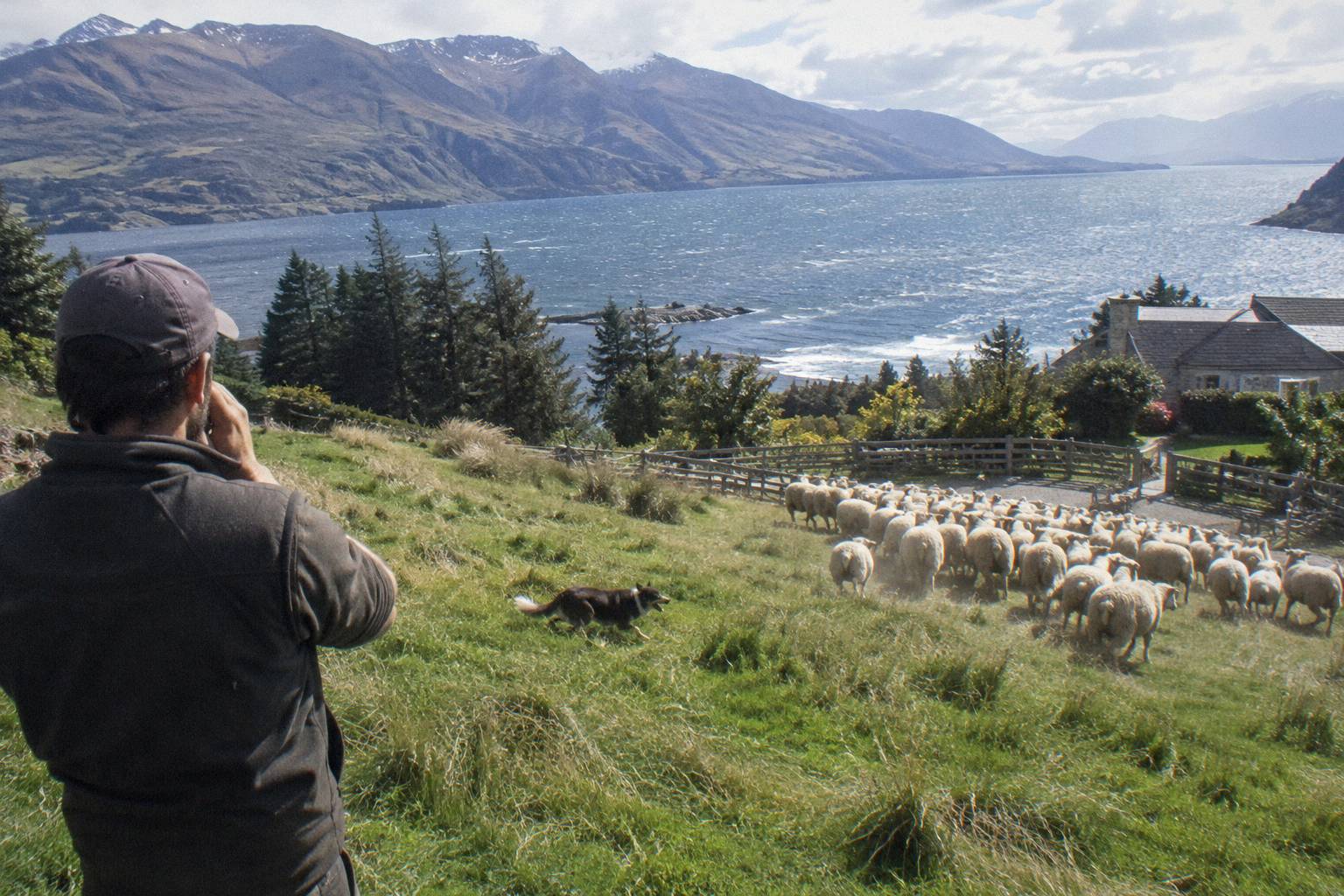
The two dog types reflect how mustering actually works on New Zealand high-country runs. Heading dogs are close relatives of border collies, bred to think their way around a flock and to move it with eye and positioning rather than noise. Huntaways are a New Zealand development, larger and louder, bred to bark on command so that sheep keep moving through steep, broken country where a silent dog would struggle to be felt. Seeing both worked in the same small amphitheatre makes the division of labour unusually clear: one dog shapes the flock's direction, the other supplies the pressure.
| Dog Type | Working Style | Role In The Muster |
|---|---|---|
| Heading dog | Silent, wide casting, works on eye and positioning | Circles out and turns or holds the flock's direction |
| Huntaway | Barks on command, larger build | Drives the sheep forward from behind with voice |
What the audience gets is the dogs' trained response in real time. The handler sends a dog out, stops it, casts it left or right, and walks the sheep through gates or into a corner, all with whistle commands that carry across the hillside. Because the sheep are farm stock rather than performers, their behaviour varies with the day, the weather, and the dogs' mood, which is precisely the point: the display shows something closer to a working morning on the station than a rehearsed act. RealNZ's ultimate guide to the farm covers the shape of a Walter Peak day, the animals, and the seasonal differences, including summer departure patterns.
For visitors weighing this against other farm content, the muster is the segment children tend to remember, and the question of taking Walter Peak with kids in a farm-visit slot comes up often. The amphitheatre display is outdoor seating on a hillside, so the practical notes about clothing and footing in that guide apply to the show directly.
If the muster and shearing display are the main draw, check the live price for the farm-visit cards: the booking calendar shows dates and the current fare for each departure.
The Blade Shearing Half Of The Show
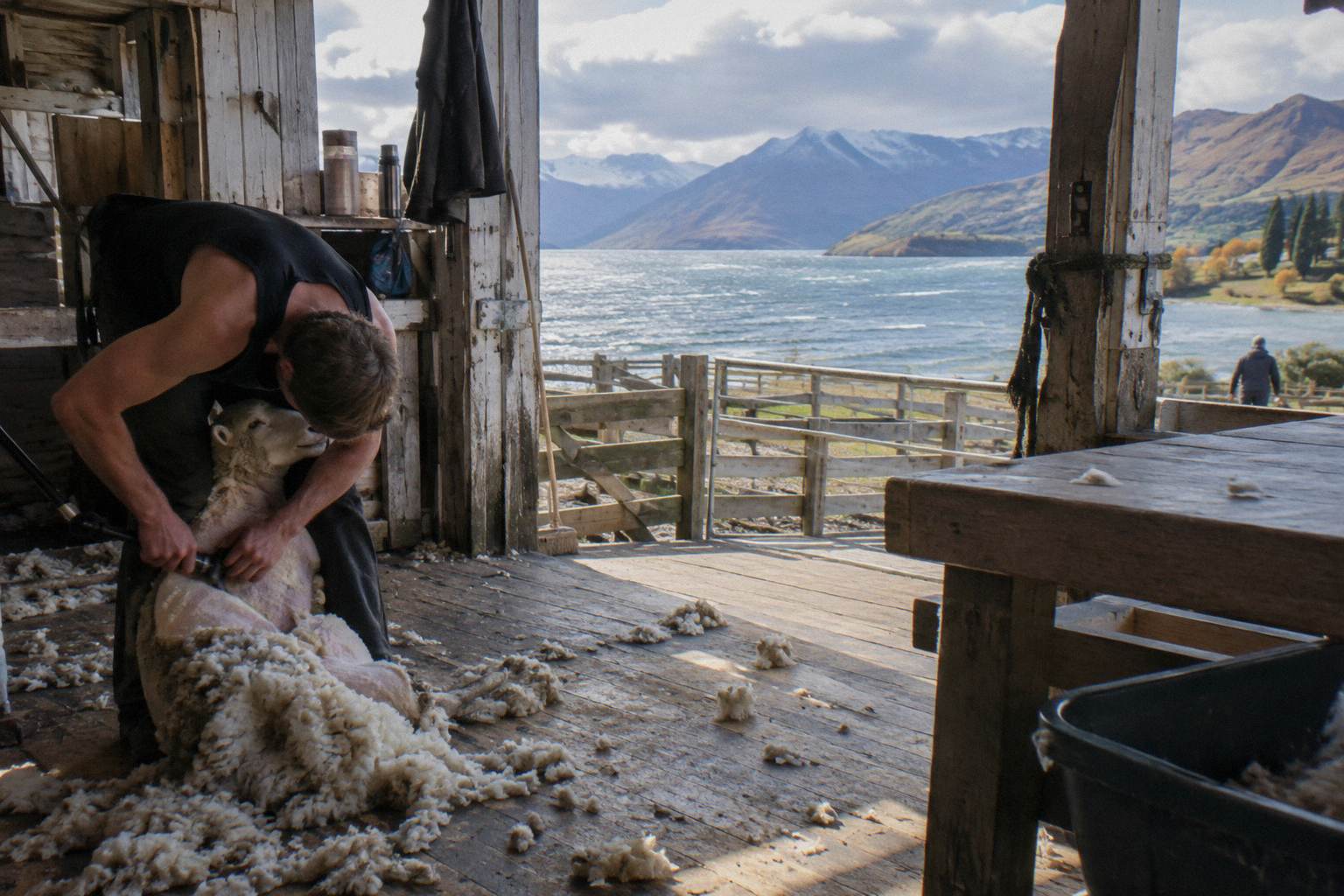
After the muster, a shearer demonstrates blade shearing, the New Zealand blade technique, on a sheep in front of the audience. Blade shearing uses hand shears rather than machine heads, and the demonstration shows the full fleece coming off in one piece while the shearer explains the technique. It is a skilled-craft display rather than a speed contest, and it connects directly to the farm's merino history.
Blade shearing is the older of the two shearing methods and still the preferred one in much of high-country New Zealand, where a machine head can cut too close on fine-wool sheep in cold conditions. The demonstration shows the shearer positioning the sheep with legs and balance, working the blades in long strokes, and keeping the fleece intact as it peels away. Watching it done well is quietly physical: the whole display rests on the shearer holding a large, unhappy animal calm through positioning alone, and the commentator typically narrates both the technique and the animal-handling logic behind it. Other pages covering the same trip are gathered on Walter Peak Farm Tours.
The fleece connection is real history rather than set dressing. Walter Peak merino fleece topped wool sales in New Zealand and Australia three times in the 1930s, at a period when the station ran 40,000 sheep across 170,000 acres with up to 50 full-time staff, and the Mackenzie family, who farmed the property for about 80 years from the late 1880s, are credited with developing many of the principles of successful high-country farming. The farm's own history page carries that story, along with the gardens and the homestead. The blade demonstration is the living end of that lineage.
The show length is not published, so plan around the trip duration rather than the segments: every show-bearing product runs about 3.5 hours door to door including the cruise, with the evening dinner trip at about 4 hours. On the evening BBQ product the demonstration follows the meal and runs lit after dark, which changes the look of both the muster and the shearing entirely. If the after-dark version appeals, the evening BBQ dinner and cruise has the full breakdown of that product.
On the BBQ trips the demonstration is one element of a longer arc: crossing, meal at the Colonel's Homestead, show, and return sailing. Travellers who want that full-arc version can check availability for the Gourmet BBQ and lake cruise and compare its dates against the farm-visit cards.
The Amphitheatre, The Weather, And What To Wear
The demonstration takes place in an open-air, purpose-built amphitheatre, so weather is part of the deal. Queenstown runs four seasons in a day, with summer around 19 to 29 °C, autumn 15 to 25, winter 5 to 10, and spring 9 to 15, and the show runs in all of them. RealNZ's packing advice is non-slip shoes or boots, a warm jacket, sunscreen, a camera, and personal medication.
The seating and sightlines are built for the display: the amphitheatre steps up the hillside so the whole muster pattern stays visible from every row, and the Remarkables sit snow-capped behind the show through the colder months, a backdrop RealNZ itself highlights for winter visits. The trade-off is exposure. There is no shelter from wind or drizzle in the amphitheatre, and the walk from the wharf to the seats, and back to the homestead or woolshed afterwards, is on gravel farm paths. That footing is also why an unaided wheelchair user cannot tour the farm, and the detailed accessibility notes for Walter Peak cover the paths, the vessels, and the restaurant separately, since the BBQ restaurant itself is wheelchair accessible via an inclined gravel path even though the farm tour is not.
| Season | Typical Daytime Range | What It Means For The Show |
|---|---|---|
| Summer | 19 to 29 °C | Sun exposure in open seating; sunscreen and a hat matter |
| Autumn | 15 to 25 °C | Variable; layers and a warm jacket |
| Winter | 5 to 10 °C | Cold in exposed seating; boots and heavy jacket, snow on the Remarkables behind the show |
| Spring | 9 to 15 °C | Changeable with lambs on the farm; windproof layer |
Weather cancellations are rare but real, and the operator and the lake decide what runs on any given day. The booking calendar is the source for whether a sailing operates, and free cancellation up to 24 hours before start applies across every show-bearing product, which is worth having in reserve if a front is forecast. A fuller treatment of seasonality, including the winter look of the farm and spring lambs, sits in the best time to visit Walter Peak guide, and the practical packing list is expanded in what to wear and bring to Walter Peak.
Watching The Show With Children
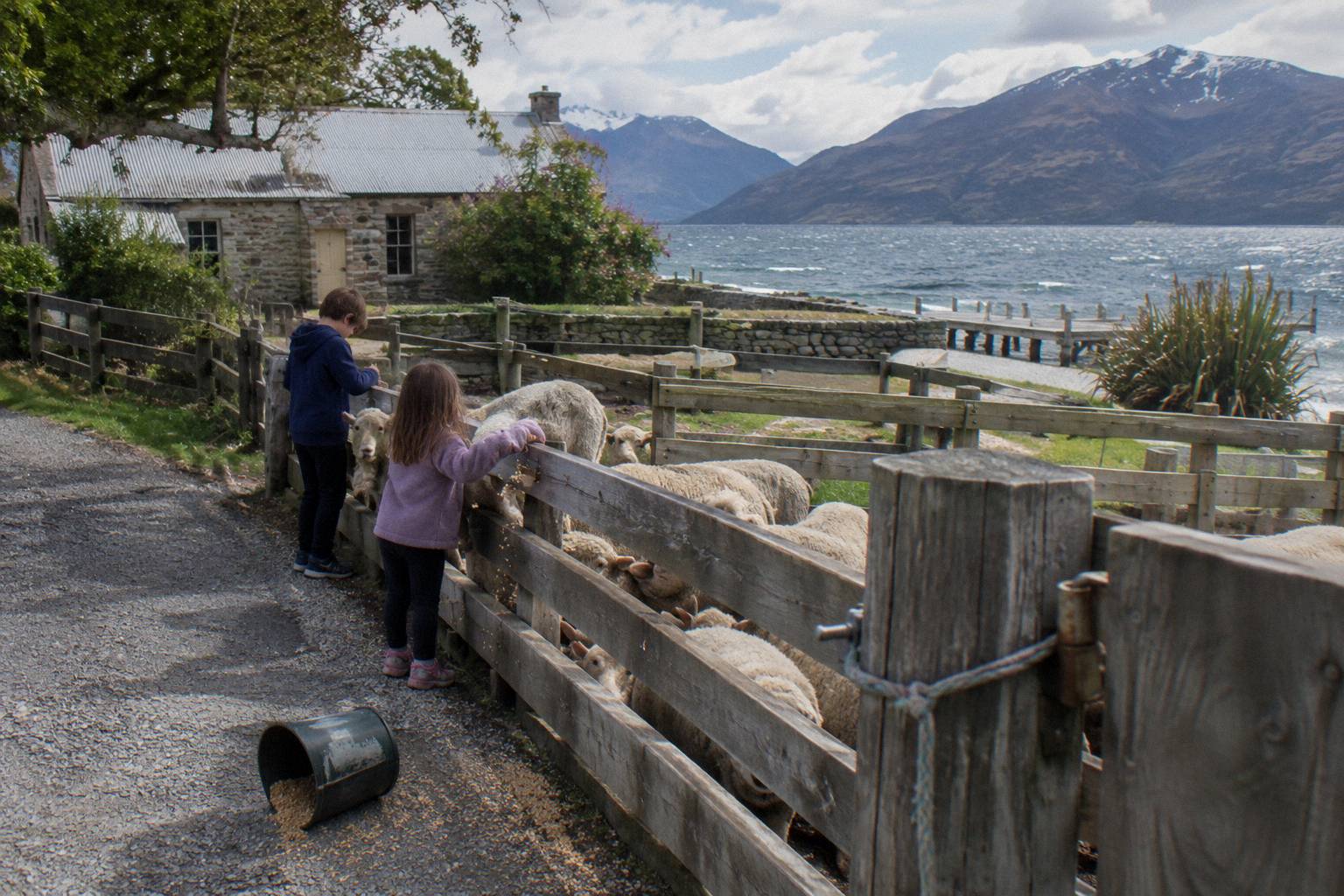
Children can attend every show-bearing product, and the muster is the segment built for them: dogs working at speed, sheep responding visibly, and a handler narrating in plain language. The two farm-visit cards add hand-feeding of the farm animals, which RealNZ names as Highland cattle including the resident cow Dougal, sheep including merino, alpacas, deer, pigs and donkeys, plus the woolshed tea. No age or size limits apply to the farm-visit or BBQ trips.
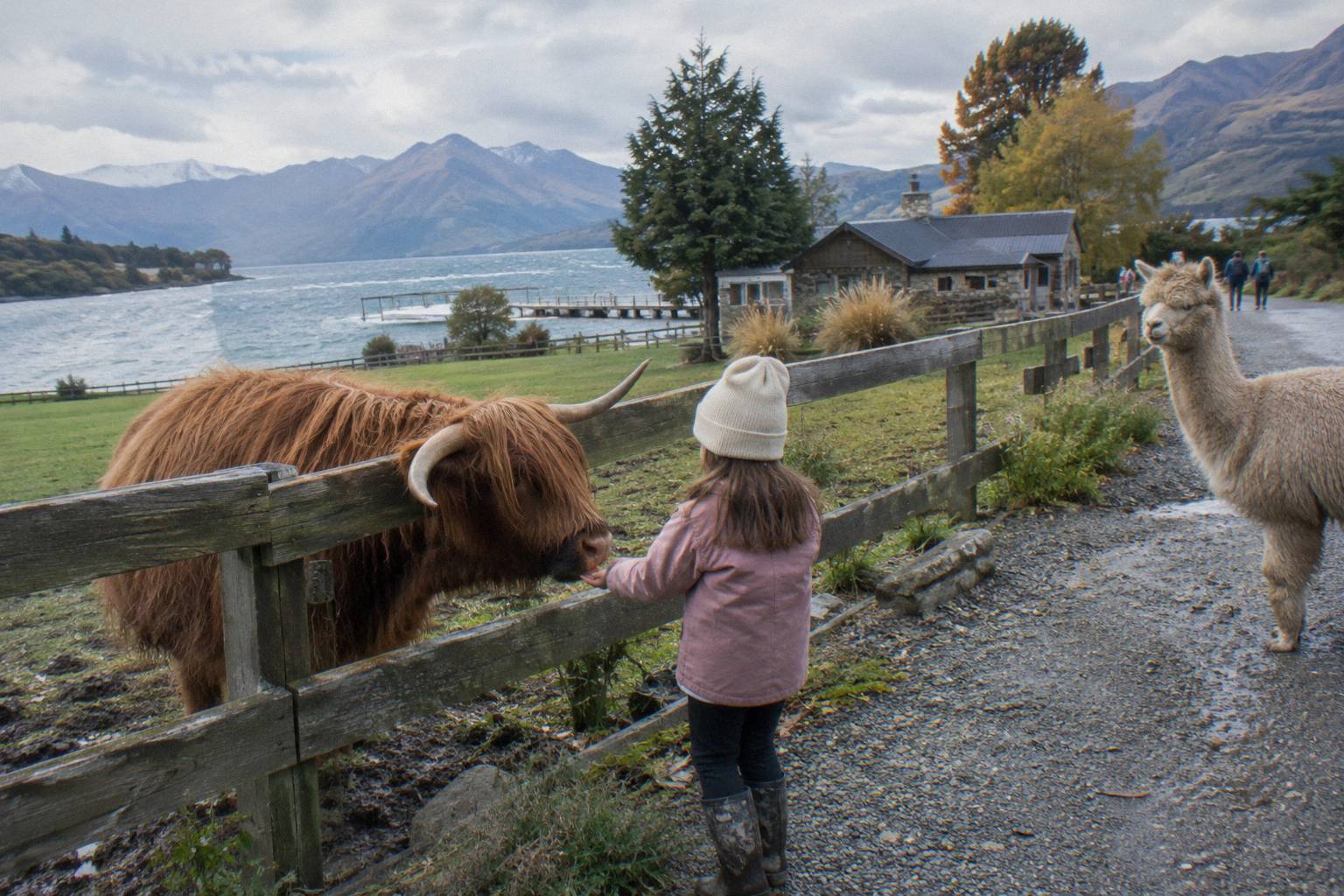
The animal list is worth setting expectations against. RealNZ's pages name exactly those six animal groups for the farm, and the hand-feeding on the farm tour happens under supervision near the woolshed and paddocks rather than inside the amphitheatre itself. The demonstration section of the visit is watch-only, which suits younger children fine: the dogs do the moving, the sheep do the running, and the shearing half runs long enough to reset restless attention. The woolshed tea afterwards gives the whole party a seated break before the return cruise.
Timing is the main lever with children. Every show-bearing trip runs about 3.5 hours from check-in, and RealNZ asks that you allow 30 extra minutes for parking and reaching the RealNZ Visitor Centre at 88 Beach Street, so the realistic door-to-door day is closer to four and a half hours. Free street parking around the wharf is limited, with paid buildings on Man Street and Church Street and car parks on Boundary Street and Ballarat Street about 15 minutes walk away. The check-in and parking guide for Steamer Wharf maps those options, and the half-day timeline for Walter Peak shows how the whole outing fits together hour by hour.
Dietary needs at the woolshed tea or the BBQ buffet should go to the operator at booking, so the kitchen can prepare; vegetarian dishes are on the buffet, and vegan and gluten-free specifics are not published, so ask the operator once. For the wider family-planning picture, including which slot suits which age group, the Walter Peak with kids farm visit guide carries the full treatment.
What Trips People Up Before You Book
The recurring mistakes are simple ones: buying a trip that does not include the show, underestimating the parking and check-in window, expecting a published show length, and assuming the demonstration is weatherproof seating. The horse trek cards are separate products built around the ride, not the amphitheatre, and the cruise-only steamship card makes no farm landing at all. Each is a fine product, but none is a ticket to the sheepdog muster.
The first trip-up is product confusion. The tours covered here include several Walter Peak options, and only the farm-visit and BBQ dining products include the demonstration, as the table earlier in this page sets out. The horse trek products centre on a guided 40 minute ride to a lookout with minimum age 7, minimum height 120 cm and maximum weight 95 kg, and the cruise-only steamship card is a 1.5 hour lake sail with no landing. If the sheepdog demonstration is the goal, start from the show-bearing list and nothing else.
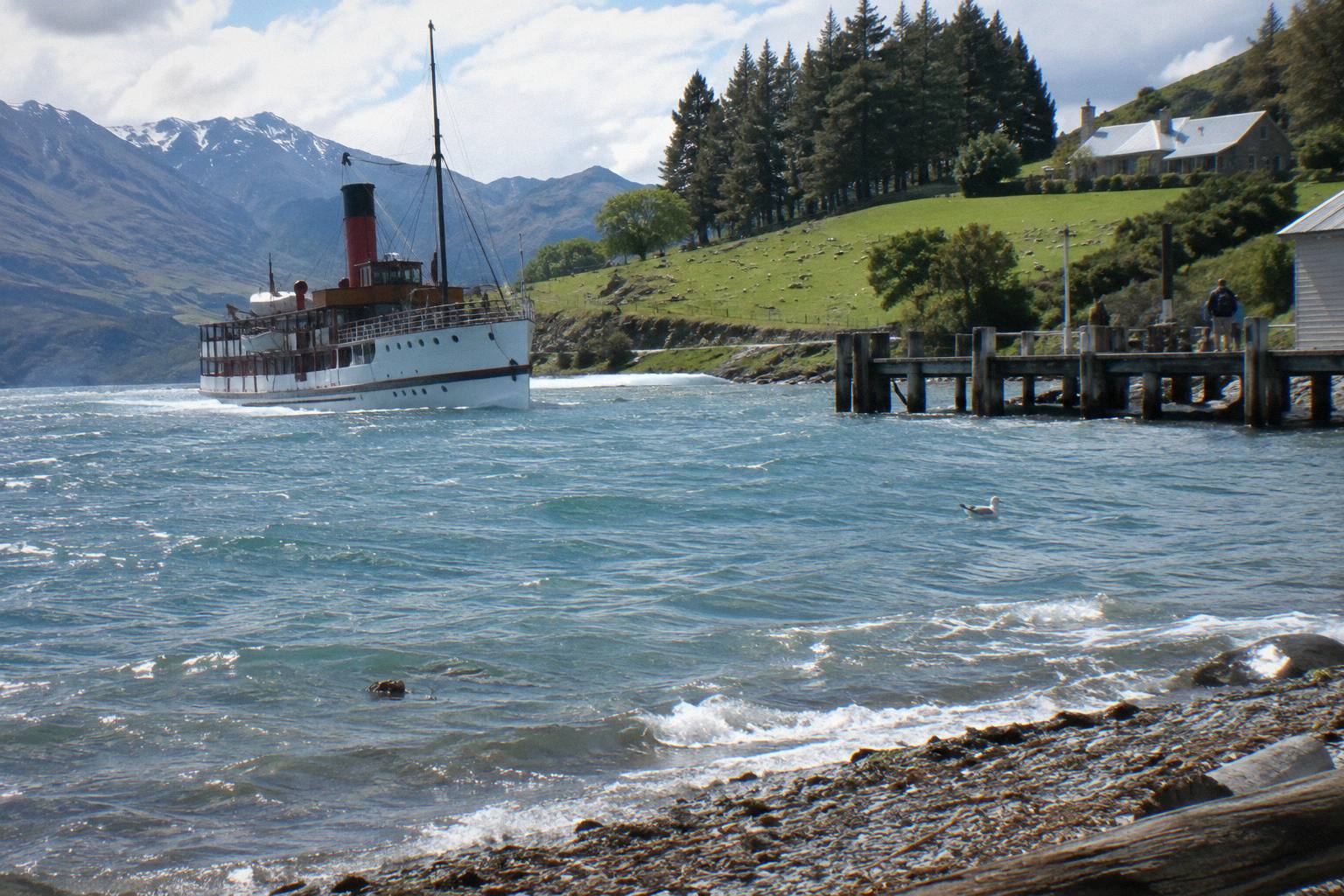
The second is timing. RealNZ recommends booking ahead because vessel space is limited, and dining sittings fill through school holidays and peak summer. Typical summer departures for the Earnslaw, per RealNZ, run at 9:00am, 11:00am, 1:00pm, 3:00pm, 5:00pm and 7:00pm from October to April, and your start time is chosen on the booking calendar rather than fixed on the ticket. The third is expectation: no show duration is published, so plan the day around the 3.5 hour trip length rather than a segment-by-segment schedule. The fourth is logistics on the day: card payments only on the vessels and at the farm, no cash, and 30 minutes of slack for parking.
| Trip-Up | The Fix |
|---|---|
| Booking a non-show product | Confirm the card is a farm-visit or BBQ dining product before paying |
| Cutting the check-in window fine | Allow 30 extra minutes for parking and the walk to 88 Beach Street |
| Expecting a published show length | Plan around the about 3.5 hour trip, not the segments |
| Dressing for the restaurant, not the amphitheatre | Non-slip shoes or boots and a warm jacket; open-air seating |
| Assuming cash works | Card payments only on the vessels and at the farm |
The fifth is the meeting point, which differs by card. Most show-bearing trips meet at the RealNZ Visitor Centre, 88 Beach Street, with pre-purchased tickets collected in front of the TSS Earnslaw at the Steamer Wharf dock; the BBQ Buffet card asks for arrival 30 minutes early; no Walter Peak option includes hotel pickup; every trip meets at the RealNZ Visitor Centre, 88 Beach Street, before the lake crossing. Free cancellation up to 24 hours before start applies to every product named here. Whether to book Walter Peak and Earnslaw tickets in advance has its own walkthrough, as does the question of needing to book Walter Peak in advance at busier times of year.
Before locking a card in, check dates on the booking calendar for whichever trip leads your list: the two farm-visit cards and the BBQ cards all run the same crossing and the same amphitheatre, so the calendar often decides the answer for you.
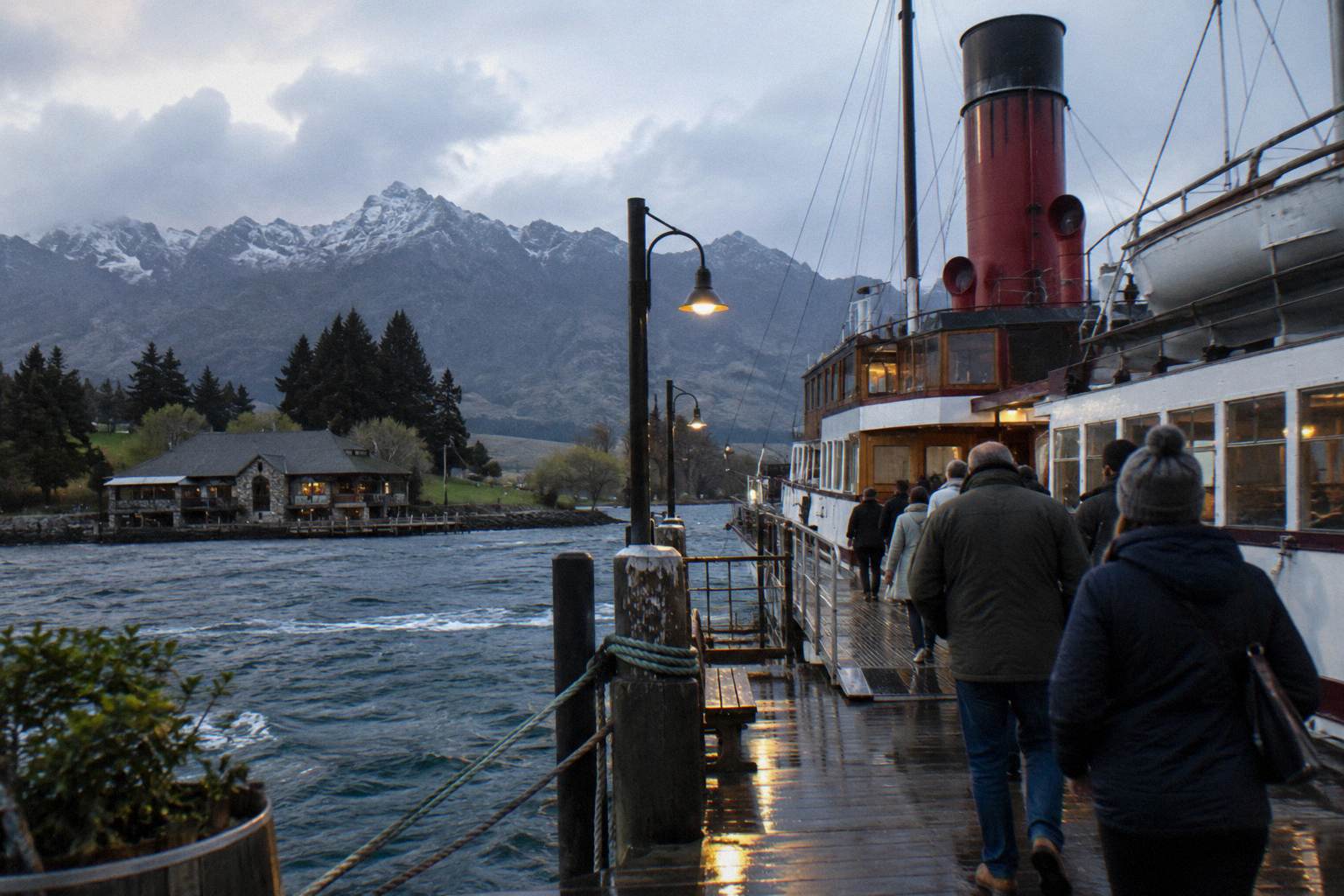
A final planning note on the vessel side: the crossing itself is a 45 minute sail on the coal-fired TSS Earnslaw, built in Dunedin in 1912 and, per the Wikipedia entry for the TSS Earnslaw, believed the only coal-fired passenger steamship still in operation in the southern hemisphere, burning about 1.5 tonnes of coal per return trip. Visitors can go below to the engine room and stoker room on the crossing, which pairs well with the shearing display as a working-machinery double. The evening dinner card is the only product that runs after dark, and the after-dark demonstration on that trip is the version returning guests tend to describe most vividly; see dates for it on the calendar before assuming a sailing exists for your evening.
Whether the whole outing justifies its price is a fair closing question, and the is Walter Peak farm worth it assessment works through it against the alternatives on the lake. Between the muster, the blades, the woolshed tea, and a steamship crossing each way, the demonstration products deliver the densest single block of high-country station life available on a half day from Queenstown.
Common Questions About The Farm Show
Does Every Walter Peak Trip Include The Sheepdog Demonstration?
No. The farm-visit products and the BBQ dining products include the amphitheatre show. The horse trek products centre on the ride, and the cruise-only steamship card makes no farm landing at all. Check the inclusions on the specific card before booking.
How Long Is The Walter Peak Sheepdog Demonstration?
No show duration is published. Plan around the trip length instead: the show-bearing products run about 3.5 hours including the lake cruise, and the evening dinner product runs about 4 hours.
Do You See Shearing As Well As The Dogs?
Yes. The demonstration has two halves: working heading dogs and huntaways mustering sheep, then a live blade-shearing demonstration using the New Zealand blade technique.
Can Children Watch The Demonstration?
Yes, and the muster is the segment most families remember. No age or size limits apply to the farm-visit or BBQ products; the minimum age 7, minimum height 120 cm and maximum weight 95 kg limits belong to the horse trek products only.
What Happens To The Show In Bad Weather?
The amphitheatre is open-air, so the show runs in the weather of the day, and the operator and the lake decide what sails. Bring non-slip shoes and a warm jacket. Free cancellation up to 24 hours before start applies to every show-bearing product.
Which Trip Is The Cheapest Way To See The Sheepdog Demonstration?
The two farm-visit cards, from NZ$139 per person, both include the show and the woolshed tea. The BBQ dining cards cost more and add the buffet meal at the Colonel's Homestead. Prices vary by date; the booking page shows the fare for the date you choose.