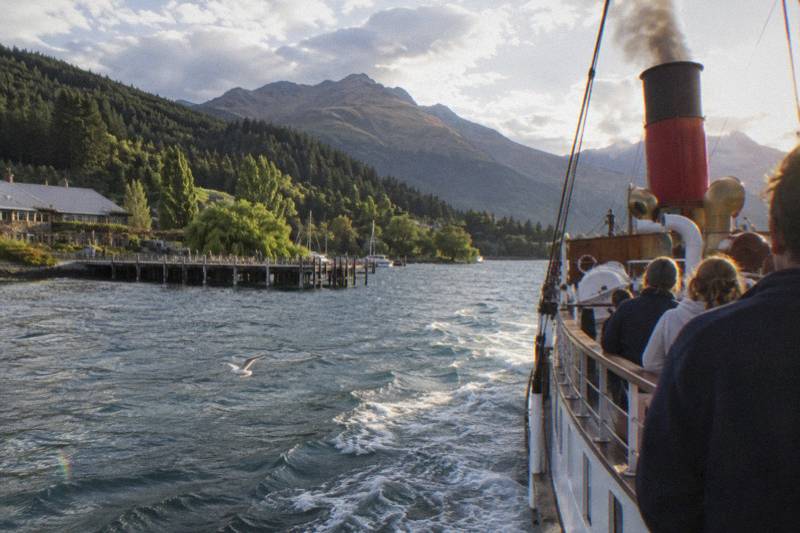
TSS Earnslaw History: The Lake Wakatipu Steamship Since 1912
The TSS Earnslaw has crossed Lake Whakatipu since 1912, surviving a near scrapping, a change of operator and eight decades of mountain weather to become the last coal-fired passenger steamship of her kind in the southern hemisphere.
Short answer
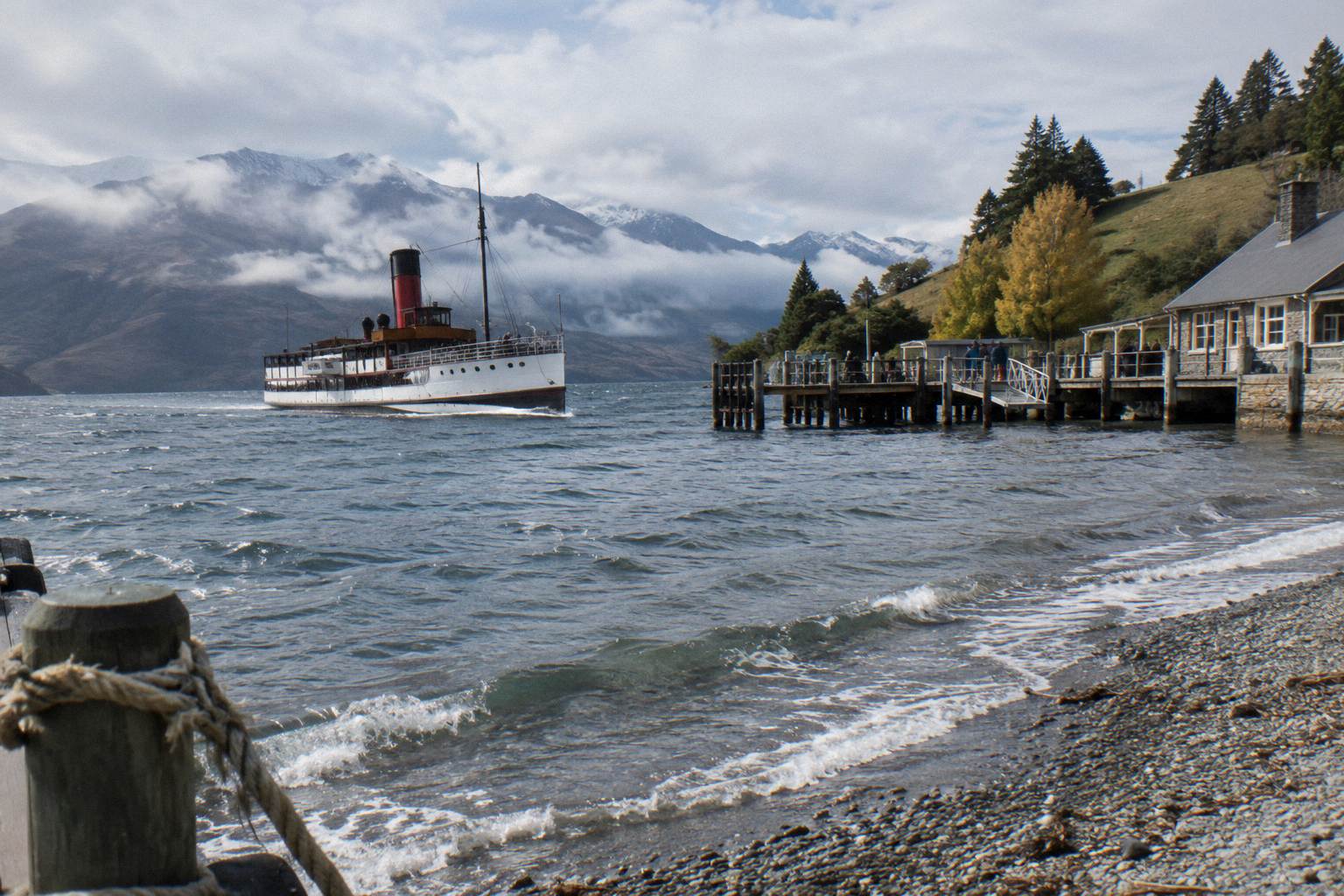
The TSS Earnslaw was built in Dunedin in 1912 by John McGregor and Company for New Zealand Railways, taken apart, railed to Kingston and reassembled on Lake Wakatipu. Nearly scrapped in 1968, she was taken on by Fiordland Travel, now RealNZ, from 1969. She still burns about 1.5 tonnes of coal per return trip and crosses to Walter Peak in 45 minutes.
Sailing on the Earnslaw is the reason many people end up at Walter Peak at all, and the ship herself is the draw for plenty more. For readers who want to move straight from history to a booking, the steamship cruise product page covers the 1.5 hour sail in detail. Her history explains almost everything about the trip: why she smells of coal, why her engine room is open to visitors, and why a vessel launched in 1912 is still the working heart of Lake Whakatipu tourism more than a century later.
| Fact | Detail |
|---|---|
| Launched | 1912, built in Dunedin by John McGregor and Company |
| Built for | New Zealand Railways |
| Power | Coal-fired steam engines, about 1.5 tonnes of coal per return trip |
| Length | More than 48 metres |
| Operator today | RealNZ, under its earlier name Fiordland Travel since 1969 |
| Funnel | Painted red after a 1984 refit |
| Crossing to Walter Peak | 45 minutes each way |
| Famous passengers | Queen Elizabeth II and Prince Philip, 1990 |
What Is The TSS Earnslaw?
The TSS Earnslaw is a coal-fired passenger steamship that has operated on Lake Whakatipu since 1912, described by RealNZ as the only coal-fired passenger steamship in operation in the southern hemisphere, and she still runs on the same lake, the same route and the same basic machinery that carried her first passengers. The initials stand for Twin Screw Steamer, a reference to her two propeller shafts, according to the Wikipedia entry for the TSS Earnslaw. She measures more than 48 metres from stem to stern and burns about 1.5 tonnes of coal on a return trip across the lake, shoveled by hand into boilers that still drive her original triple-expansion machinery. Few working vessels anywhere can claim a century of unbroken service on the same water, and she is one of them.
She is not a museum piece behind ropes. The Earnslaw carries paying passengers every day of the year except her annual maintenance and survey period, connecting Queenstown with Walter Peak High Country Farm on the western shore. Visitors can walk below decks to the engine room and stoker room while the engines turn, watch coal fire glow under the boilers, and read the mini-museum housed aboard. There is a Promenade Cafe and a licensed bar, and live piano features on some sailings. A crossing takes 45 minutes on the Earnslaw, against about 30 to 35 minutes on the modern catamaran that shares the route, a comparison RealNZ lays out in its own lake cruise comparison guide.
Her survival was never guaranteed. Steamships like her were scrapped by the score across New Zealand once roads improved, and she came within reach of the breaker's torch herself in 1968 before a tourism operator stepped in. That rescue, her earlier life as a railway vessel, and her later life as a Queenstown icon each fill a chapter below. Together they explain why a visit to Walter Peak still begins, for most people, with the smell of coal smoke drifting across the wharf at Queenstown.
How Was The Earnslaw Built In 1912?
She was built in Dunedin in 1912 by John McGregor and Company for New Zealand Railways, then taken apart, carried by rail to Kingston at the southern end of Lake Wakatipu, and reassembled on the lakeshore, because the lake itself was the highway and no road could deliver a ship of her size. The lake was the transport spine of the district. Before roads wrapped around its shores, the railway ran to Kingston and the lake fleet carried freight, stock and people from there to Glenorchy, Queenstown and the farming stations along the western shore, including Walter Peak. A ship that could not be delivered by water had to arrive in pieces, so her hull plating, frames and machinery made the journey south by rail and were riveted back together at the water's edge.
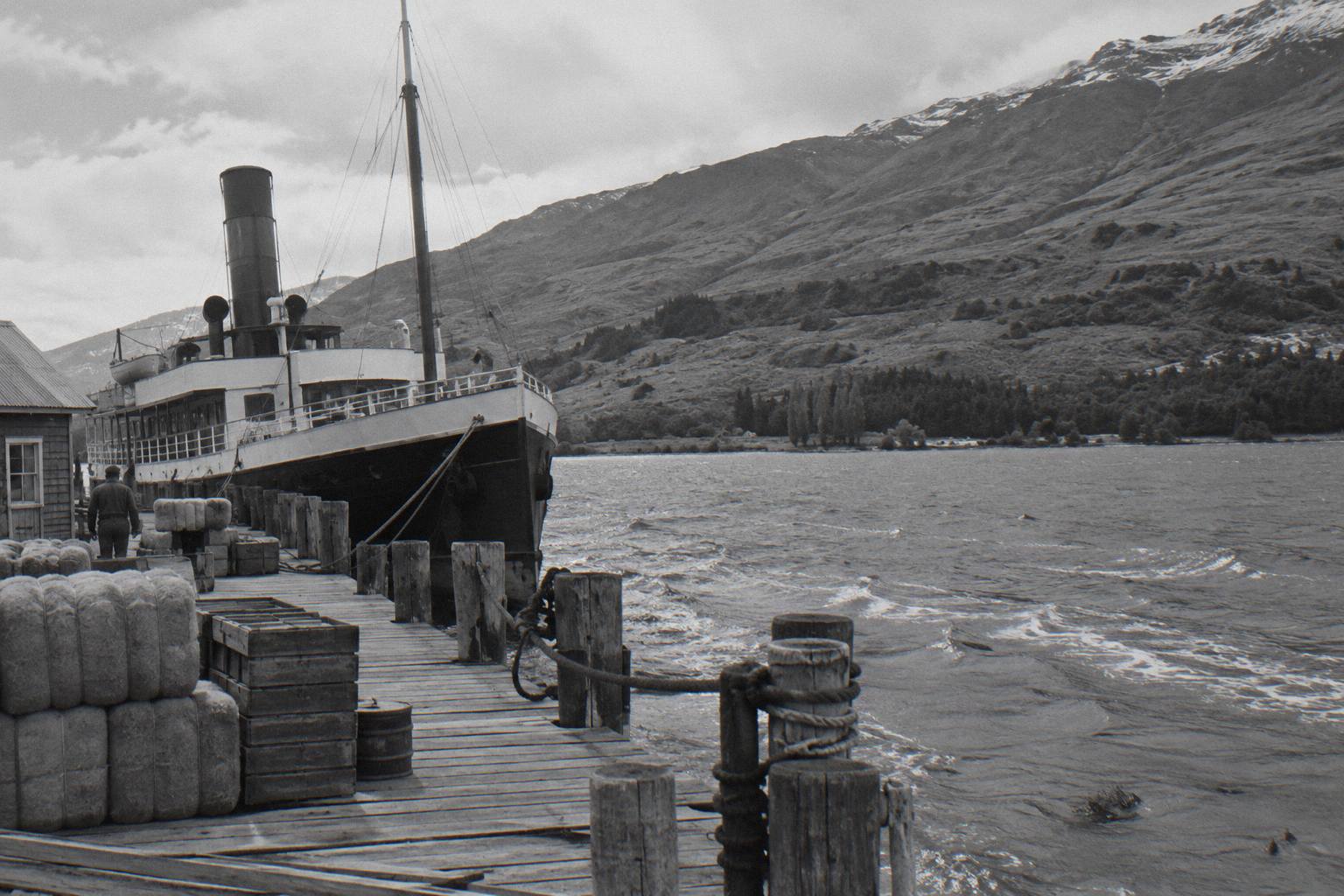
Her maiden voyage came in 1912, and from that year she worked the lake as a utility vessel: cargo, wool, passengers and livestock, all part of a week's work for a railway lake steamer. That working origin still shows. Her holds, her deck gear and her no-nonsense riveted hull were built for weather and freight, not for pleasure cruising, and the robustness that let her earn her keep through two world wars is the same quality that keeps her sound today. The lake she serves is long and exposed, funnelling mountain weather down its length, and a frail ship would never have lasted a decade on it, let alone a century.
| Year | Event |
|---|---|
| 1912 | Built in Dunedin by John McGregor and Company, railed to Kingston in pieces and reassembled |
| 1912 | Maiden voyage on Lake Whakatipu |
| 1968 | Nearly scrapped as her working life wound down |
| 1969 | Taken on by Fiordland Travel, the company now called RealNZ |
| 1982 | Purchased outright by the operator |
| 1984 | Major refit, after which the funnel was painted red |
| 1990 | Queen Elizabeth II and Prince Philip travel aboard |
| 2013 | Real Journeys buys its Walter Peak base, the 155 hectare farm at Beach Bay |
For readers whose interest in her history leads toward standing on her deck, the products below are the ones that put you there, from a cruise-only sail to crossings that land at the farm.
The cruise-only product runs about 1.5 hours with no farm landing, which suits history buffs who want the ship and nothing else. Check the live price for your date before deciding, since amounts move with the calendar.
Why Was She Nearly Scrapped In 1968?
By the late 1960s her working cargo days were finished, and in 1968 she came close to being scrapped before Fiordland Travel, the company now known as RealNZ, took her on from 1969 and later bought her outright, giving the vessel the second life that has now lasted far longer than her first. Roads had reached around the lake. Trucks could do in hours what the lake fleet did in a day, and the railway's interest in maintaining a coal-burning steamer faded with every kilometre of new seal. Her machinery was old, her owners were a government rail department with no romance for steam, and the scrapyard was the standard retirement for her sister vessels across the country.
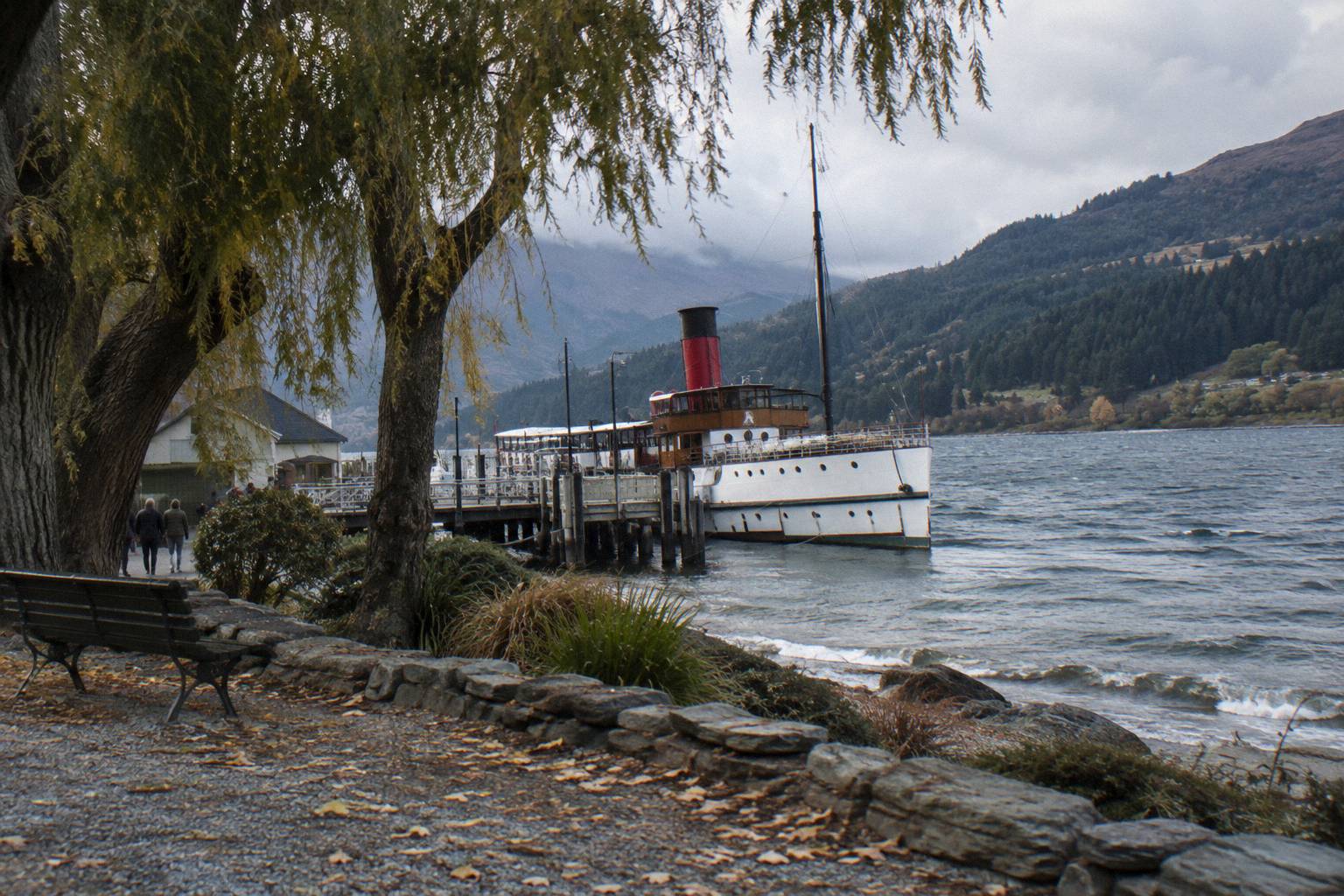
The lease that saved her began a second life that has now outlasted her first. Under tourism ownership she was refitted for passengers, her cargo decks gave way to seating, and in 1984 a major refit left her with the red funnel that is her signature today. According to the Wikipedia entry for the TSS Earnslaw, the operator leased her in 1969 and purchased her in 1982. The irony is that the scrappers of 1968 nearly destroyed the single most valuable piece of maritime heritage in the region, and the company that saved her built an entire tourism network around her, Walter Peak included.
That rescue is also why her maintenance regime matters to anyone booking today. The Earnslaw is scheduled to operate every day of the year except her annual maintenance and survey period, and during that window the modern catamaran, the Spirit of Queenstown, serves Walter Peak instead. If riding the steamship specifically is the point of your trip, check the sailing dates for your visit on the booking calendar before you commit to a product or a day.
The 1.5 hour cruise aboard her is the simplest way to experience the ship: a round trip on the lake with the engine room open, food and drinks to buy aboard, and no farm stop. Free cancellation applies up to 24 hours before departure. See dates for your travel window before you lock in a day.
Who Has Travelled On Her?
Queen Elizabeth II and Prince Philip travelled aboard the Earnslaw in 1990, and the ship has a film credit too, with a cameo in Indiana Jones and the Kingdom of the Crystal Skull, but her real passenger history is a century of ordinary lake traffic, from farm families and stock agents to wool clips and school parties. Royal passengers are the headline, yet the fuller story is that she carried the working population of the lake for over a century: farm families, stock agents, wool, and in her second life, visitors from every corner of the world. The mini-museum aboard displays material from her working past, and the stoker room still shows the graft at the heart of every crossing.
The film cameo matters more than it might seem. A Hollywood production chose her precisely because she is unmodernised: riveted steel, coal smoke and brass, an authentic 1912 vessel that needs no set dressing. That authenticity is the product, in a sense. Every rival lake cruise in New Zealand runs diesel or electric propulsion behind a modern hull, while the Earnslaw burns coal in view of her passengers and requires crew trained in a trade that vanished from merchant shipping decades ago. Stoking a boiler by hand, hour after hour across a cold lake, is not a skill many marine colleges teach anymore.
Her passenger list is not the only famous connection. The peak she sails toward carries a name from the same colonial era: Walter Peak and Cecil Peak were named after Cecil Walter Rees, eldest son of Queenstown founder William Rees, by surveyor James McKerrow in 1862, and the peak stands 1,800 metres high, as recorded in the Wikipedia entry for Walter Peak. The ship and the mountain frame each other across the water, one named in 1862, one launched in 1912, both still centre stage in every photograph taken from her decks.
What Has Changed And What Has Not?
Her hull, engines and coal-fired boilers are original 1912 work, while her passenger fit-out, funnel colour and ownership are products of her second life, so a trip today splits evenly between living history and considered restoration, and the engines that turn beneath the deck are the same ones that turned a century ago. The table below sets the two eras side by side.
| Then (1912 to 1960s) | Now (1969 onwards) |
|---|---|
| Owned by New Zealand Railways | Operated by RealNZ, earlier Fiordland Travel |
| Worked cargo, stock and freight | Carries passengers only |
| Funnel in railway livery | Funnel painted red after the 1984 refit |
| Crew of railway lake sailors | Crew of hospitality and marine specialists |
| Delivered by rail in pieces from Dunedin | Maintained on the lake year round |
| Faced the scrapyard in 1968 | Scheduled daily except annual maintenance |
What has not changed is the experience below decks. The engine room and stoker room are open to visitors, warm and loud, with machinery turning within arm's reach behind rails. On deck the lake looks much as it did to her first passengers: the Remarkables to the southeast, Cecil Peak and Walter Peak closing the view west. Even payment has moved with the times in one respect, since the vessels and the farm are cash-free and take card only, a small modern concession on an otherwise Edwardian ship.
For most travellers the question is not whether to ride her but how. The steamship-only cruise keeps the focus on the vessel, while crossings that continue to a farm tour or a barbecue lunch turn her into the most scenic commute in the country. How long each option takes, and what each includes, is set out in the steamship cruise options compared guide.
How Does Her Story Link To Walter Peak's?
The Earnslaw has been the front door to Walter Peak for decades, and the farm's own history runs on the same timeline: Maori camps in the sheltered bays, European settlement from the 1860s, and a sheep station that reached 170,000 acres and 40,000 sheep at its peak, with the steamship the last and longest-serving link in the lake's transport chain. The lake was the transport spine for everything on the western shore, and when roads finally arrived the ship simply changed jobs rather than retiring. The two histories are inseparable, which is why every trip covered here exists at all.
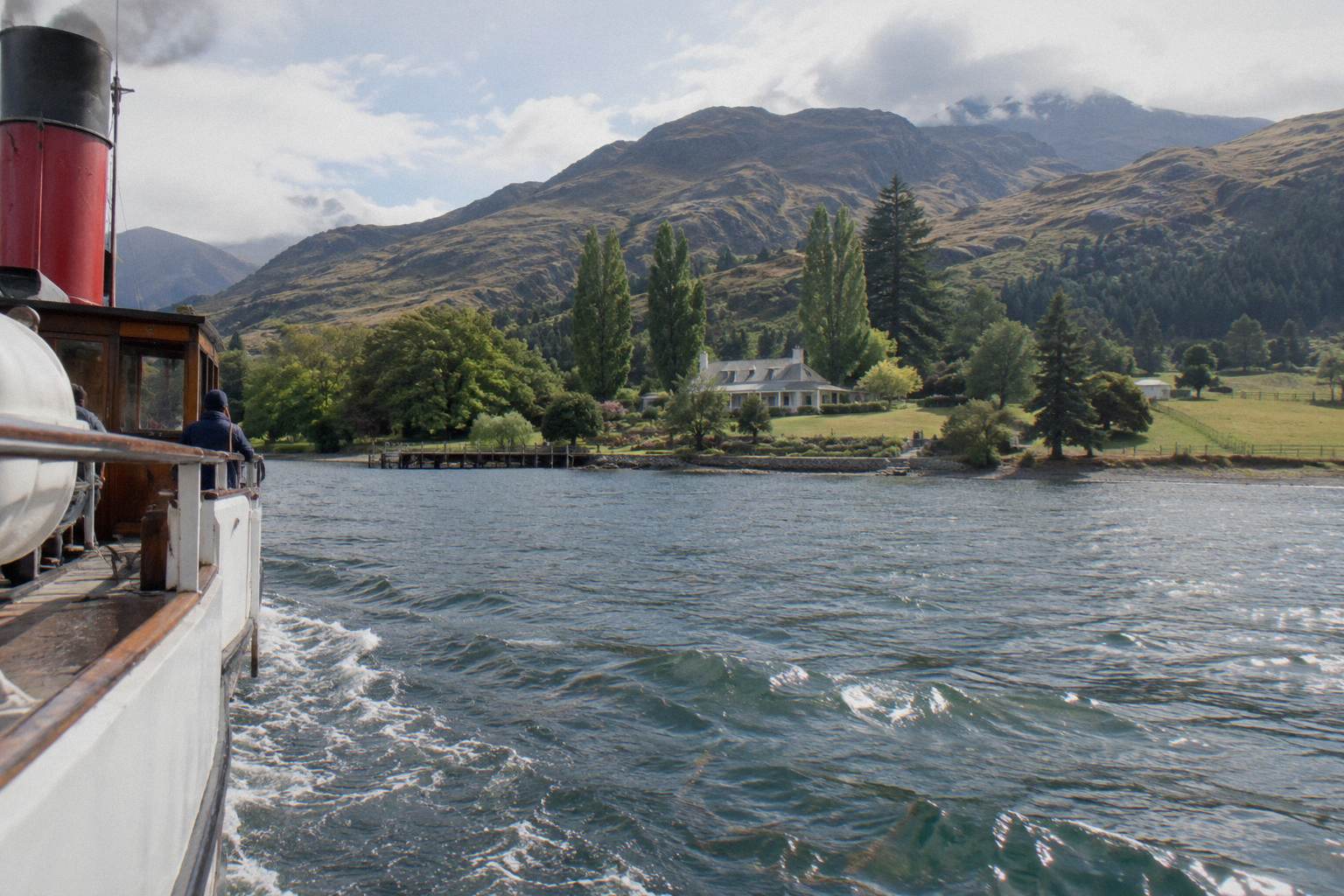
The farm side of the story, as RealNZ tells it on its Walter Peak history page, runs from those Maori camp sites used on moa-hunting and greenstone journeys, through the Von Tunzelman settlement in the 1860s, to the Mackenzie family who took over in the late 1880s and farmed the station for about 80 years. At its height the property ran up to 50 full-time staff, and its merino fleece topped wool sales in New Zealand and Australia three times in the 1930s. The Colonel's Homestead, reconstructed in 1977 after an accidental fire, carries the name of Colonel Peter Mackenzie from that era. In 2013 Real Journeys, now RealNZ, bought the 155 hectare farm at Beach Bay, securing the steamship's destination as well as the steamship herself, as the RealNZ purchase announcement records.
If the combined story appeals, the guided farm tour crossed by the Earnslaw is the product that binds the two halves together in one booking.
That product pairs the steamship crossing with a guided walk around the farm, meeting the animals and hearing the station's story from a guide. The booking page shows the price for the date you choose, and free cancellation applies up to 24 hours before departure.
Which Sailings Carry Her History Best?
The cruise-only sailing showcases the ship herself, while any Walter Peak landing turns the crossing into the first act of a longer story, so the choice comes down to whether the vessel or the destination is your priority, and the crossing itself differs by boat: 45 minutes on the steamship, about 30 to 35 minutes on the modern catamaran. Purists gravitate to the 1.5 hour round trip: full time on the water, the engine room, the piano when it plays, and no schedule beyond the boat. Families and photographers often prefer a landing, because the farm amphitheatre, the woolshed tea and the gardens extend the day and give the crossing a purpose beyond the ride.
| Sailing | Focus | Time On The Water |
|---|---|---|
| Steamship cruise only | The vessel, engine room, lake scenery | About 1.5 hours, no landing |
| Earnslaw crossing with guided farm tour | The ship plus the station's story and animals | 45 minutes each way, 3.5 hours total |
| Lake cruise with farm visit and tea | Animals and woolshed tea, modern catamaran option | About 30 to 35 minutes each way, 3.5 hours total |
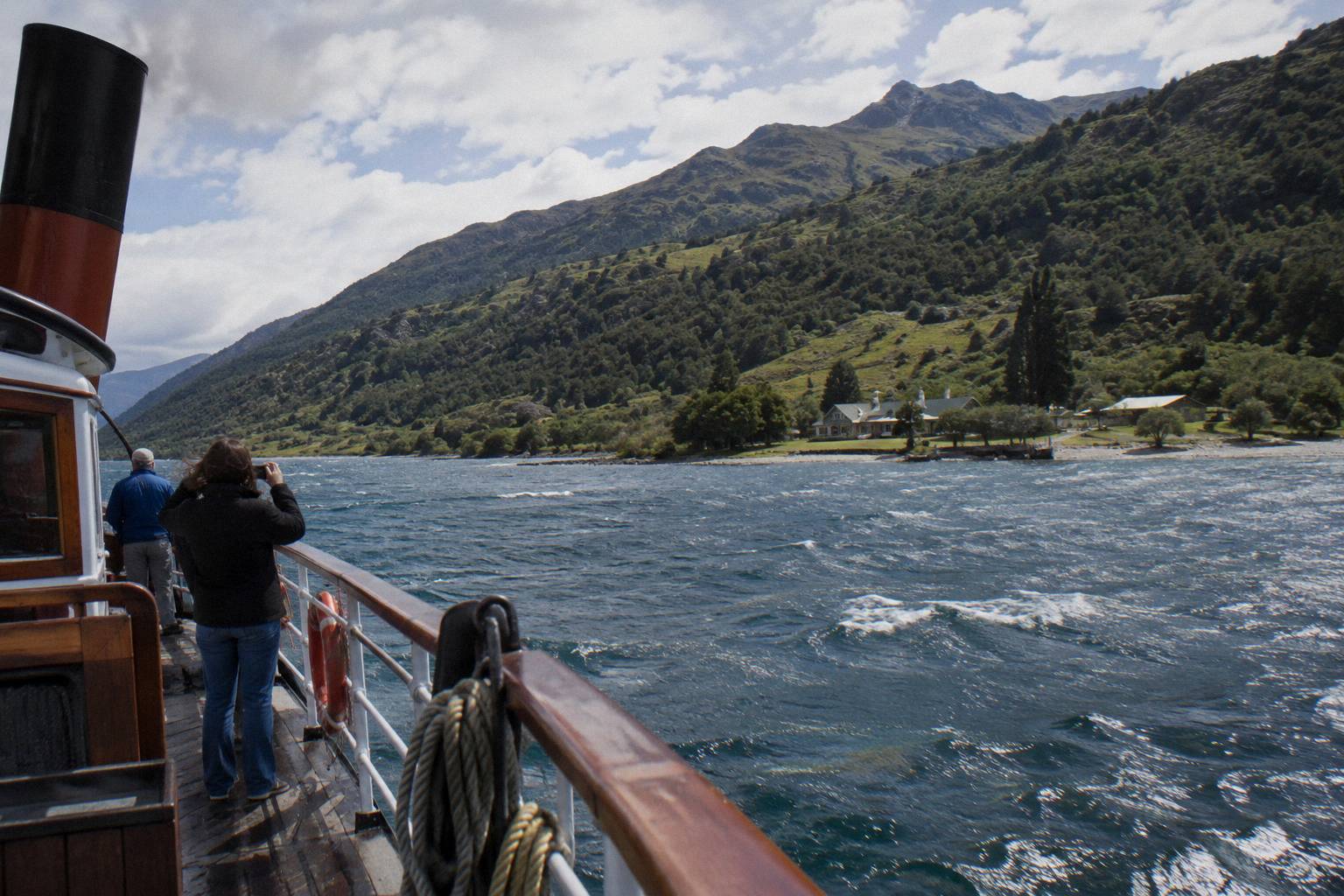
The lake tour that lands at the farm with a nature guide is the middle path, and worth a look if you want commentary and animals without a full meal. You can see the lake cruise farm visit details to compare it against the steamship-paired version. Whichever you pick, remember that vessel space is limited and RealNZ recommends booking ahead, with dining sittings filling fastest in school holidays and peak summer. Amounts are in New Zealand dollars, from NZ$139 per person for the farm visit crossing and from NZ$175 for gourmet barbecue crossings, and prices vary by date, so check the live price for your day.
Departures through the October to April summer typically run at 9:00am, 11:00am, 1:00pm, 3:00pm, 5:00pm and 7:00pm on the Earnslaw, according to RealNZ, with the booking calendar confirming what runs on your date. Winter brings a quieter schedule and a different atmosphere, with the animals in heavy coats and snow on the Remarkables behind the farm show, as the Walter Peak in winter guide describes.
For readers deciding between a food-focused crossing and a plain one, the history angle does not change the food, but the homestead you dine in is part of the same story: a station kitchen lineage that goes with the 1870s gardens, protected Sycamore and Oak among the oldest introduced trees in the region. The gourmet barbecue crossing pairs that dining with the steamship ride.
That product runs 3.5 hours from the RealNZ Visitor Centre at 88 Beach Street, from NZ$175 per person, and free cancellation applies up to 24 hours before start. Alcoholic drinks are a separate purchase, and dietary requirements should be flagged at booking so the kitchen can prepare.
What Trips People Up Before You Board
The common mistakes are arriving without buffer time for parking, expecting a farm stop on a cruise-only ticket, assuming the steamship sails every crossing when the catamaran covers her maintenance window, and turning up without a card since the vessels and the farm take card payment only. Each one is avoidable with a little planning, and none is obvious from the brochure photographs. RealNZ asks passengers with pre-purchased tickets to meet in front of the TSS Earnslaw at the Steamer Wharf dock, and the Visitor Centre at 88 Beach Street is the check-in point.
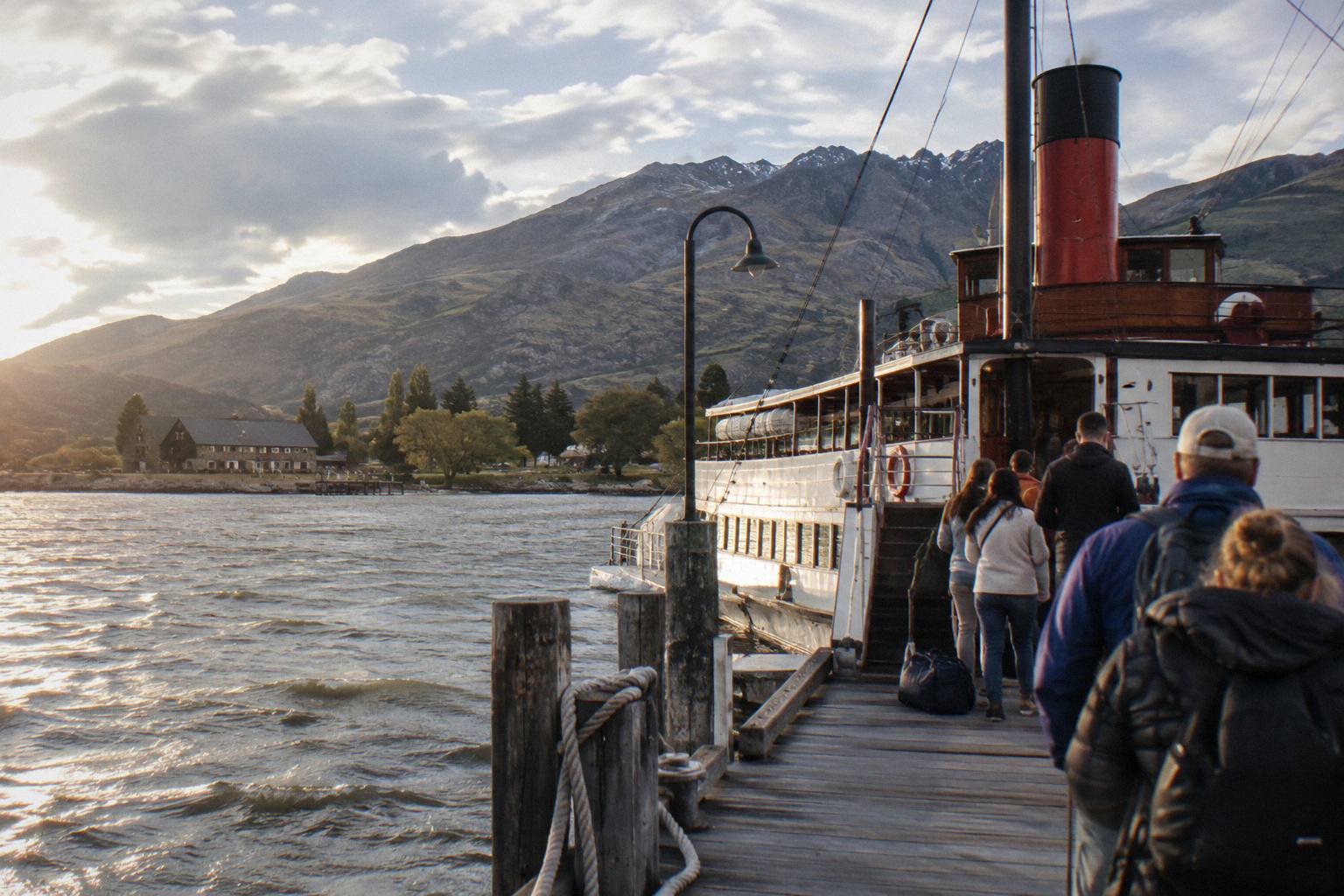
Parking is the first trap. Allow 30 extra minutes: free street parking near the wharf is limited, the paid buildings sit at Man Street and Church Street, and the Boundary Street and Ballarat Street car parks are about 15 minutes on foot. The second trap is product confusion. The steamship cruise-only sailing does not land at the farm, and the lake cruise on the Spirit is a different vessel entirely, faster and modern, crossing in about 30 to 35 minutes rather than 45. If the century-old ship is the reason you booked, confirm which vessel your product boards. The third trap is accessibility expectations: both vessels are boarded via ramps but neither is fully wheelchair accessible and neither has an accessible toilet, though the barbecue restaurant at Walter Peak is wheelchair accessible via an inclined gravel path from the wharf. Dress for four seasons in a day, with non-slip shoes, a warm jacket and sunscreen, as the what to wear and bring guide details.
A final note on timing: if your heart is set on the steamship rather than the catamaran, look at the dates around your visit before booking, since the maintenance window swaps vessels on the Walter Peak route, and no winter timetable is worth guessing at when the booking calendar holds the answer for your exact day.
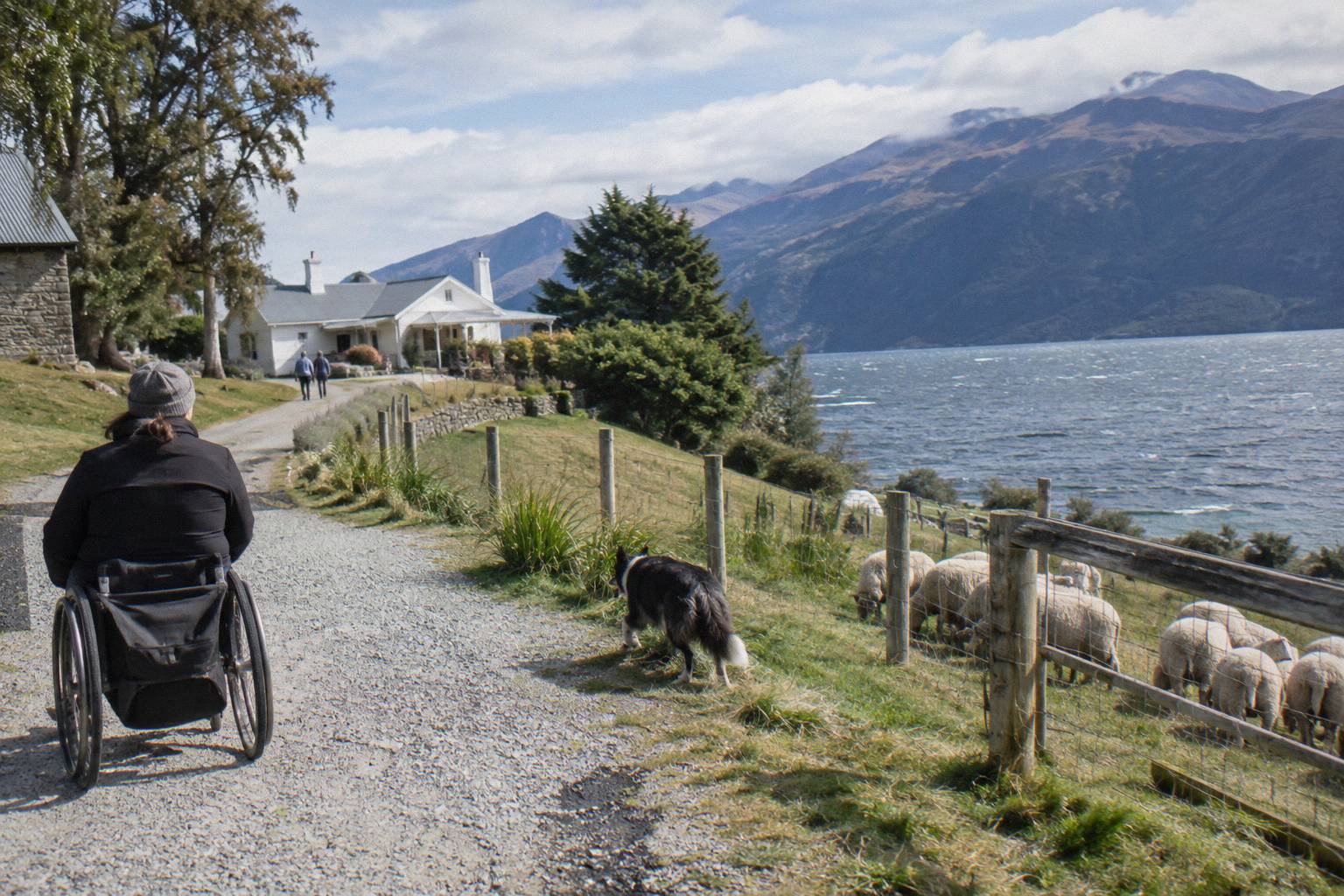
Whatever you choose, riding a 1912 coal-fired steamer across a glacial lake is the kind of experience that outlasts any itinerary change, and Walter Peak Farm Tours keeps the full range of crossings, cruises and farm landings in one place to compare.
Common Questions About The Old Steamship
What Does TSS Stand For?
Twin Screw Steamer, referring to her two propeller shafts, per the Wikipedia entry for the vessel.
When Was The TSS Earnslaw Built?
She was built in Dunedin in 1912 by John McGregor and Company for New Zealand Railways, taken apart, carried by rail to Kingston and reassembled on Lake Wakatipu. Her maiden voyage was in 1912.
How Old Is The Earnslaw?
She dates from 1912 and has served Lake Wakatipu ever since, first as a railway cargo and passenger vessel and, since 1969 under the operator now called RealNZ, as a tourism steamship.
Why Is Her Funnel Red?
The funnel was painted red after a major refit in 1984, during her second life as a passenger vessel under Fiordland Travel, the company now known as RealNZ.
Was The Earnslaw Ever Nearly Scrapped?
Yes. In 1968, with her cargo working days ending, she came close to being scrapped before Fiordland Travel took her on from 1969 and later purchased her outright.
Did Queen Elizabeth II Sail On The Earnslaw?
Queen Elizabeth II and Prince Philip travelled aboard her in 1990. The ship also has a film cameo in Indiana Jones and the Kingdom of the Crystal Skull.