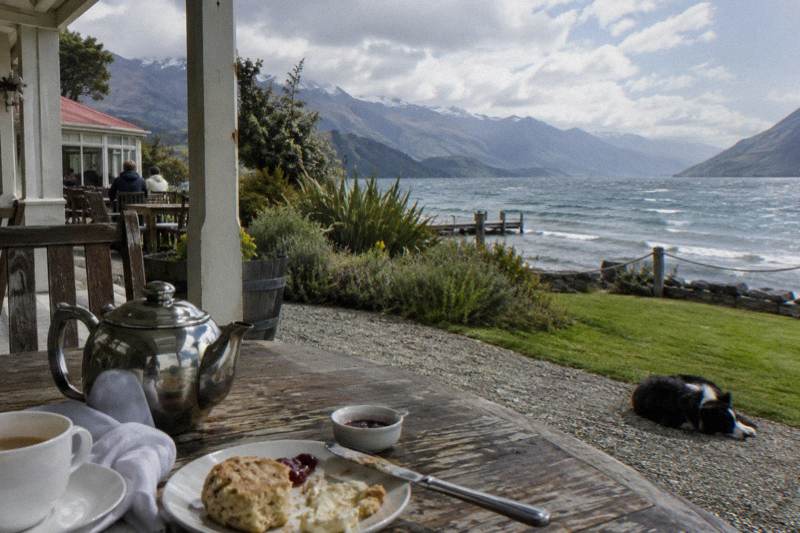
Walter Peak Station: The Working Sheep And Cattle Farm Explained
The name Walter Peak Station belongs to a neighbouring working sheep and cattle property, while the farm visitors actually land at is Walter Peak High Country Farm. Here is how the two fit together, the history behind both, and what the farm visit delivers.
Short answer
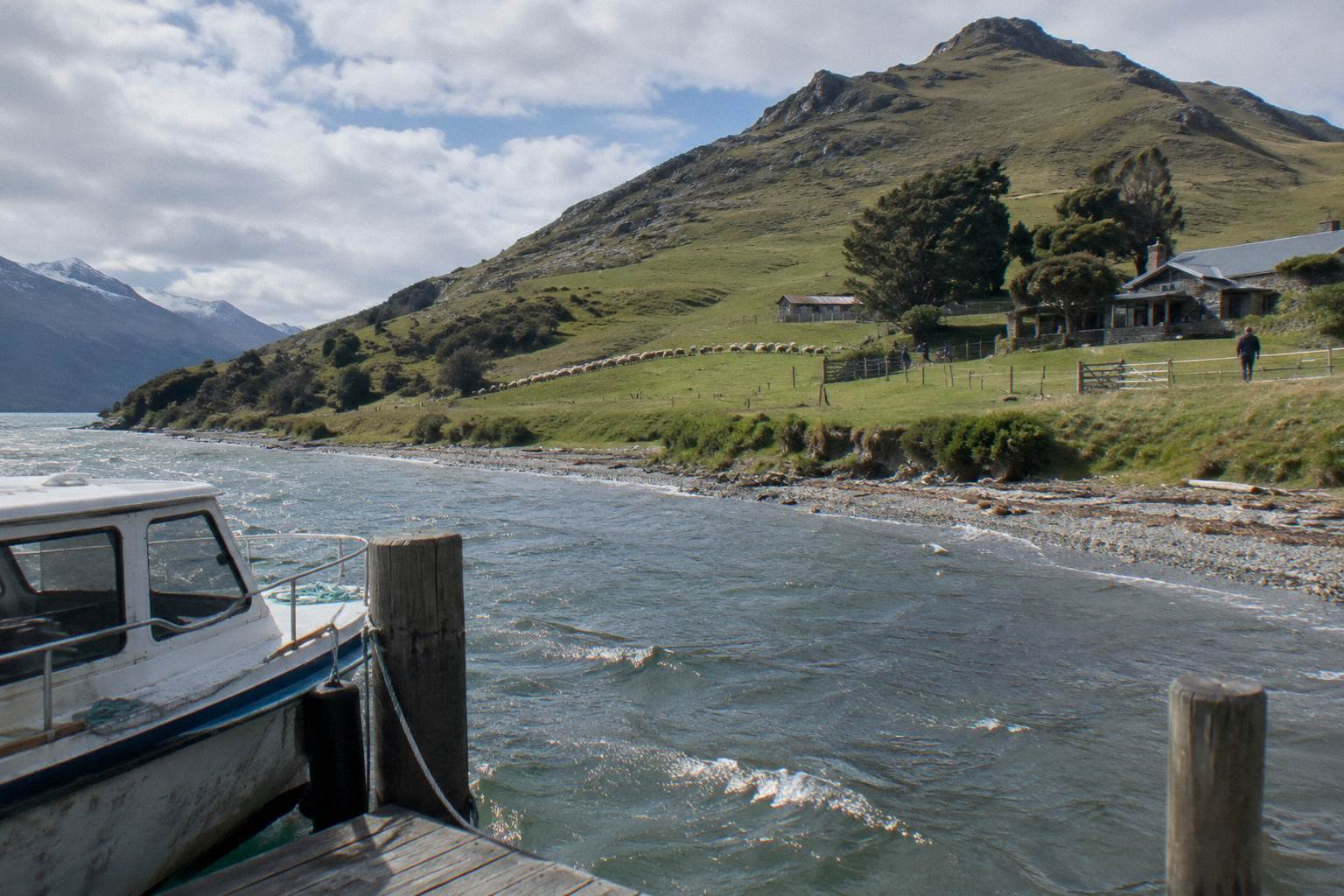
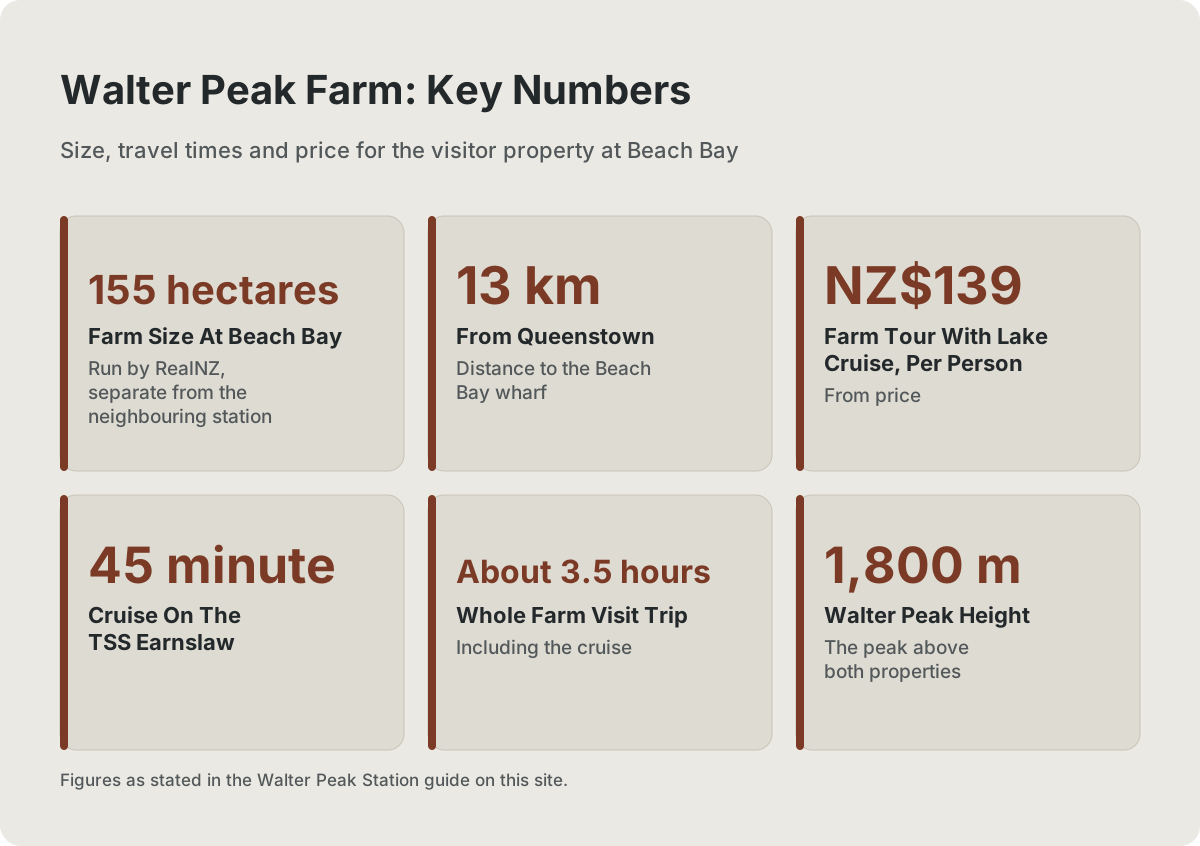
Walter Peak Station is a working sheep and cattle station next door to Walter Peak High Country Farm, the 155 hectare RealNZ property where lake cruises land. The farm visit runs about 3.5 hours including the cruise, from NZ$139 per person, and covers animals, a sheepdog muster, blade shearing and tea in the woolshed.
Searching the station name brings up two different properties on the western shore of Lake Wakatipu, and mixing them up is easy. The lake cruises and farm tours described here all land at Walter Peak High Country Farm, and the most direct way onto it is the farm visit with lake cruise. Walter Peak Station is the neighbouring property, and the two are separate.
| Fact | Detail |
|---|---|
| Property visitors land at | Walter Peak High Country Farm, 155 hectares at Beach Bay, run by RealNZ |
| Neighbouring property | Walter Peak Station, a working sheep and cattle station, separate owners |
| Getting there | 45 minute cruise on the TSS Earnslaw, or a gravel back road from Te Anau, about 4 hours |
| Whole farm visit trip | About 3.5 hours including the cruise |
| From price | NZ$139 per person for the farm tour with lake cruise |
| Animals named | Highland cattle, sheep including merino, alpacas, deer, pigs, donkeys |
| Cancellation | Free up to 24 hours before start on the farm visit products |
What Exactly Is Walter Peak Station?
Walter Peak Station is a working sheep and cattle station on the western shore of Lake Whakatipu, immediately neighbouring the smaller property that visitors actually set foot on, Walter Peak High Country Farm. The two share a name and a boundary but not an owner: the farm is the 155 hectare RealNZ property at Beach Bay, 13 km from Queenstown, while the station is farmed by others. No Walter Peak product lands on the station itself.
The distinction matters for planning. When readers book a farm tour, a BBQ lunch or a horse trek, the boat docks at Walter Peak High Country Farm, the original homestead block of the old station, now a visitor operation. The 2026 vegetation fire made the boundary obvious to many people for the first time: it burned across Walter Peak Station, Cecil Peak Station and adjoining conservation land in the McKinlays Creek area, while the farm and its buildings sat protected beside it.
RealNZ describes the farm on the RealNZ Walter Peak farm page as a working high-country farm at the base of Walter Peak. That is true in both directions: the farm keeps livestock and runs genuine farming demonstrations, and it sits beneath a 1,800 m peak that gives the whole area its name.
The geography explains why the two properties get confused in the first place. From the Queenstown foreshore, the eye takes in one continuous sweep of tussock and farmland on the far shore, and no signpost marks where one block ends and the other begins. Maps label the visitor site at Beach Bay and the station behind and beside it, but from the water the boundary is invisible, so people naturally read it as a single farm. Even the peak itself belongs to everyone in the view: Walter Peak at 1,800 m stands above both properties and lends its name to the station, the farm and the tour products alike.
There is a practical consequence to getting this right before you travel. Anyone who arrives expecting to wander a vast 170,000 acre station will instead find a compact 155 hectare property designed around a half-day visit: a wharf, a homestead restaurant, gardens, an amphitheatre, woolshed and animal paddocks. That scale is part of the appeal, since everything sits within a short gravel-path walk of the landing. But it is a different experience from a station tour, which no product here offers.
Is Walter Peak A Working Farm?
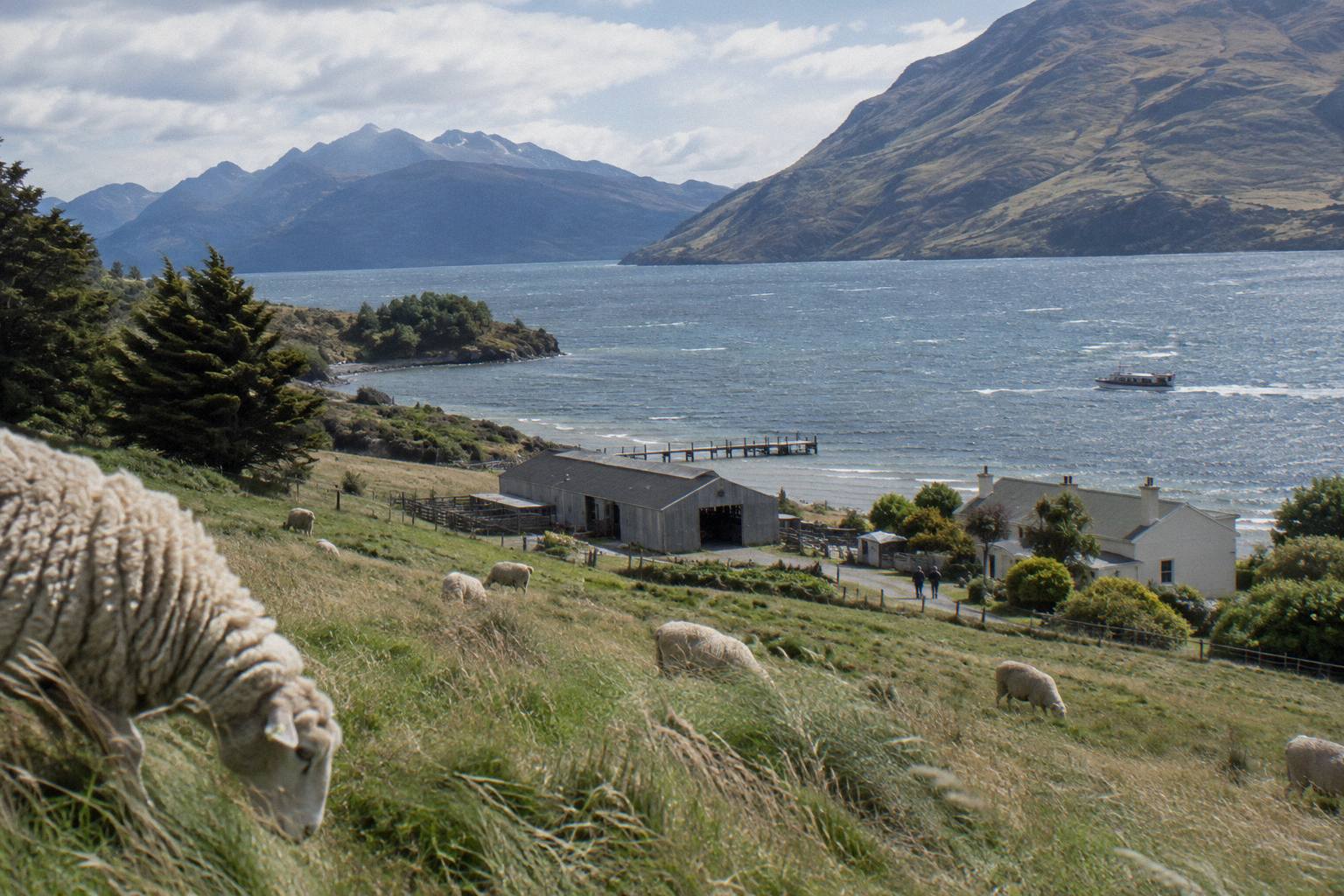
Yes, Walter Peak High Country Farm is a real working farm of 155 hectares, not a theme-park replica. Highland cattle, sheep including merino, alpacas, deer, pigs and donkeys are named on RealNZ pages, and the farm tour includes hand-feeding. The neighbouring Walter Peak Station carries on larger-scale sheep and cattle farming, and its tussock slopes are what most visitors photograph from the boat.
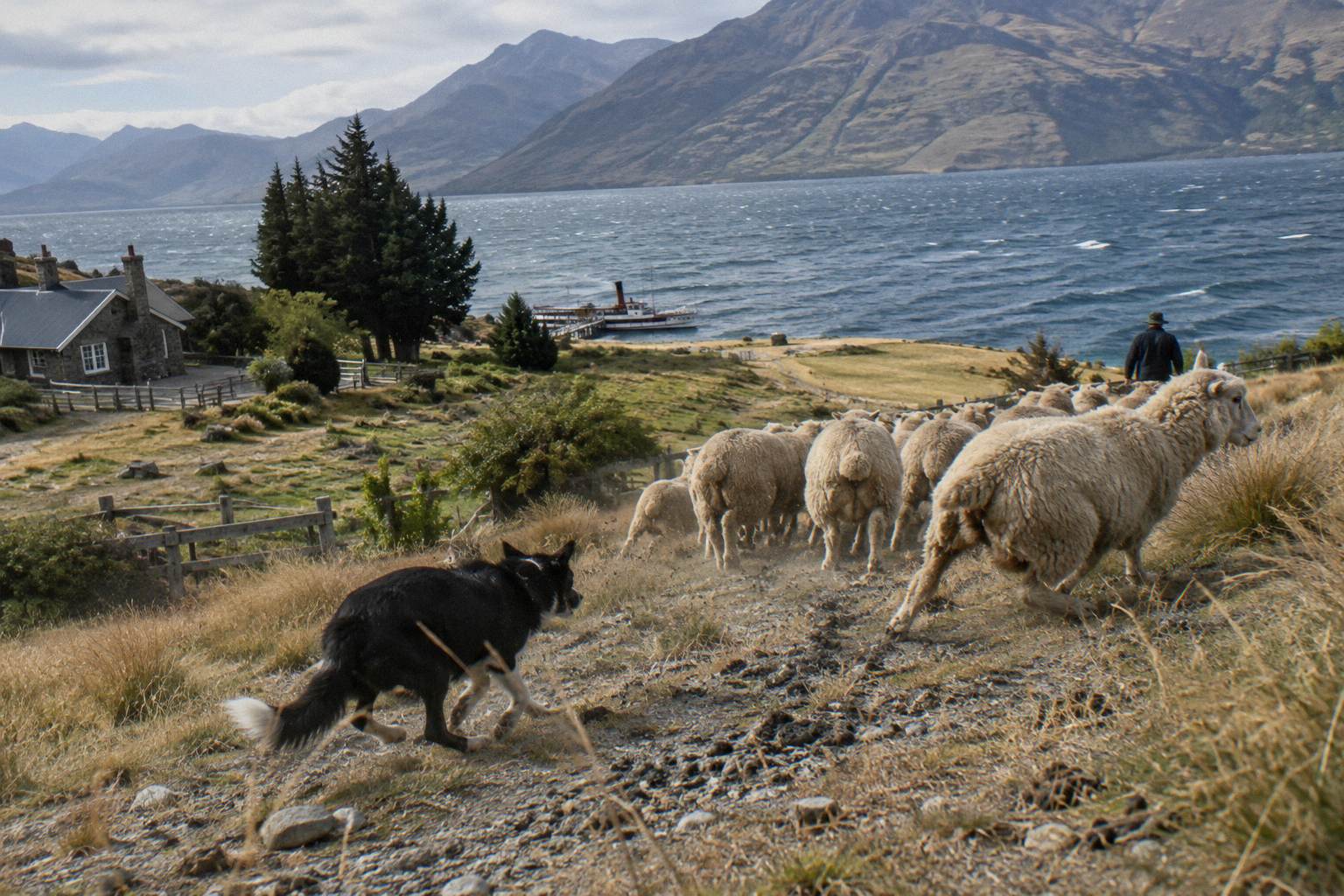
The farm side of the operation shows its working character in the amphitheatre show, where heading dogs and huntaways muster sheep, followed by a live blade-shearing demonstration in the New Zealand blade technique. The tour finishes with afternoon or morning tea of scones, cakes, slices and sandwiches in the woolshed, a building that earns its name. Heading dogs work silently and wide, while huntaways bark to move stock, so the demonstration doubles as a compact lesson in how New Zealand high-country mustering actually works.
The animals keep the working-farm claim grounded. The resident Highland cow is named Dougal, and the merino flock connects directly to the station history: it was Walter Peak merino fleece that topped wool sales in New Zealand and Australia three times in the 1930s, and the sheep on the property today carry that lineage forward in front of visitors. Hand-feeding turns the flock from scenery into the main event for younger travellers.
For readers weighing whether the visit justifies the fare, the whether the farm is worth it guide works through the value question directly, and the is Walter Peak a working farm explainer covers the day-to-day reality in more depth. Between them they answer most doubts about whether the stop is genuine or staged.
Seasons change what working looks like. Spring brings lambs, winter puts the animals in heavy coats and leaves the farm quieter, and the Remarkables sit snow-capped behind the show, per the RealNZ blog on the farm through the year. No single month delivers the same visit twice, which is worth weighing against your travel dates.
How Do The Two Properties Compare Side By Side?
Walter Peak High Country Farm is 155 hectares, owned and run by RealNZ as a visitor farm with a restaurant, and it is the only one of the two you can book onto. Walter Peak Station is larger, separately owned and farmed commercially for sheep and cattle, with no visitor product. A third name, Walter Peak itself, is simply the 1,800 m peak above them both, named in 1862.
| Walter Peak High Country Farm | Walter Peak Station | |
|---|---|---|
| Size | 155 hectares | Larger working station, size not published here |
| Owner and operator | RealNZ | Separate owners |
| Visitor access | Bookable farm tours, dining, horse treks | None |
| Landing point | Beach Bay wharf, 13 km from Queenstown | Neighbouring land, no public landing |
| Livestock | Highland cattle, sheep, alpacas, deer, pigs, donkeys | Sheep and cattle |
| Role today | Visitor farm with working demonstrations | Commercial sheep and cattle station |
The naming comes from surveyor James McKerrow in 1862, who named Walter Peak and Cecil Peak after Cecil Walter Rees, eldest son of Queenstown founder William Rees, per the Wikipedia entry for Walter Peak. The station, the farm and the peak all carry versions of that one name, which is exactly why searches blur them together.
Ownership histories diverged long before the visitors arrived. The Mackenzie era, which begins in the late 1880s, is the period that shaped the run's reputation, and the farm open to visitors today occupies the original homestead block of that run. When Real Journeys, now RealNZ, bought the 155 hectare Beach Bay property on 5 December 2013, it bought a fragment of the old station rather than the whole, and the station continued farming separately under its own management. The purchase ended a long association that had begun with the pastoral lease in 1987 and the Earnslaw operation before that.
For a visitor, the comparison boils down to access. The farm answers the phone, takes bookings, feeds you and shows you the dogs working. The station farms. You will see its country from the boat, from the farm's shoreline walkway and from the horse trek lookout, and that is as close as any product here gets.
What Is The History Behind The Station And The Farm?
European settlement of the Walter Peak block dates from the 1860s, and the Mackenzie family took over in the late 1880s, farming it about 80 years and developing principles of high-country farming still respected today. At its peak the run carried 170,000 acres, 40,000 sheep and up to 50 full-time staff, and its merino fleece topped wool sales in New Zealand and Australia three times in the 1930s. RealNZ secured the pastoral lease in 1987.
| Period | Event |
|---|---|
| Pre-European | Maori used the sheltered bays as camp sites on moa-hunting and greenstone trips |
| 1860s | European settlement begins with Von Tunzelman, forced off by stock deaths, snowstorms and lack of money |
| 1862 | Surveyor James McKerrow names Walter Peak and Cecil Peak after Cecil Walter Rees |
| Late 1880s | The Mackenzies take over and farm the station about 80 years |
| 1930s | Walter Peak merino fleece tops NZ and Australian wool sales three times |
| 1977 | The Colonel's Homestead is reconstructed after an accidental fire |
| 1987 | RealNZ secures the pastoral lease |
| 2013 | Real Journeys, now RealNZ, buys the 155 hectare Beach Bay property including the homestead |
| 2014 | Walter Peak Land Restoration Project begins, clearing 155 ha of invasive trees and weeds |
The homestead keeps its Mackenzie link in its name: the Colonel's Homestead is named for Colonel Peter Mackenzie. It was reconstructed in 1977 after an accidental fire, and its gardens date from the 1870s, including a protected Sycamore and Oak among the oldest introduced trees in the region. The RealNZ history of Walter Peak carries the full story of the purchase on 5 December 2013 from Convelle Enterprises Ltd.
The scale of the peak-era station deserves a moment of reflection, because the numbers explain the landscape visitors cruise past. Forty thousand sheep needed mustering routes, dog teams and shearing gangs, and up to 50 full-time staff meant the homestead operated as a small village. Today's farming next door runs leaner, but the tussock faces and the long lake frontage still carry the imprint of a run that once topped the wool tables on both sides of the Tasman.
The restoration project that followed the 2013 purchase is the modern chapter of the same land. From 2014, all 155 hectares were cleared of invasive non-native trees and weeds, native planting followed, wilding pines were sprayed in winter 2015, and a public walkway now runs along the foreshore to Beach Point. Visitors who stroll that walkway after their meal are walking through a deliberate ecological reversal, not leftover farmland scrub.
The deep history sits underneath it all. Maori used the sheltered bays of the Walter Peak shoreline as camp sites on moa-hunting and pounamu trips to the Mararoa and Oreti Rivers, long before any fence line existed. Von Tunzelman's 1860s settlement ended in stock deaths, snowstorms and a lack of money, a reminder that high-country farming was marginal country then and remains demanding country now.
What Does The Farm Visit Actually Include?
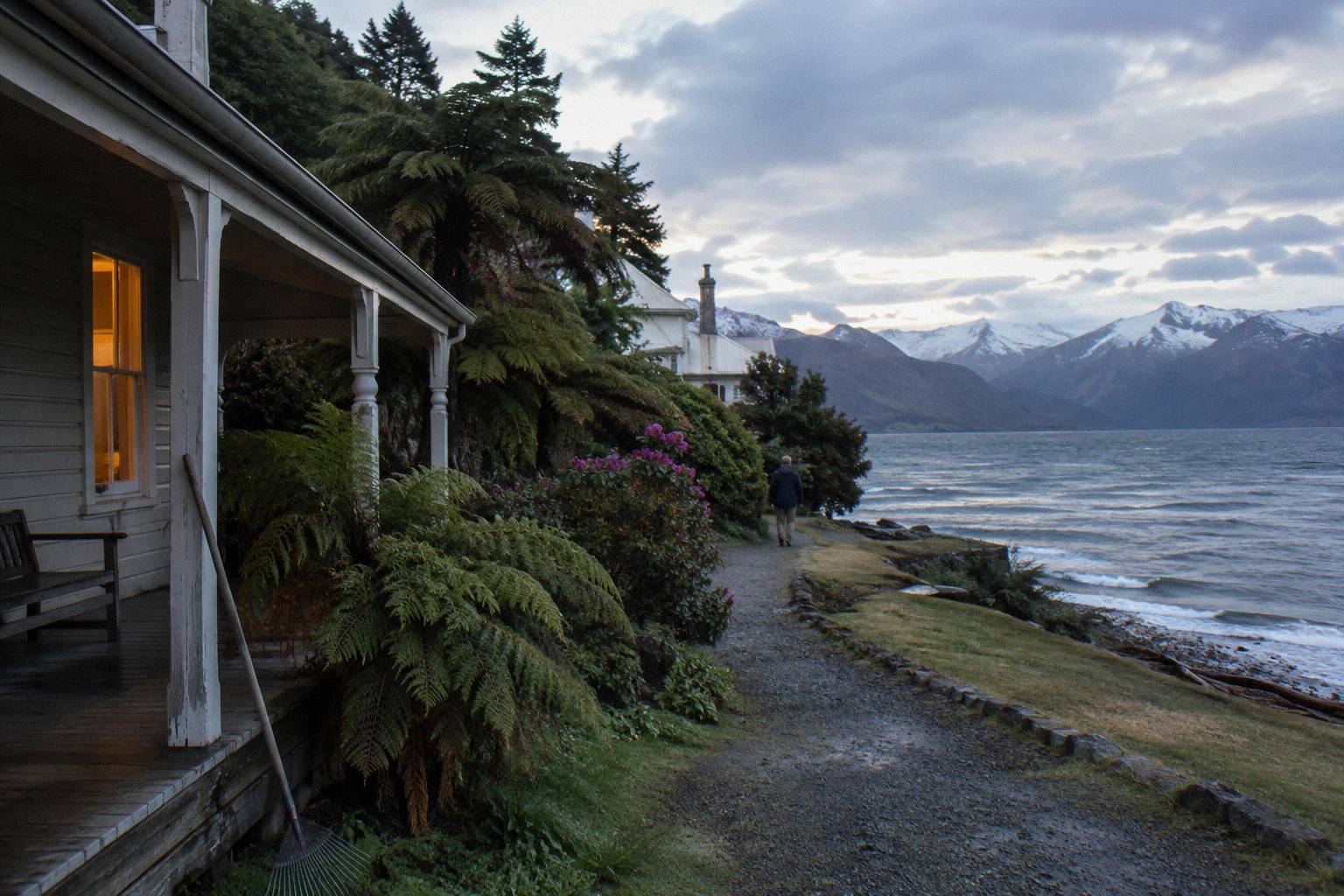
The standard farm visit pairs a 45 minute Earnslaw cruise across Lake Whakatipu with time on the farm: hand-feeding the animals, the amphitheatre sheepdog and shearing show, and tea in the woolshed. The whole trip runs about 3.5 hours from the RealNZ Visitor Centre at 88 Beach Street, and the farm tour with lake cruise starts from NZ$139 per person.
The "Queenstown: Queenstown Lake Cruise and Walter Peak Farm Tour" carries a 4.8 rating from 1,178 reviews, and its sister card, the "Queenstown: Walter Peak Farm Tour and Lake Cruise", adds a sheep shearing demonstration at the same NZ$139 from price, with a 4.8 rating from 36 reviews. Both allow free cancellation up to 24 hours before start. Check availability on the live booking calendar to see the departure days and times held for your date.
The shape of the day is simple and repeatable. Cruise out, land at the wharf, walk the gravel paths to the animals, hand-feed where the guide allows it, take a seat in the amphitheatre for the dogs and the blade shearing, then gather in the woolshed for scones, cakes, slices and sandwiches before reboarding. The cruise each way is 45 minutes on the Earnslaw, which leaves roughly two hours onshore, enough for the standard visit without rushing.
A third card in the same family, the "Lake Wakatipu TSS Earnslaw Cruise With Guided Farm Tour", pairs the steamship crossing with a guided farm walk; the booking page shows the price for the date. Readers comparing the exact inclusions of each card should check each product's own page, since tea, meal and drinks inclusions differ card by card.
One practical note: the farm sits on gravel paths, so an unaided wheelchair user cannot tour the farm itself, though the BBQ restaurant is wheelchair accessible via an inclined gravel path from the wharf. The accessibility and wheelchair guide covers the details for pushchairs too.
Readers who want a meal rather than tea can move up to the "Queenstown: Walter Peak Gourmet BBQ & Lake Whakatipu Cruise", from NZ$175 per person, rated 4.8 from 3,272 reviews. The buffet runs over a wood fire in the homestead, with salads, vegetables, meats, seafood and desserts, and the shearing demonstration follows the meal. The kitchen can prepare for dietary requirements if you tell RealNZ at the time of booking; vegetarian dishes sit on the buffet as standard.
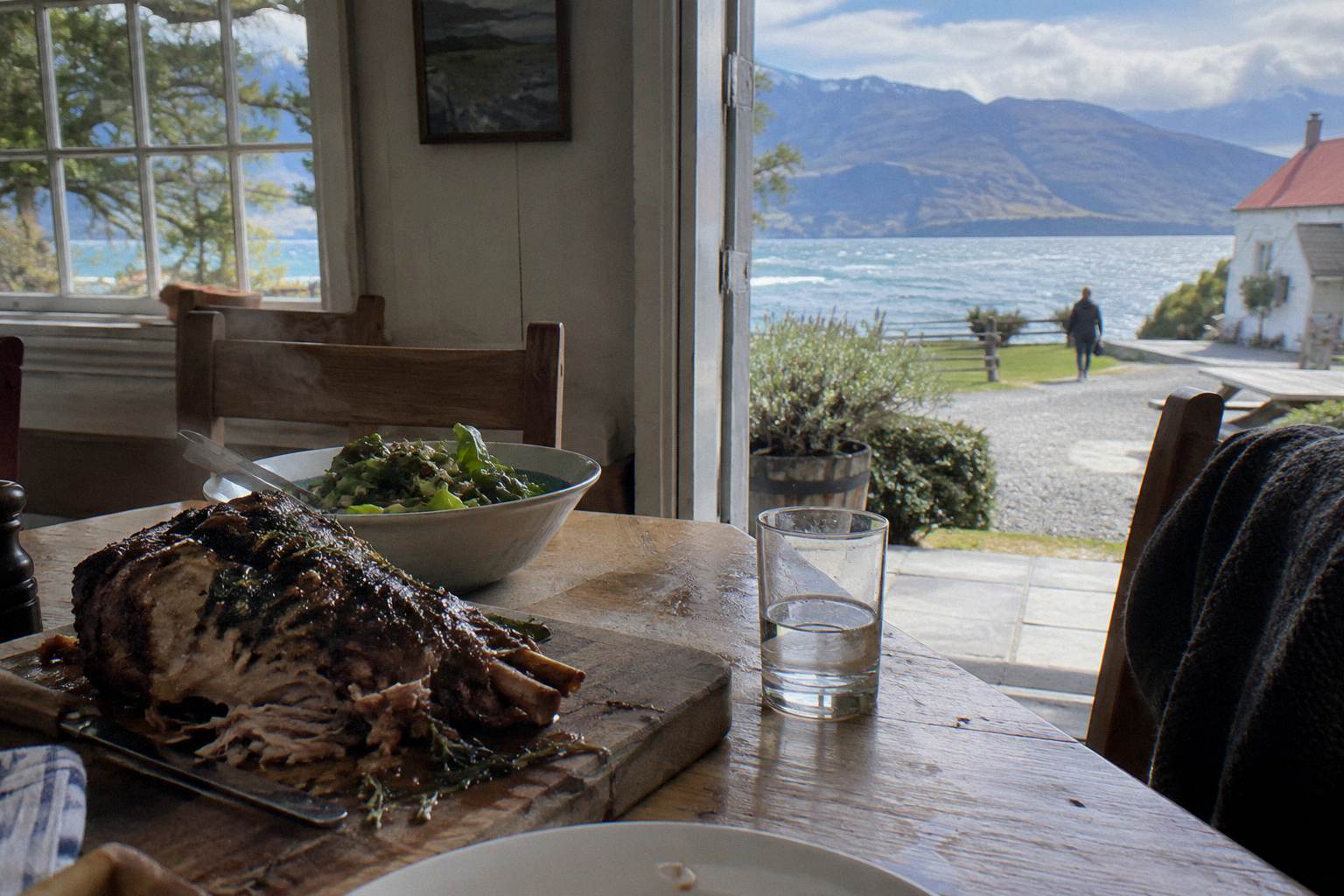
Dining happens indoors in the homestead rooms, with the veranda used in good weather per the RealNZ blog, so the meal itself barely depends on the forecast. The executive chef, Will Eaglesfield, runs a seasonal menu that changes with supply and chef discretion, and a December sample menu listed Lake Ohau wagyu, lamb, Fiordland venison, monkfish and free-range chicken as examples of the style.
How Does The Boat Crossing Fit The Story?
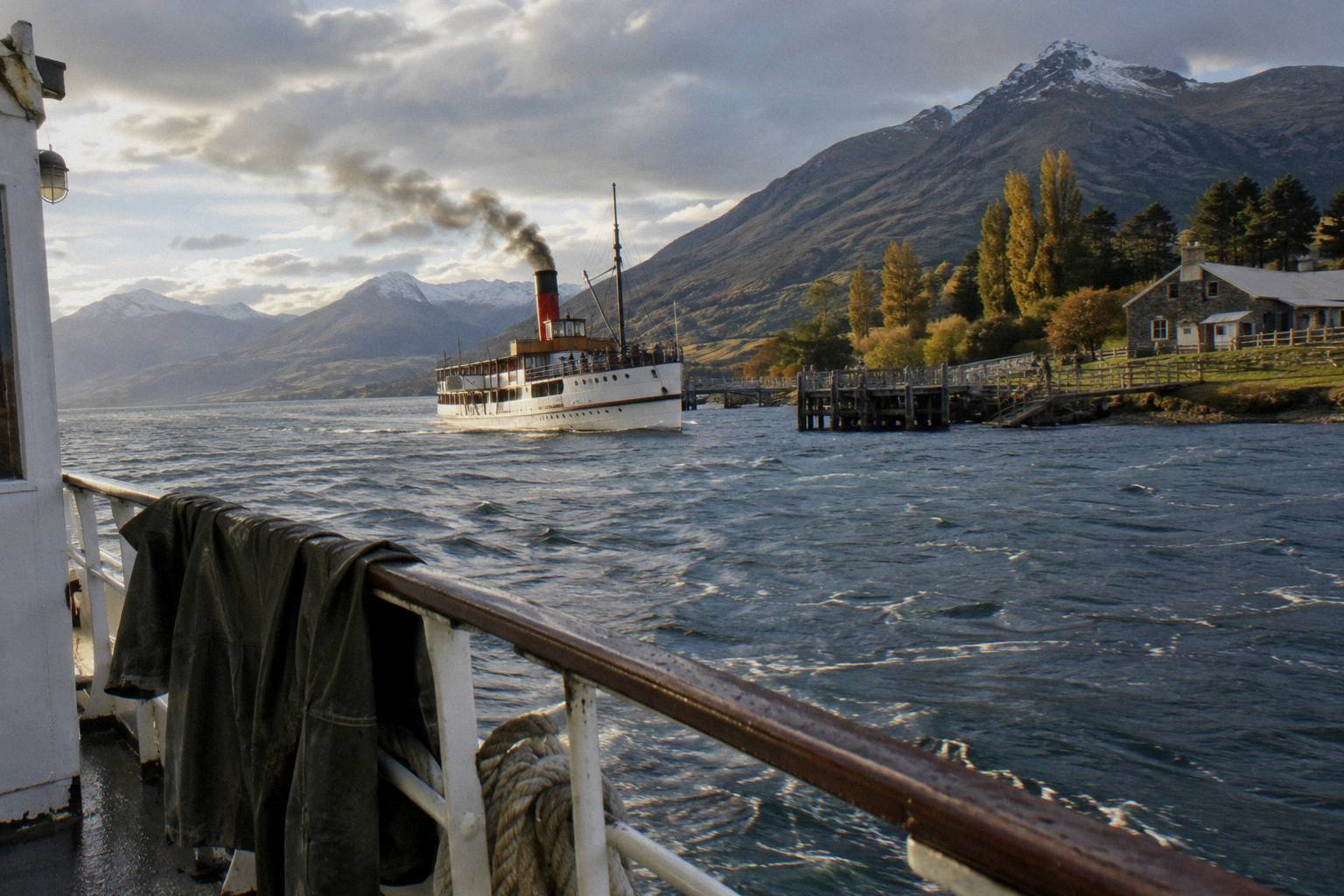
Every Walter Peak product begins with the water crossing, 45 minutes on the TSS Earnslaw from Steamer Wharf, a coal-fired twin-screw steamship built in Dunedin in 1912. The vessel is the living link between Queenstown and the farm's history, carrying roughly 1.5 tonnes of coal per return trip, and it is the only coal-fired passenger steamship in operation in the southern hemisphere, per RealNZ.
The Earnslaw nearly met the scrapyard in 1968 before Fiordland Travel, now RealNZ, leased her in 1969 and later bought the ship outright. Visitors can climb below to the engine room and stoker room, warm and loud, watch the crew feed the boilers, and browse a mini-museum on board; the Promenade Cafe and licensed bar serve upstairs, with live piano on some sailings. The Wikipedia entry for the TSS Earnslaw records the royal passengers too: Queen Elizabeth II and Prince Philip travelled on her in 1990, and the ship holds a film cameo in an Indiana Jones sequel.
Typical summer departures, October to April, sit at 9:00am, 11:00am, 1:00pm, 3:00pm, 5:00pm and 7:00pm per RealNZ, though your product's start time is whatever the booking calendar shows for the date. The vessel is scheduled to operate every day of the year except annual maintenance periods, when the Spirit of Queenstown, a modern catamaran, serves Walter Peak and makes the crossing in about 30 to 35 minutes. Card payments only apply on both vessels and at the farm.
The crossing is also the best vantage point on the trip for reading the station country. From the water, the tussock faces that burned in October 2026 and the slopes that carried 40,000 sheep in the 1930s open up in a single panorama, and the horse trek lookout later offers the same view back towards Queenstown.
Did The 2026 Fire Affect The Farm?
A vegetation fire broke out near Walter Peak Station on the afternoon of 6 October 2026 and burned about 1,350 to 1,400 hectares at its largest, across Walter Peak Station, Cecil Peak Station and adjoining conservation land. Fire and Emergency declared it contained on 8 October 2026. No homes, buildings or livestock were lost, the homestead was protected, and the farm trips run as normal now.
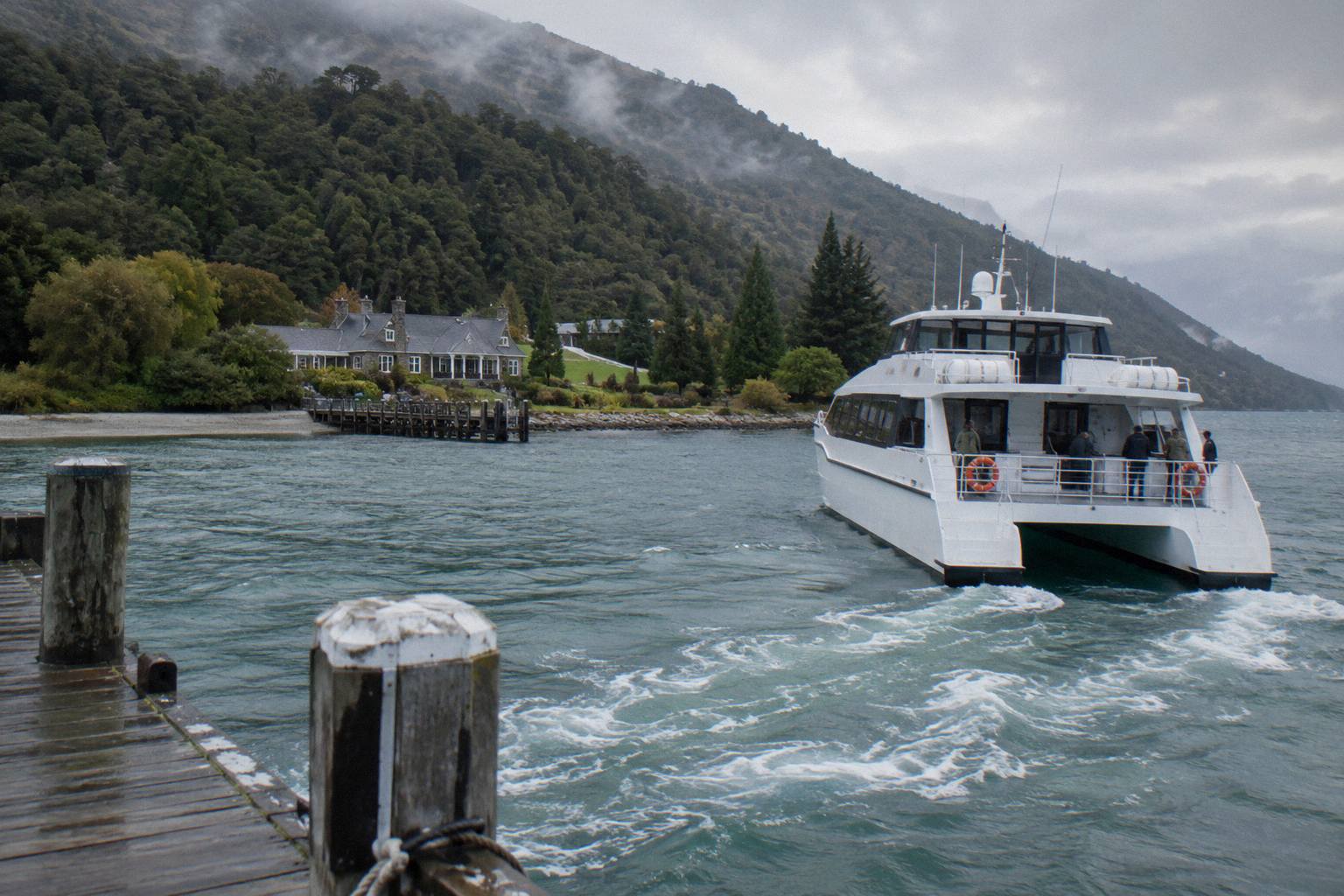
The fire came within 300 m of the historic homestead on the first day, prompting evacuation of 350 guests and staff, RealNZ chief executive Dave Beeche said at the time. The vessel exclusion zone near the Walter Peak shoreline was lifted once the fireground was handed back to landowners. No cause has been established publicly, and none is claimed here.
The event is worth understanding for one reason: it confirmed that the visitor operation and the station are managed separately. The fire burned on the station and conservation land; the farm, homestead and wharf infrastructure were protected and undamaged. Sailings were disrupted in the days around the fire, and realnz.com experience pages now show normal operation with no fire notice.
What Trips People Up Before You Book
The most common mistake is booking a farm visit expecting to set foot on Walter Peak Station itself, which no product offers. Second is missing the meeting point: trips leave from the RealNZ Visitor Centre at 88 Beach Street, not from a hotel lobby. Third is timing, since the whole outing runs about 3.5 hours and parking near the wharf needs an extra 30 minutes.
A few specifics worth knowing before you commit:
| Trap | What To Do |
|---|---|
| Confusing the two properties | All bookable trips land at Walter Peak High Country Farm |
| Pickup expectations | Hotel pickup is not included on any Walter Peak product; trips meet at the RealNZ Visitor Centre |
| Parking time | Allow 30 extra minutes; free street parking is limited |
| Dietary needs | Tell RealNZ at booking so the kitchen can prepare |
| Footwear | Non-slip shoes or boots suit the gravel farm paths |
| Payment | Card only on the vessels and at the farm, no cash |
Horse trek riders face extra limits: minimum age 7, minimum height 120 cm and maximum weight 95 kg apply to the horse products only. The trek itself is a guided 40 minute ride to a lookout, suitable for all abilities, with helmets and wet-weather clothing provided. Amounts throughout are New Zealand dollars, and prices vary by date and group, so see the live price on the booking page for your day.
Booking ahead is recommended generally, because vessel space is limited and dining sittings fill in school holidays and peak summer. What to bring rarely changes: non-slip shoes or boots, a warm jacket, sunscreen, a camera and personal medication, since Queenstown weather can run through four seasons in a day and the farm visit spends time outdoors between buildings.
The "Queenstown: Walter Peak Horse Trek & Queenstown Lake Cruise" pairs that guided 40 minute trek to a lookout with the lake crossing, from NZ$279 per person, rated 4.6 from 327 reviews. Food and drinks onboard cost extra on this card, and tea at the Colonel's Homestead follows the ride. Check availability for your dates, since trek slots are the tightest of the farm's products.
Which Tour Fits A Station-Curious Visitor Best?
Visitors who want the working-farm story should pick the farm tour with lake cruise, from NZ$139, because it spends the onshore time on animals and the sheepdog and shearing show. Readers drawn to the wider landscape can add the horse trek, and history-minded visitors get the Earnslaw crossing, a 1912 coal-fired steamship, thrown in with every option. All three sit in the same 3.5 hour window.
The choice really comes down to what happens after the boat docks. Tea and animals, a BBQ buffet, or a saddle. The which experience to pick guide compares the formats side by side, and Walter Peak Farm Tours lists each one with its live calendar.
Budget frames the decision as much as interest does. The farm visit and the shearing-demo visit both open at NZ$139, the BBQ dining cards open at NZ$175, and the horse trek opens at NZ$279, all per person and all with free cancellation up to 24 hours before start. Family planners can add the visiting Walter Peak with kids guide to the reading pile, since hand-feeding and the dog show carry the day for younger visitors.
For garden-minded readers, the Garden to Table walk covers the restaurant garden and the reforested peninsula, includes planting a native tree or shrub, and finishes with a garden platter; drinks cost extra. It runs from NZ$169 per person, rated 4.8 from 16 reviews, though the uneven tussock makes it unsuitable for wheelchair users. See dates on the operator's calendar for any of these.
The choice between morning and afternoon also shapes the day, and the best time to visit guide works through the seasons, from spring lambs to winter snow on the Remarkables behind the show. Whichever slot wins, the station keeps farming across the fence line, exactly as it has through every era described above.
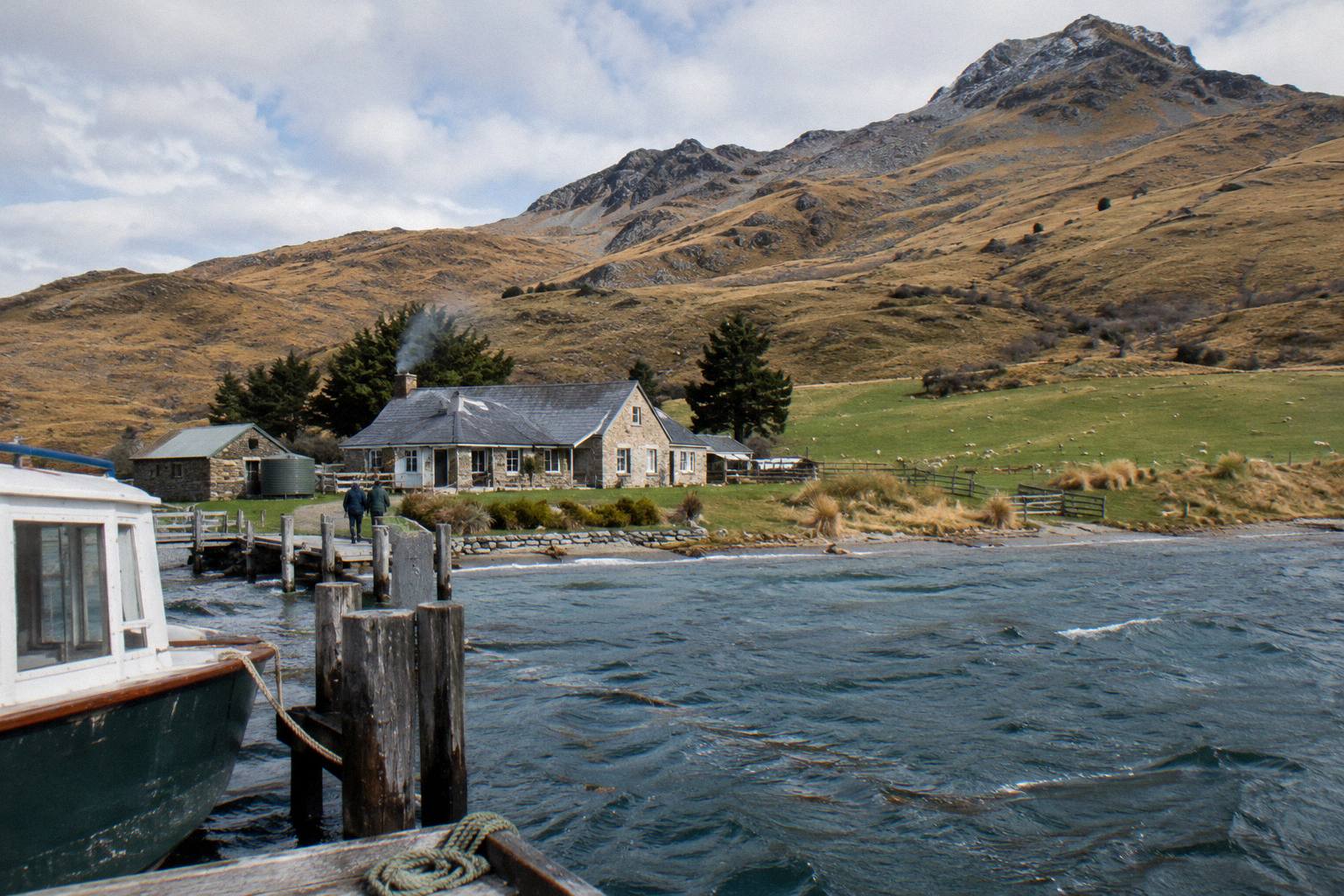
The 2013 purchase gave RealNZ full control of the visitor operation it had run under lease since securing the pastoral lease in 1987, and the restoration project that followed has reforested the peninsula visitors now walk. The station next door keeps farming, much as the Mackenzies did from the late 1880s, and the two properties keep sharing one name across the water from Queenstown. For travellers, that shared name is the only confusion worth clearing up before booking: pick a farm product, ride the steamship, and enjoy the station as scenery.
Common Questions About The Station And The Farm
Is Walter Peak Station The Same As Walter Peak High Country Farm?
No. The farm is the 155 hectare RealNZ visitor property at Beach Bay where lake cruises land; the station is the neighbouring working sheep and cattle property with separate owners.
Can You Visit Walter Peak Station Itself?
No product lands on the station. Bookable trips all visit Walter Peak High Country Farm next door.
Is Walter Peak A Working Farm?
Yes. RealNZ runs it as a working high-country farm with Highland cattle, sheep including merino, alpacas, deer, pigs and donkeys, plus a live sheepdog and blade-shearing demonstration.
How Long Does The Farm Visit Take?
About 3.5 hours including the 45 minute cruise each way, starting and finishing at the RealNZ Visitor Centre, 88 Beach Street, Queenstown.
Who Owns Walter Peak?
RealNZ owns and operates Walter Peak High Country Farm, having bought the 155 hectare property on 5 December 2013. The neighbouring station has separate owners.
Did The 2026 Fire Damage The Farm?
No homes, buildings or livestock were lost. The fire burned across the neighbouring station and conservation land, was declared contained on 8 October 2026, and trips run as normal now.