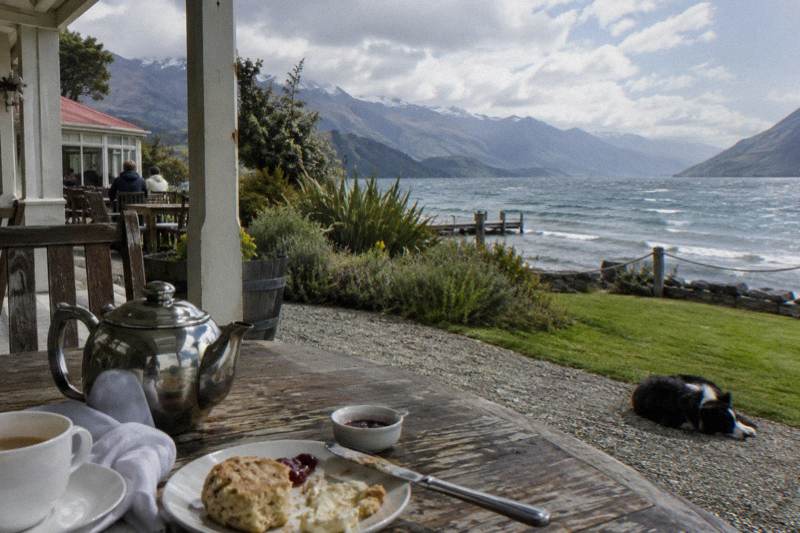
Best Photo Spots At Walter Peak And On The Lake
A Walter Peak day packs a lake crossing, a working farm, a sheepdog show and 1870s gardens into about three and a half hours, and every stage has its own photographic payoff. Here is where the shots are, stage by stage, and which trip to book for each.
Short answer
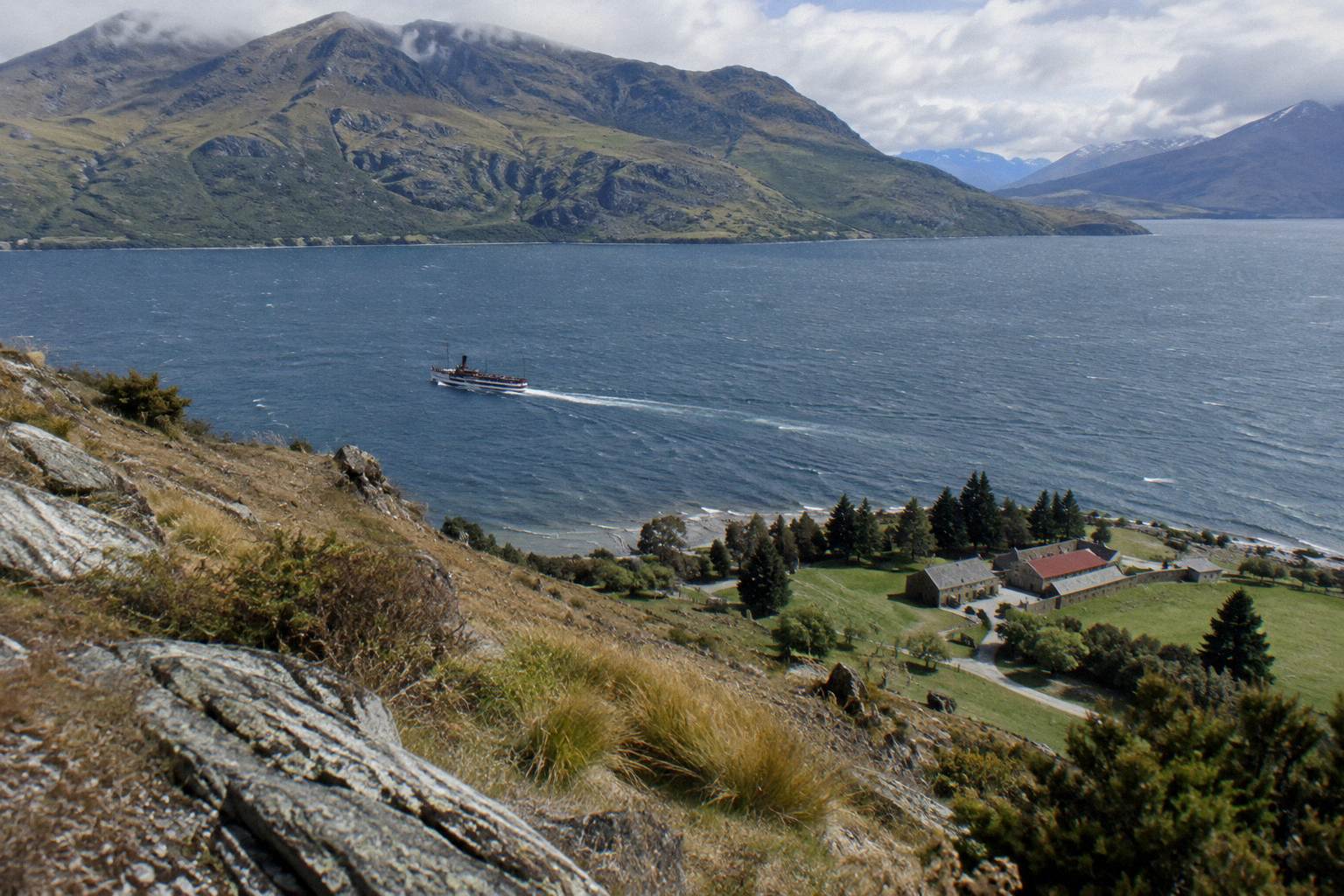
The strongest Walter Peak photos come from four stages: the 45 minute TSS Earnslaw crossing, the purpose-built amphitheatre where heading dogs and huntaways muster sheep, the 1870s homestead gardens with their protected sycamore and oak, and the shoreline walkway along the reforested peninsula. Farm visit trips with tea run from NZ$139 per person.
Walter Peak is one of the most photographed corners of Lake Whakatipu, and the reason is simple: a single booked day stacks a vintage steamship, an alpine lake, a working high-country farm and a garden dating from the 1870s into about three and a half hours. This page walks the day stage by stage, and the full set of bookable farm visits is compared in the which experience should you pick guide, where each option is weighed on price, duration and inclusions.
| Fact | Detail |
|---|---|
| The farm | Walter Peak High Country Farm, 155 hectares at the base of Walter Peak, western shore of Lake Wakatipu, run by RealNZ |
| The crossing | 45 minutes on the TSS Earnslaw, about 30 to 35 minutes on the Spirit of Queenstown |
| Whole trip length | About 3.5 hours including the cruise |
| Animals on RealNZ pages | Highland cattle (resident cow Dougal), sheep including merino, alpacas, deer, pigs, donkeys |
| The show | Heading dogs and huntaways muster sheep, then a live blade-shearing demonstration, in a purpose-built amphitheatre |
| The gardens | Date from the 1870s, with a protected sycamore and oak and a kauri added in the 1960s |
| Payment on site | Card only on both vessels and at Walter Peak |
| Trip prices | Farm visits from NZ$139, Gourmet BBQ dining from NZ$175, Garden to Table from NZ$169, horse treks from NZ$279 per person |
What You Can Photograph At Walter Peak
The photographic day at Walter Peak falls into five distinct stages: the lake crossing on a 1912 coal-fired steamship, the wharf and shoreline at the farm, the amphitheatre farm show with its dogs and blade shearing, the animals on the gravel farm paths, and the 1870s homestead gardens. Each stage rewards a different kind of patience. The crossing is about movement and water, the show is about timing, the gardens are about stillness and old trees, and the shoreline walkway along the reforested peninsula frames the lake and the peaks beyond it. RealNZ, the operator, describes the farm as a working high-country sheep and cattle property, and that working character is exactly what separates these photographs from ordinary lake scenery.
Not everything photographable here is on the farm itself. The TSS Earnslaw, built in Dunedin in 1912, is a photographic subject in her own right, from her red funnel to the warm, loud engine room and stoker room visitors can walk down into. The Wikipedia entry for the TSS Earnslaw records her coal-fired boilers and her long service on the lake, and the vessel burns about 1.5 tonnes of coal per return trip according to the operator. Between boat, lake, farm and garden, a single booked afternoon can produce four genuinely different portfolios.
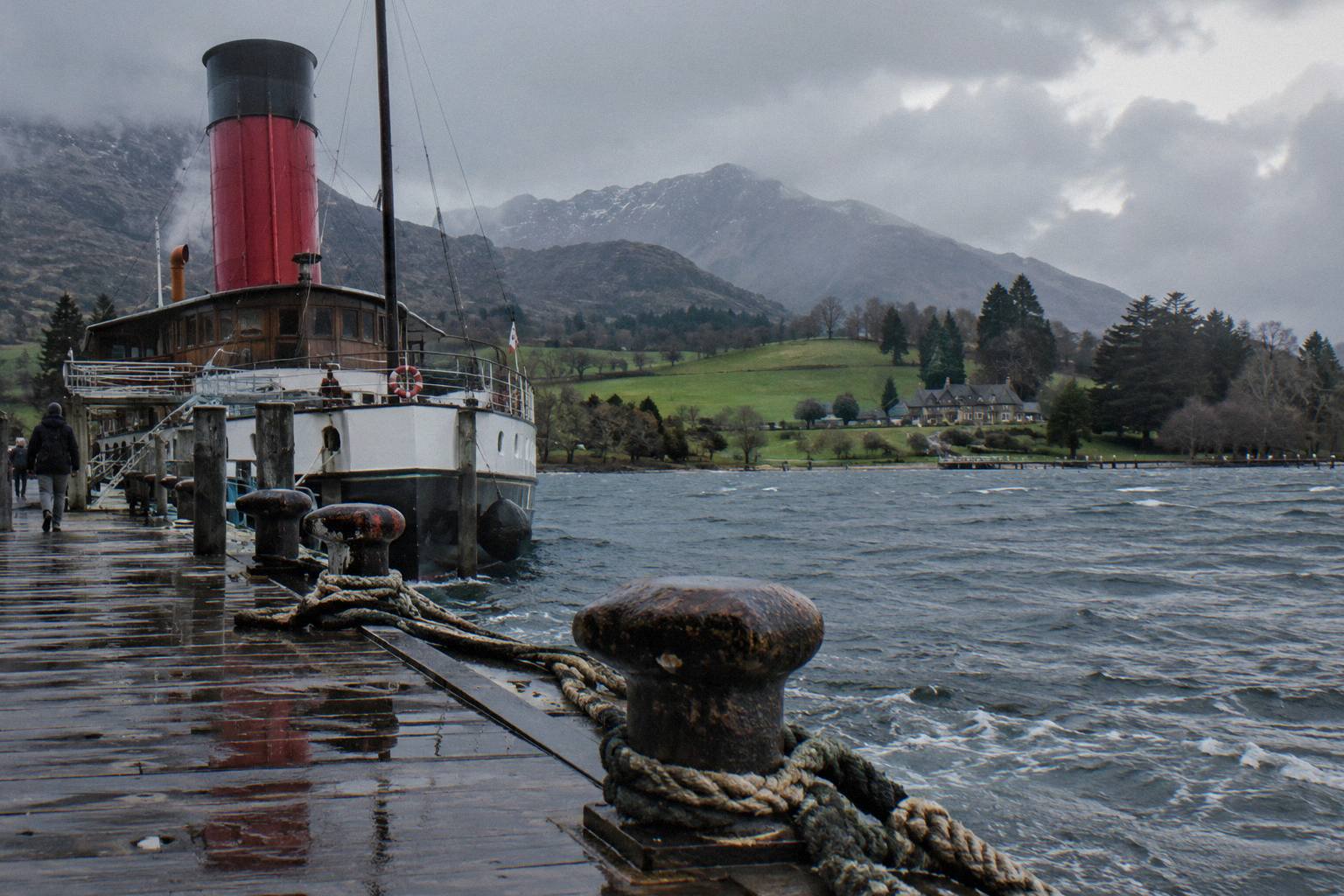
Planning around light matters more than equipment. RealNZ notes the lake region sees four seasons in a day and the Queenstown forecast is a good guide, and summer typical highs run 19 to 29 °C while winter sits between 5 and 10 °C. The what to wear and bring guide covers the practical kit, and nothing on this page depends on any particular camera: every spot below works with a phone as well as with anything larger.
Photo Spots On The Lake Crossing
The crossing itself is the first and often the best photographic stage, because the Earnslaw offers three vantage points in one: the deck with the lake and mountains, the stern with the wake and coal smoke, and the engine room below deck where the stokers work the boilers in front of you. The run from Queenstown to Walter Peak takes 45 minutes each way on the steamship, long enough to work all three angles rather than rush one. On the modern catamaran, the Spirit of Queenstown, the crossing takes about 30 to 35 minutes and the framing is cleaner and more contemporary, all glass and water.
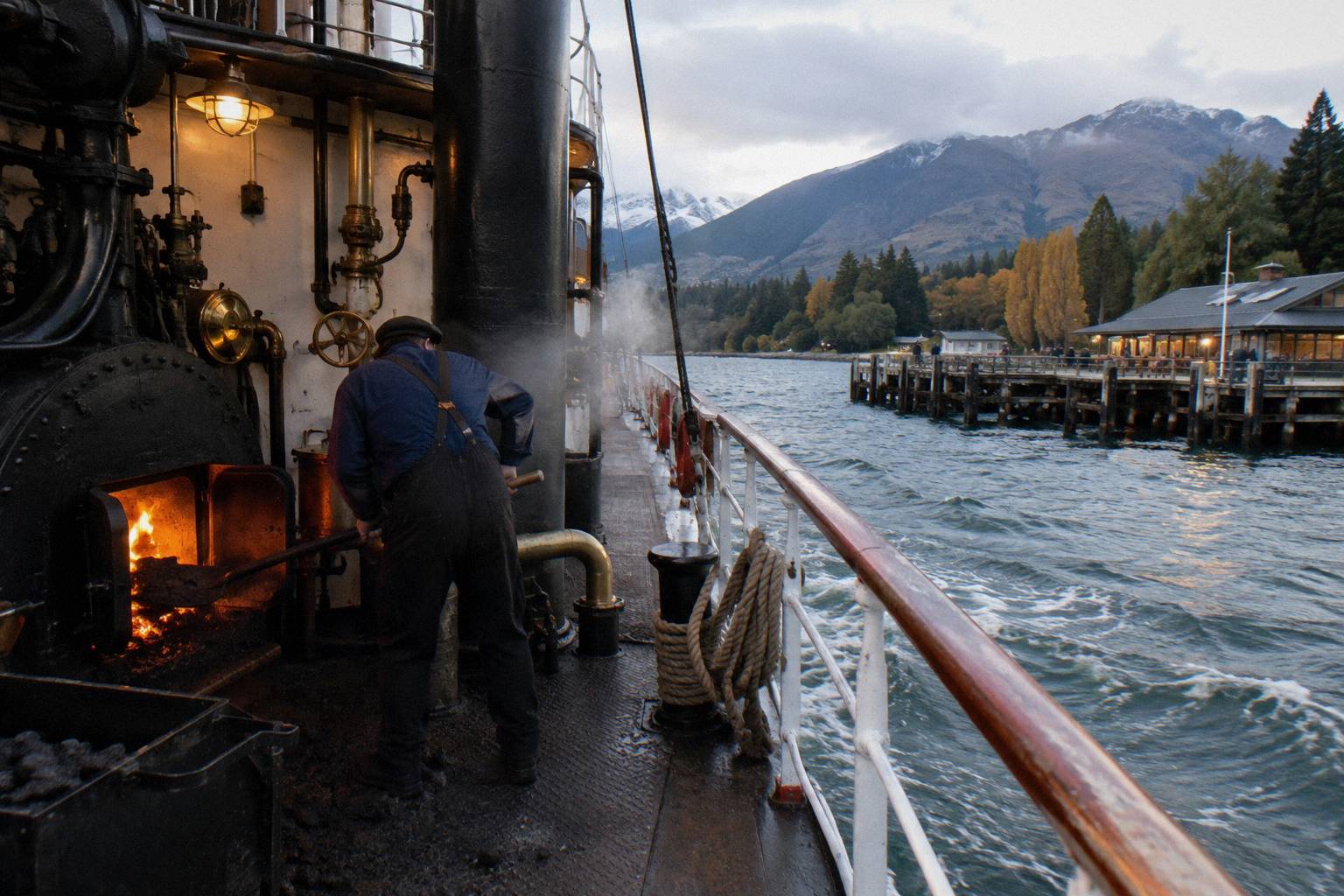
The engine room deserves the stop. Visitors can go below to the engine room and stoker room, warm and loud, with the machinery in motion the whole crossing, and there is a mini-museum, the Promenade Cafe and a licensed bar upstairs, with live piano on some sailings. Those details shape what you can shoot while underway: a working steam plant, a cabin with period character, and an open deck where the lake light changes with every turn toward the western shore. Payment on the vessels is card only, so sort the coffee before you settle at a window.
Departure choice sets the light. RealNZ's typical summer Earnslaw departures, October to April, are 9:00am, 11:00am, 1:00pm, 3:00pm, 5:00pm and 7:00pm, and the start time for any booked trip is chosen on the booking calendar. The Earnslaw departure times guide works through what each slot means for the lake and the mountain behind it, and the crossing is usually calmer in the morning before the afternoon wind picks up off the water, a pattern local operators plan around.
Which product fits depends on how long you want aboard. The farm visit with tea gives you both crossings plus time on land, and you can see the farm visit tour page for its dates and price, from NZ$139 per person. For a pure crossing without a farm landing, Check availability on the 1.5 hour steamship cruise, whose price is on the booking page for the date.
Photo Spots At The Farm And In The Amphitheatre
The farm's core photographic set pieces are the amphitheatre show, where working heading dogs and huntaways muster sheep and a blade-shearing demonstration follows, and the animal paddocks where Highland cattle, sheep, alpacas, deer, pigs and donkeys come close enough for portraits. The show sits in a purpose-built amphitheatre cut into the hillside, so the framing is layered: dogs and sheep on the slope, the lake behind, and in winter the Remarkables snow-capped above the whole scene, as RealNZ's own seasonal notes describe. The resident Highland cow is named Dougal, and the long-coated cattle against tussock are among the most dependable frames on the property.
Timing inside the show is the one thing worth preparing for. The muster moves fast, the dogs work wide arcs, and the shearing demonstration brings the action close and low to the ground, so it pays to watch the first run of dogs before lifting the camera for the second. RealNZ does not publish a show length, so plan for the show as one block within your roughly 3.5 hour trip rather than a fixed slot. The farm visit ends with afternoon or morning tea of scones, cakes, slices and sandwiches in the woolshed, and the woolshed interior, timber and wool bales, is a quieter photographic subject after the show.
The paths shape the animal photography. The farm tour runs on gravel paths, and unaided wheelchair users cannot tour the farm, a limitation the accessibility guide covers in full. Hand-feeding happens on the farm tour, which brings the animals to you rather than the reverse, and the farm animals guide lists what RealNZ names on its pages, nothing more: cattle, sheep including merino, alpacas, deer, pigs and donkeys.
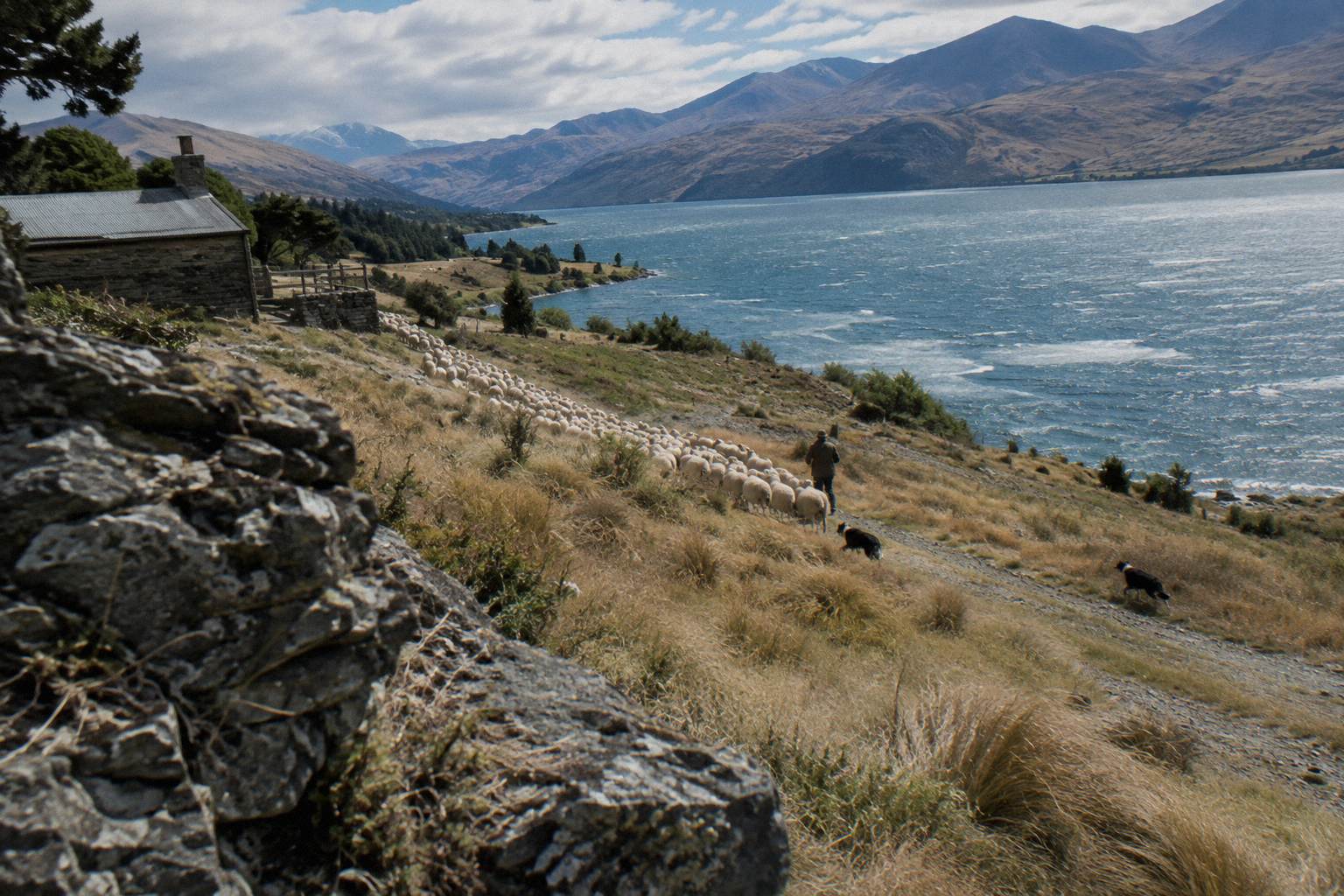
One trip adds a vantage the others cannot: the horse trek. A guided 40 minute ride to a lookout, with helmets and wet-weather clothing provided, puts you above the shoreline for elevated frames of the lake and the peninsula. The trek suits all abilities, with a minimum age of 7, minimum height 120 cm and maximum weight 95 kg, and tea at the Colonel's Homestead follows. It runs from NZ$279 per person, with free cancellation up to 24 hours before start.
The Homestead Gardens And The Reforested Peninsula
The garden stage gives Walter Peak its quietest photographs: gardens that date from the 1870s, a protected sycamore and oak counted among the oldest introduced trees in the region, a native kauri added in the 1960s, and a public walkway along the foreshore to Beach Point through land cleared and replanted since 2014. The trees carry the history in a single frame: the sycamore and oak predate almost everything else planted by settlers in the district, and the kauri marks a deliberate mid-century addition to a southern garden, far from its northern range. The homestead itself, the Colonel's Homestead, is the backdrop, and the RealNZ history of Walter Peak page traces the gardens and the property's run from 1860s settlement onward.
The reforestation story is visible rather than explained. The Walter Peak Land Restoration Project, launched in 2014, cleared the 155 hectare property of invasive non-native trees and weeds and replaced them with native planting, and the public walkway along the foreshore to Beach Point runs through the result. For photographers this means a shoreline sequence, water, new natives, old exotics, homestead, in the space of a short walk. The whole property sits 13 km from Queenstown across the water, and Real Journeys, now RealNZ, bought the 155 hectares including the homestead in December 2013, as the RealNZ media release on the purchase records.
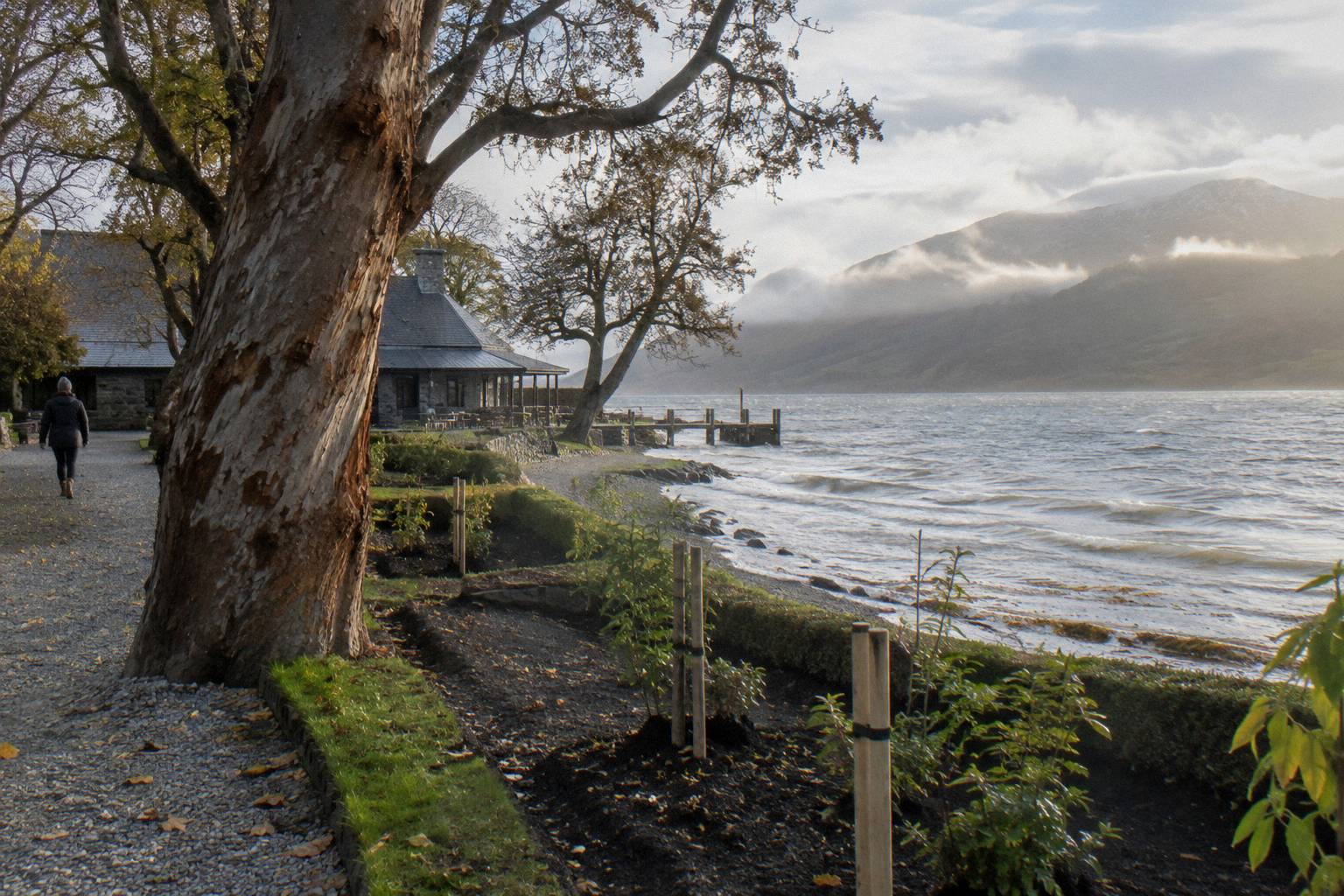
The Garden to Table product is built around exactly this stage: a guided walk through the restaurant garden, the walk along the reforested peninsula, planting a native tree or shrub, and a garden platter, from NZ$169 per person with drinks extra. It is not suitable for wheelchair users, as the peninsula tussock is uneven. The Garden to Table experience guide covers what the trip includes, and the best time to visit guide helps match a garden visit to the season you want in frame.
Getting to this stage depends on the TSS Earnslaw, the 1912 coal-fired steamship that has carried visitors across Lake Wakatipu for more than a century. The crossing takes 45 minutes each way, which gives you two short onboard shoots as bookends to the garden and peninsula work: the engine room and stoker room below deck, where crew still shovel coal, and the mini-museum upstairs. Between October and April, summer sailings typically leave Queenstown at 9:00am, 11:00am, 1:00pm, 3:00pm, 5:00pm and 7:00pm, so the 5:00pm and 7:00pm departures pair the shoreline sequence with late and low light over the water.
One planning note for the frame: the horse trek option climbs 40 minutes to a lookout suitable for all abilities, and it overlaps with the peninsula walk territory, so if you want both the elevated view and the shoreline sequence, check the Garden to Table and trek timings against the Earnslaw schedule before you lock in a sailing. The last thing you want is to be mid-planting on the reforested peninsula when your return steamship sounds its horn at the jetty.
Which Season Gives The Best Walter Peak Photos
Winter and spring change the Walter Peak frame most: from the colder months the animals carry heavy coats, the farm is quieter and the Remarkables sit snow-capped behind the amphitheatre, while spring adds lambs to the paddocks, and the operator runs the farm year-round. The snow line is the visible difference. A winter show photograph carries a white range behind the muster that summer simply cannot offer, and Dougal and the other Highland cattle are at their shaggy best in the cold. Typical highs and lows by season, per RealNZ, are summer 19 to 29 °C, autumn 15 to 25 °C, winter 5 to 10 °C and spring 9 to 15 °C, with four seasons possible in a single day.
| Season | Typical Highs And Lows | What Changes In The Frame |
|---|---|---|
| Summer, October to April | 19 to 29 °C | Full six-departure Earnslaw schedule, long evenings, busiest sittings |
| Autumn | 15 to 25 °C | Settled light, colour in the introduced trees of the 1870s gardens |
| Winter | 5 to 10 °C | Snow-capped Remarkables behind the show, heavy animal coats, quieter farm |
| Spring | 9 to 15 °C | Lambs in the paddocks, variable weather day to day |
The crossing seasons matter too. The Earnslaw is scheduled to run every day of the year apart from her annual maintenance window, May to early July, and in 2026 that window ran 18 May to 26 June, with the Spirit of Queenstown, about 30 to 35 minutes each way, serving Walter Peak during it. The Walter Peak in winter guide works through the cold-season trip in detail, and the comparison of the two vessels on the RealNZ lake cruise comparison page sets out the crossing times side by side.
Which Trip To Book For Each Kind Of Shot
Match the product to the frame you want: the farm visit with tea covers the amphitheatre, the animals and the woolshed; the Gourmet BBQ products add the homestead dining rooms and the lit evening demonstration after dinner; the horse trek adds the elevated lookout; and the Garden to Table walk adds the peninsula planting and the oldest trees. Every trip crosses the lake, so the steamship stage is common ground, but the land stage differs sharply between cards, and each product's inclusions belong to that card alone, for example hotel pickup is included on the Shearing Demo farm visit and excluded on the dinner and lunch products. All amounts here are New Zealand dollars, and prices vary by date and group, with the booking page showing the price for the date.
| Photo Goal | Stage It Belongs To | Product That Gets You There |
|---|---|---|
| Steamship deck, funnel, engine room | The crossing | Any Walter Peak trip, or the 1.5 hour cruise only |
| Amphitheatre muster and blade shearing | The farm show | Nature Guide Farm Visit, Tea, from NZ$139 |
| Animal portraits, hand-feeding | Gravel farm paths | Nature Guide Farm Visit, Tea, from NZ$139 |
| Woolshed interior over tea | End of farm tour | Nature Guide Farm Visit, Tea, from NZ$139 |
| Elevated lake and peninsula frames | Lookout above the shore | Horse Trek, from NZ$279 |
| Old trees, reforested shoreline, planting | Gardens and peninsula | Garden to Table, from NZ$169 |
| Homestead dining rooms, lit evening demo | Evening, after dinner | Evening Dinner, Wakatipu Cruise, price on the booking page |
The dinner product is the only evening option in the set, running about 4 hours with the departure and start time chosen on the booking calendar, and after the BBQ meal the demonstration follows, lit for the dark. It carries no printable rating, so judge it on its own description rather than a number, and hotel pickup is excluded. The BBQ dinner and evening cruise guide walks the evening in full if that slot suits your light.
Photo Opportunities Stage By Stage Through The Day
A full Walter Peak day hands you roughly six photographic stages in sequence: the wharf at Steamer Beach Street, the outbound crossing, the shoreline and gardens on arrival, the amphitheatre show, the animal paddocks and woolshed, and the return crossing with the evening light if your slot is late. The table below lays them out in order, with what each stage offers and what to have ready. The meeting point is the RealNZ Visitor Centre on Steamer Wharf, 88 Beach Street, and with pre-purchased tickets you meet in front of the TSS Earnslaw at the dock, which is itself worth a few frames before boarding.
| Stage Of The Day | What Is In Frame | Notes |
|---|---|---|
| Steamer Wharf, 88 Beach Street | Steamship at the dock, lake, town frontage | Allow 30 extra minutes for parking; paid buildings at Man Street and Church Street |
| Outbound crossing, 45 minutes | Deck, funnel, wake, engine room and stoker room, mini-museum | Card only on board; live piano on some sailings |
| Arrival at the farm | Wharf, shoreline, homestead from the water | Inclined gravel path up from the wharf to the BBQ restaurant |
| The amphitheatre show | Heading dogs and huntaways mustering, blade shearing, lake behind | Winter adds snow-capped Remarkables behind the action |
| Farm paths and woolshed | Highland cattle including Dougal, sheep, alpacas, deer, pigs, donkeys; tea of scones, cakes, slices, sandwiches | Gravel paths; hand-feeding on the farm tour |
| Return crossing | Lake, mountains, steamship lines in late light | Evening departures in summer run to a 7:00pm typical sailing |
The half day timeline guide sequences the same stages with the clock, useful when a late departure threatens the light on the return leg. Booking ahead is recommended generally, as vessel space is limited and dining sittings fill in school holidays and peak summer, a point the booking in advance guide develops.
What Trips People Up Before You Book
The common missteps are expecting a fixed show schedule, misreading which inclusions belong to which card, arriving without parking time, and assuming cash or winter closure: the show length is not published, inclusions like hotel pickup and meals differ card to card, the vessels and the farm take card only, and the farm runs year-round with the Spirit covering the Earnslaw's May to early July maintenance. Each of those has quietly reshaped someone's day, and none of them is obvious from a distance. Free cancellation up to 24 hours before start applies across the products in the range, which takes most of the risk out of locking in a departure early, before the sittings you want fill.
Parking is the practical one. RealNZ advises allowing 30 extra minutes, free street parking is limited, paid buildings sit at Man Street and Church Street, and the Boundary Street and Ballarat Street car parks are about 15 minutes walk away. The Steamer Wharf check-in and parking guide covers the geography, and the BBQ buffet card asks arrivals 30 minutes early besides. None of this is dramatic, but a missed departure over parking is a whole afternoon of photographs gone.
Wheelchair access splits by stage, and photographers travelling with a chair should plan around it: the BBQ restaurant is wheelchair accessible via an inclined gravel path from the wharf, both vessels are ramp-boarded but neither is fully wheelchair accessible and neither has an accessible toilet, and the farm tour on gravel paths defeats unaided chairs. Ask the operator about a specific product when the limits matter to your group, and check the live price for your date at the booking stage rather than planning around a figure that shifts with the calendar.
Common Questions About Photographing Walter Peak
What Can You Photograph At Walter Peak?
A 45 minute steamship crossing with an open engine room, a hillside amphitheatre show with working dogs and blade shearing, Highland cattle including Dougal plus sheep, alpacas, deer, pigs and donkeys, 1870s gardens with a protected sycamore and oak, and a foreshore walkway to Beach Point through replanted native bush.
Which Walter Peak Trip Is Best For Photos Of The Farm Show?
The farm visit products that include the amphitheatre show. The Nature Guide Farm Visit with tea runs from NZ$139 per person, about 3.5 hours including the cruise, and covers the muster, the shearing demonstration, hand-feeding and tea in the woolshed.
What Season Gives The Best Walter Peak Photos?
Winter puts snow on the Remarkables behind the amphitheatre and heavy coats on the animals, and the farm is quieter then. Spring adds lambs. The farm runs year-round, with typical highs of 5 to 10 °C in winter and 19 to 29 °C in summer.
Can You Photograph The TSS Earnslaw Engine Room?
Yes, visitors can go below to the engine room and stoker room, described by the operator as warm and loud, with the coal-fired plant working through the 45 minute crossing. A mini-museum, the Promenade Cafe and a licensed bar sit upstairs, and payment on board is card only.
Is The Earnslaw The Only Boat To Walter Peak?
No. The Spirit of Queenstown, a modern catamaran, makes the crossing in about 30 to 35 minutes and serves Walter Peak while the Earnslaw is in her annual maintenance window, May to early July, which ran 18 May to 26 June in 2026. Outside that window the Earnslaw is scheduled every day.
Do You Need To Book A Walter Peak Trip In Advance For Photography?
Booking ahead is recommended because vessel space is limited and dining sittings fill in school holidays and peak summer. Choosing your departure on the booking calendar is how you control the light, and free cancellation up to 24 hours before start applies to the products in the range.