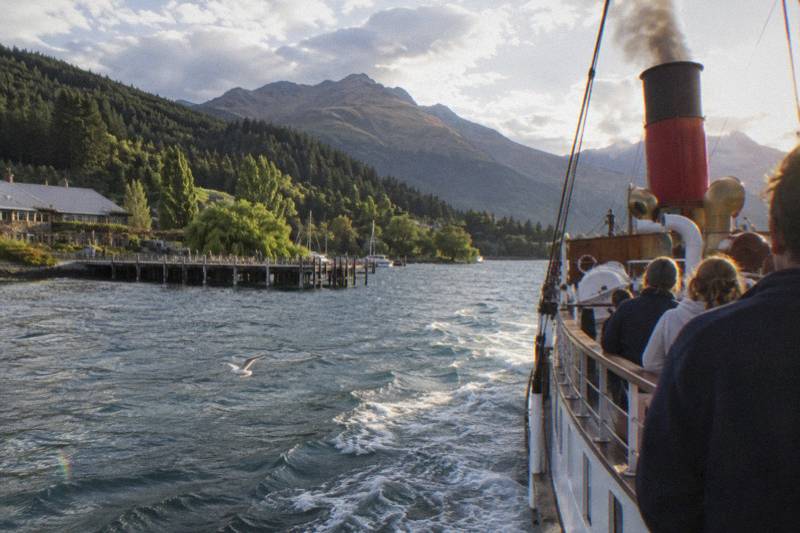
What Does TSS Earnslaw Stand For?
TSS stands for Twin Screw Steamer, a title earned by the twin propellers of the 1912 coal-fired steamship that carries visitors across Lake Whakatipu to Walter Peak.
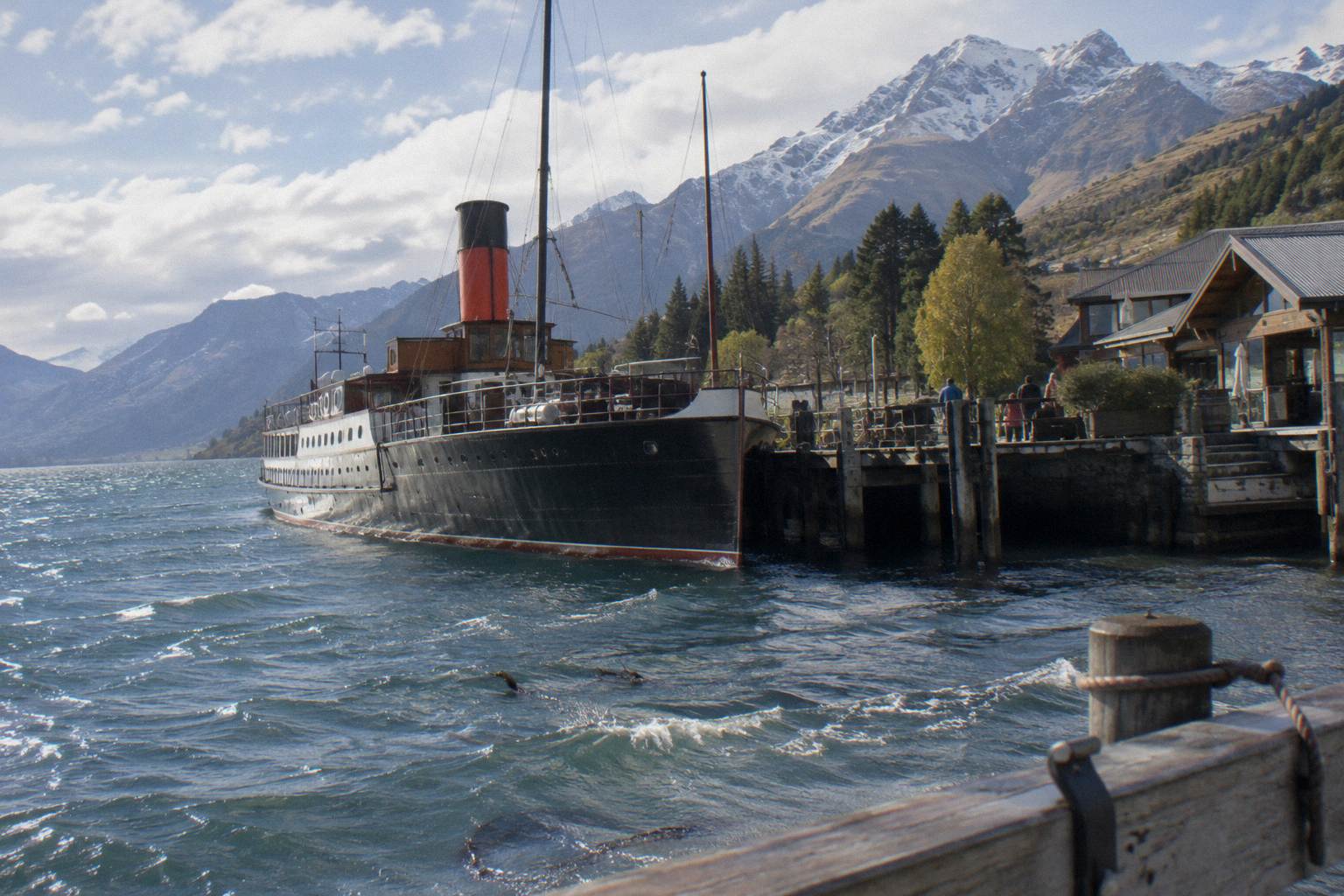
Steamships, screws and century-old coal engines sit at the heart of the Walter Peak day out, and the sailing itself, with no farm landing attached, is bookable as the steamship cruise card. This page decodes the letters in her name first, then follows the story behind them, from a Dunedin shipyard in 1912 to the wharf at Queenstown today.
| Fact | Detail |
|---|---|
| What TSS stands for | Twin Screw Steamer |
| Vessel type | Coal-fired passenger steamship |
| Built | Dunedin, 1912, by John McGregor and Company |
| Original owner | New Zealand Railways |
| Length | More than 48 metres |
| Coal used | About 1.5 tonnes per return trip |
| Current operator | RealNZ |
| Crossing to Walter Peak | 45 minutes |
TSS stands for Twin Screw Steamer, a ship prefix that identifies two things about the vessel: she is driven by steam power, and she turns two propellers rather than one. In older maritime language a propeller is a screw, so a twin screw steamer is a steamship with a propeller on each side of the hull, a layout that gave better handling and redundancy on open water. The Earnslaw keeps the prefix because she keeps the machinery.
The Wikipedia entry for the TSS Earnslaw records the prefix as Twin Screw Steamer. The prefix sits in a family of ship titles readers will recognise. RMS meant Royal Mail Ship, a vessel contracted to carry post. HMS and USS mark naval vessels of Britain and the United States. MV, still common today, means Motor Vessel. TSS belonged to the steam age, and every ship that carried it was announcing her machinery before anything else: coal burned in a boiler, water turned to steam, and pistons converting that steam into rotation at the shafts.
| Prefix | Meaning | What it told you |
|---|---|---|
| TSS | Twin Screw Steamer | Steamship with two propellers |
| RMS | Royal Mail Ship | Under contract to carry post |
| HMS | Her Majesty's Ship | British naval vessel |
| USS | United States Ship | American naval vessel |
| MV | Motor Vessel | Driven by diesel or petrol engines |
The reason two screws mattered on Lake Whakatipu is practical. A single propeller pushes a ship straight ahead and gives the helmsman little help when manoeuvring at a wharf. Two propellers can be run at different speeds or in opposite directions, letting a vessel swing on the spot, which is useful on a lake whose mountain weather can shift quickly. Twin screws also meant that a failure of one shaft did not leave a ship drifting.
Why "Earnslaw" itself sits in the name is not something this page can settle for you. What is documented is the geography she serves: Walter Peak, her destination on the western shore, was named by surveyor James McKerrow in 1862 after Cecil Walter Rees, eldest son of Queenstown founder William Rees, and the Wikipedia page for Walter Peak records the peak at 1,800 metres. The vessel carried her name long before she carried tourists, and the story of how she was built explains why the prefix still fits her a century on.
If reading about the machinery makes you want to stand on her deck, the natural place to start is the plain sailing, with no farm landing attached. Walter Peak itself is a day trip, reached by water, and the cruise that pairs her with a guided farm walk is a different card again.
The steamship sailing alone runs about 1.5 hours and is rated 4.5 from 296 reviews. The guided farm tour card lands you at Walter Peak with a walk through the property, and the third card is a same-family alternative that pairs the lake crossing with a farm visit and afternoon tea, from NZ$139 per person. All amounts on this page are New Zealand dollars, and prices vary by date and group; the booking page shows the price for the date you choose.
Why Twin Screws Mattered For A Lake Steamer In 1912
A twin screw layout gave the Earnslaw two independent propellers, each driven by the steam plant through its own shafting, and that arrangement made a mid-size lake vessel far easier to handle at a jetty and safer in a squall. When one screw or its machinery needed attention, the other could still drive the ship home. For a vessel keeping a schedule in mountain weather, the redundancy was a working requirement of the timetable.
Design details like this were standard naval architecture by 1912, and they were expensive. The decision to build a proper twin screw steamer rather than a simpler single screw vessel says something about how seriously New Zealand Railways took the lake service. This was not a ferry thrown together for a quiet route. She was a railway asset, built to a specification, and her construction involved one of the stranger logistics exercises in New Zealand shipping.
Dunedin, where her hull was riveted, is not on Lake Wakatipu. There is no navigable water between the two. The answer was to build her in sections, load those sections onto rail wagons, and send them inland to Kingston at the southern end of the lake, where she was reassembled and launched. The RealNZ guide to Walter Peak High Country Farm describes her as the vessel that has carried visitors across since that era, and the crossing she makes today is the same 45 minutes each way.
Whether to sail her without a farm landing is the decision this section really turns on. A reader decoding her name is often weighing the sailing itself against the fuller day, and there is a clean split between the two.
Should you take the plain sailing? It suits travellers who want the steamship, the engine room and the lake scenery without committing three and a half hours to a farm visit. Free cancellation applies up to 24 hours before start, so the decision is reversible, and check the live price for your date before you settle on a morning or an afternoon.
Where The Peak Behind The Name Comes From
The destination the Earnslaw serves takes its name from a family, not a feature. Surveyor James McKerrow named Walter Peak and Cecil Peak in 1862, honouring Cecil Walter Rees, the eldest son of William Rees, the founder of Queenstown. The peak stands 1,800 metres high on the western shore, above the farm where the steamship's passengers step ashore. The letters TSS describe the machinery, while the place name in her schedule memorialises the first pastoral family of the district.
William Rees arrived in the area in the early 1860s and established his station on the lake shore. The 1860s were hard on early runholders in the district; the RealNZ history pages describe Von Tunzelman, an earlier settler on the western shore, being forced off by stock deaths, snowstorms and a shortage of money. Rees stayed, and the surveyors who mapped the country afterwards put his son's names on two of the most prominent peaks on the lake's western wall.
The 1860s date matters because it anchors the whole story in one decade. Within roughly fifty years of the Rees family's arrival, the lake had a coal-fired twin screw steamer running a scheduled service to settlements along its shores, and within another century the same vessel was carrying visitors from around the world on the same routes.
For readers planning the crossing rather than studying it, the naming history is a small piece of a bigger picture. The farm at the base of the peak operates as a working high country property, and a longer read on the station and its sheep and cattle explains what actually happens on the land once you step off the boat. The lake crossing and the farming story are two halves of the same day.
Built In Dunedin 1912, Reassembled At Kingston
The Earnslaw was built in Dunedin in 1912 by John McGregor and Company for New Zealand Railways, then taken apart, carried by rail to Kingston at the southern end of Lake Wakatipu, and reassembled on the lake shore for launching. Her maiden voyage came in 1912, the same year she was completed. She is more than 48 metres long, coal-fired, and described by RealNZ as the only coal-fired passenger steamship in operation in the southern hemisphere.
The rail journey from Dunedin to Kingston is the detail that stops most readers. Building a ship away from the water she would sail on, then sending her in pieces across country by train, was the practical answer to a lake with no shipyard. Kingston was the railhead, and the lake was the highway: settlements such as Queenstown depended on vessels like her for freight, mail and passengers long before any road around the shore was dependable.
Her first owner explains the professionalism of the build. New Zealand Railways ran lake shipping as part of the national transport network, and a vessel in that service was engineered, maintained and crewed to a standard. The twin screws, the riveted steel hull and the coal plant all came from that culture, which is a large part of why the ship survived when many of her contemporaries did not.
| Vessel fact | Detail |
|---|---|
| Build year and place | 1912, Dunedin, John McGregor and Company |
| First owner | New Zealand Railways |
| Delivery method | Dismantled, railed to Kingston, reassembled on the lake |
| Length | More than 48 metres |
| Power | Coal-fired steam, about 1.5 tonnes of coal per return trip |
| Funnel | Painted red after a 1984 refit |
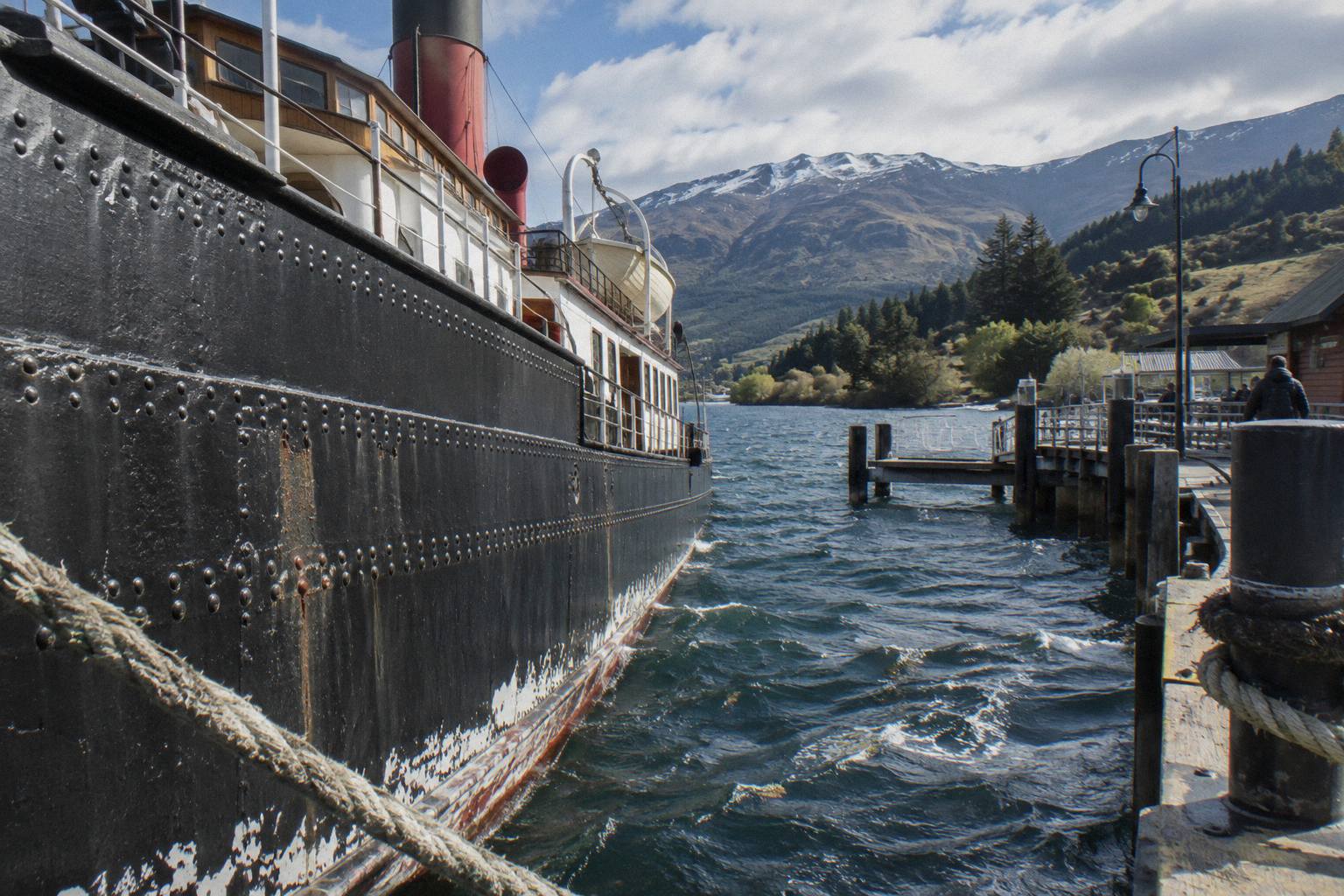
For visitors, the build story shows up in the sailing itself. She is not a replica or a themed tourist boat wearing a costume; she is the 1912 article, still burning coal, still crossing to the same wharf. The RealNZ history of Walter Peak traces how the farm at her destination grew up alongside the lake service, and the two are still sold together on most days of the year.
Coal, Fireboxes And The Working Engine Room
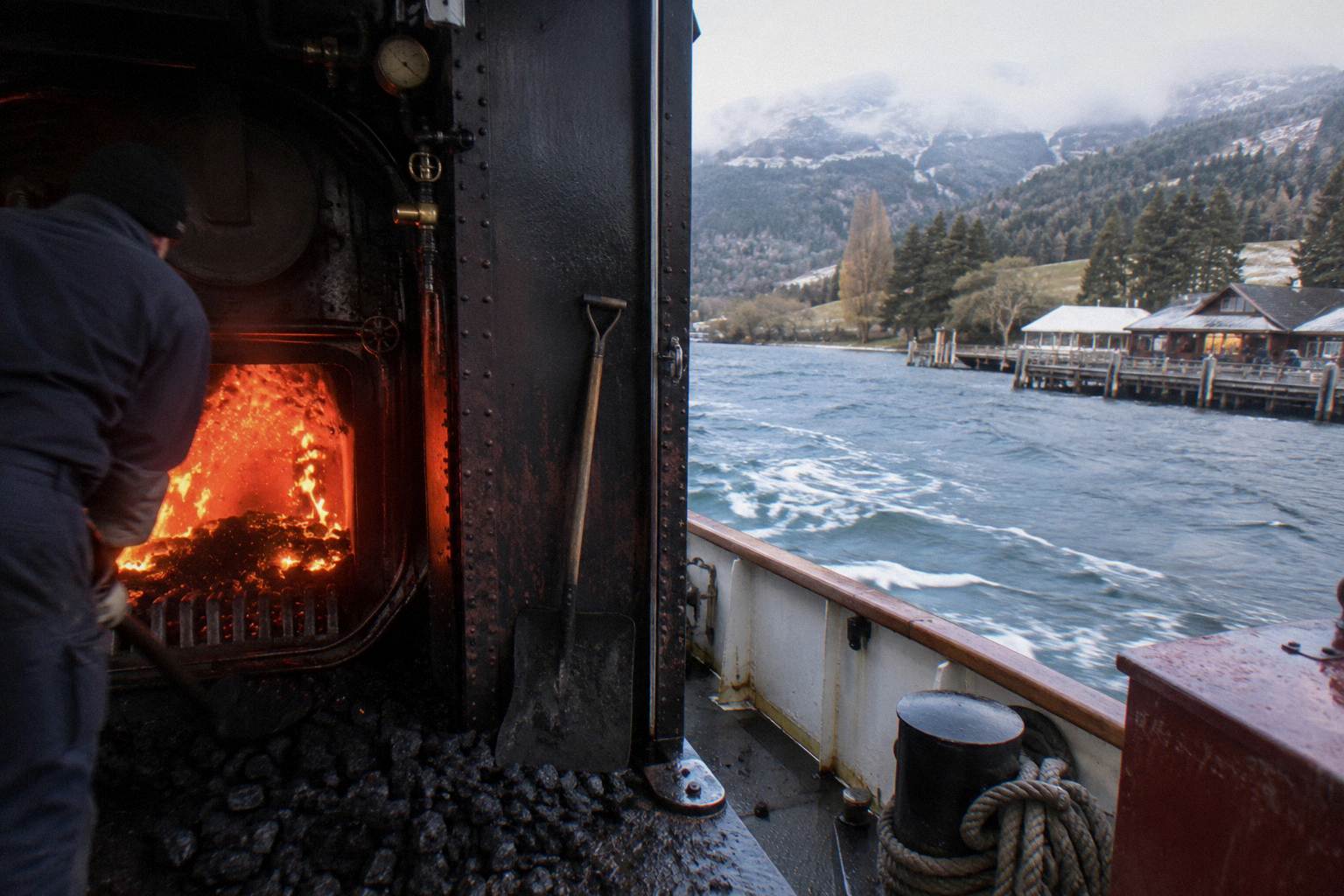
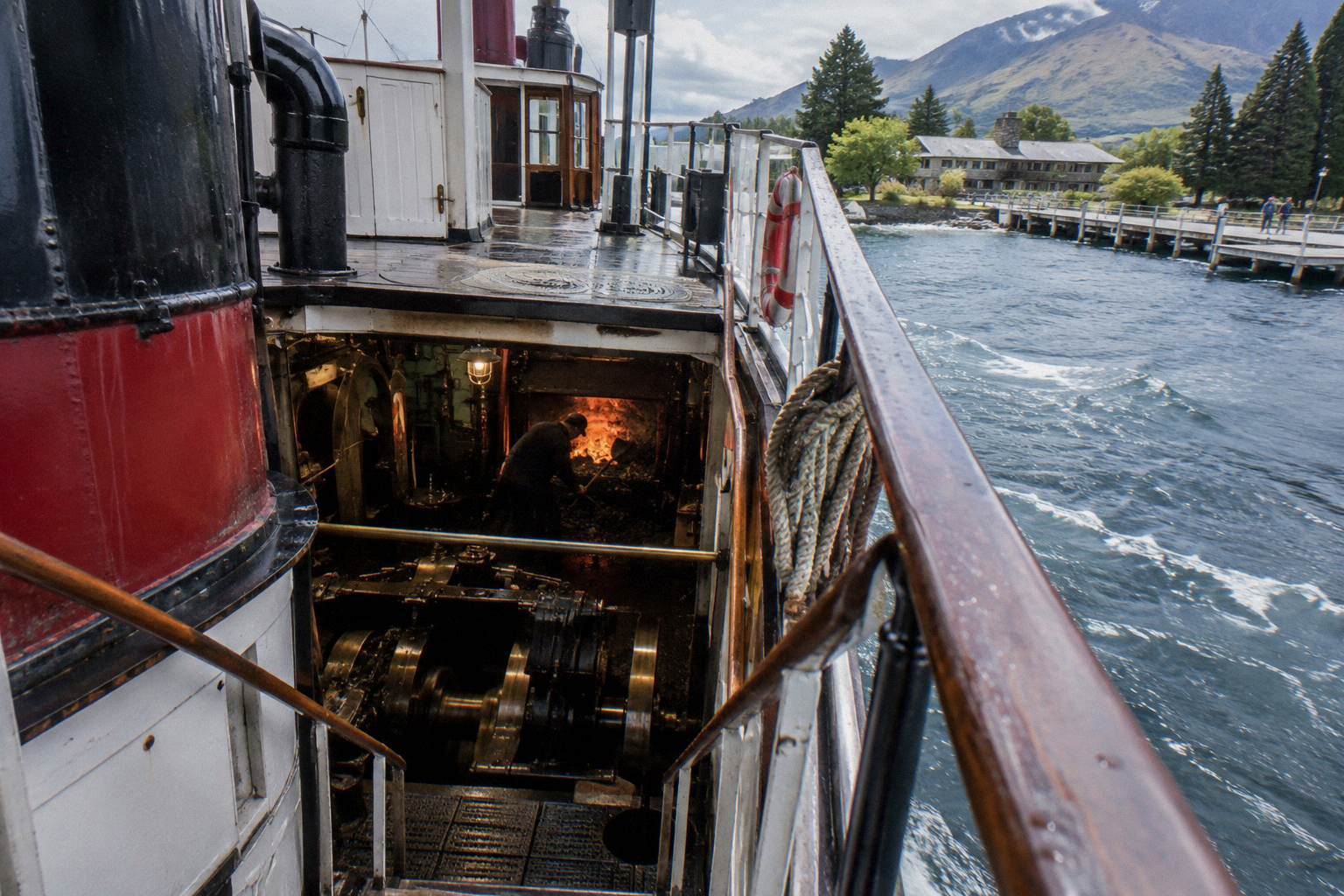
The Earnslaw burns coal to make steam, using about 1.5 tonnes of it per return trip across Lake Whakatipu, and RealNZ describes her as the only coal-fired passenger steamship in operation in the southern hemisphere. Visitors can go below deck to the engine room and stoker room, where the machinery is open to view and working in front of you. The space is warm and loud, which is exactly what a working coal-fired engine room should be.
Below deck is the part of the sailing that turns the prefix into something visible. Above deck there is a Promenade Cafe, a licensed bar and a small onboard museum; below, stokers feed the fireboxes by hand, shovel by shovel, for the length of the crossing. Live piano plays on some sailings. The contrast is the appeal: a museum-quality ship that earns her keep on a working schedule. The rest of the planning pages sit on Walter Peak Farm Tours.
The coal figure deserves a moment of thought. Roughly 1.5 tonnes per return trip means the operation consumes tonnes of coal every day of high summer, when RealNZ's typical October to April departures run at 9:00am, 11:00am, 1:00pm, 3:00pm, 5:00pm and 7:00pm. That is a real industrial commitment to keeping a 1912 ship authentic rather than converting her to something easier to run.
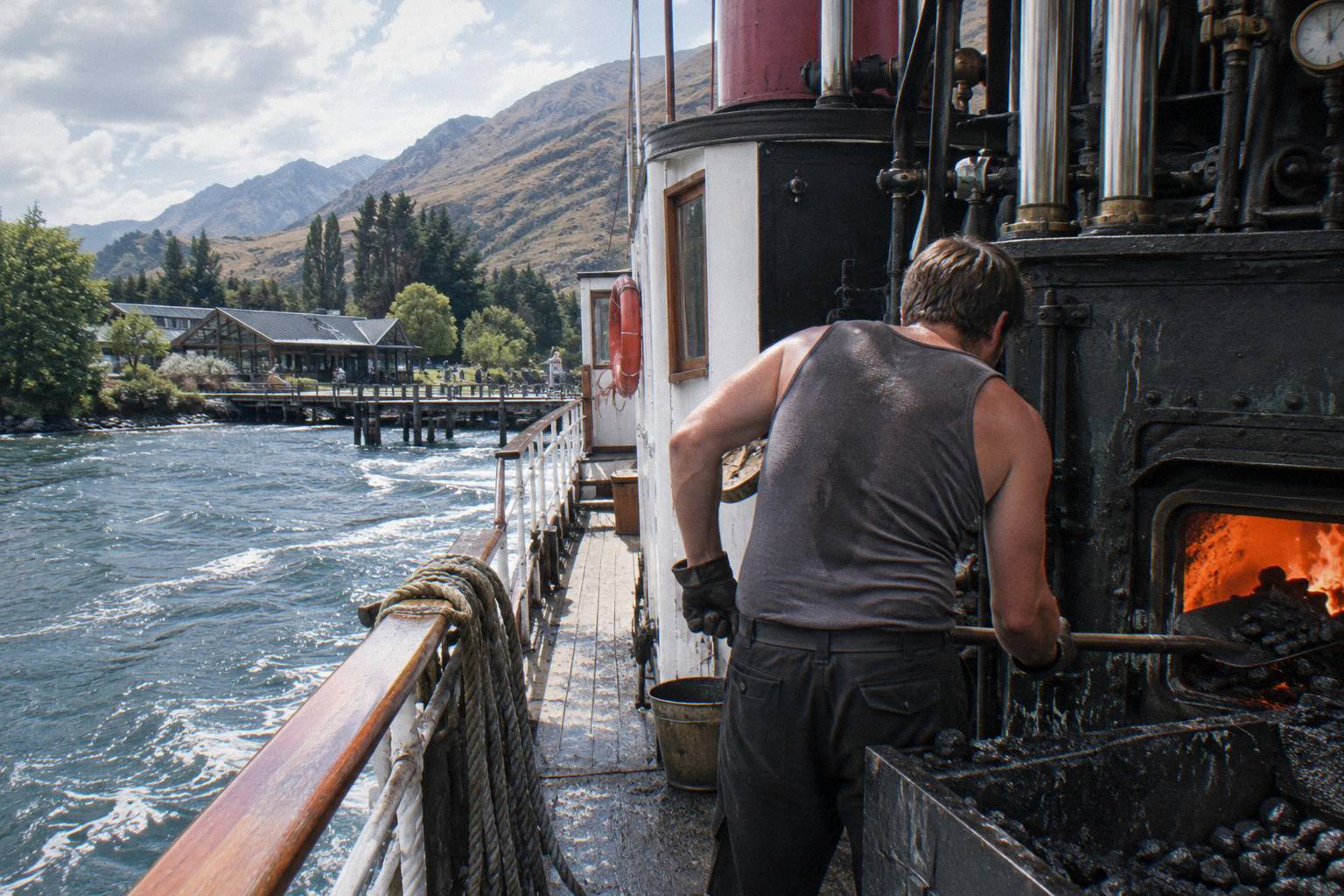
A fuller walk through the below-deck experience is worth reading before you choose a sailing, and the engine room visit explained covers what you can see and how the visit works on board. Card payments only apply on the vessel and at Walter Peak, so leave cash in your pocket.
Nearly Scrapped In 1968, Sailing Still In The 2020s
Yes, the TSS Earnslaw very nearly met the scrapyard in 1968, when her then-owner considered retiring her, but she was saved by Fiordland Travel, the company that later became RealNZ. Saved from the flames, she has kept sailing ever since, even carrying Queen Elizabeth II and Prince Philip in 1990 and appearing in an Indiana Jones film.
The near-loss of the ship is the hinge of her story. By the late 1960s road transport had taken the freight and mail, and lake steamers were being retired across the country. Fiordland Travel's decision to keep a coal-fired steamer running, at a time when she had no obvious commercial future, is the reason the prefix TSS still appears on a working timetable rather than a memorial plaque.
The royal trip in 1990 and the film cameo came later, in her second life as a visitor attraction. The red funnel, repainted after the 1984 refit, is the detail most passengers notice first from the Queenstown foreshore, and it is now as much a part of the town's waterfront identity as the wharf itself.
| Crossing | Vessel | Time Each Way |
|---|---|---|
| Queenstown to Walter Peak | TSS Earnslaw | 45 minutes |
| Queenstown to Walter Peak | Spirit of Queenstown catamaran | About 30 to 35 minutes |
Her survival also matters to the Walter Peak side of the lake. The farm's visitor operation depends on a reliable crossing, and RealNZ schedules the Earnslaw to operate every day of the year except annual maintenance and survey periods, with the modern catamaran Spirit of Queenstown covering the route during those works, a comparison the RealNZ lake cruise comparison blog sets out in detail.
For the booking decision, the guided farm tour card is the one that puts the whole 1912 story together with a landing at the far end.
That card pairs the steamship crossing with a guided walk around Walter Peak High Country Farm, runs about 3.5 hours all told, and carries free cancellation up to 24 hours before start. The booking page shows the price for your date. Meeting point is the RealNZ Visitor Centre at 88 Beach Street, and allowing 30 extra minutes for parking is the usual advice, since free street parking near the wharf is limited.
How The Name Fits The Day Trip Decision
The TSS prefix tells you the vessel is a twin screw steamship, a working scheduled ship rather than a pleasure boat, and that distinction shapes the whole day trip. If the steamship herself is the draw, book a card that names her; if the farm is the draw, any crossing card will do. Knowing what the letters mean lets you weigh the sailing, the landing, and the meal as separate choices.
Three questions sort most travellers out. Do you want the engine room and the coal? Do you want to set foot on the farm? Do you want a meal at the homestead when you get there? Answer the first yes and the steamship cards rise to the top. Answer the second yes and the crossing becomes transport rather than destination. Answer the third yes and the dining cards come into play.
The parent question this page answers usually arrives early in planning, alongside practical ones. The lake cruise and farm visit card from NZ$139 per person, rated 4.8 from 1,178 reviews, is the version that covers the middle ground, and you can see dates for the lake cruise and farm visit to compare against the steamship-only sailing. Free cancellation up to 24 hours before start applies across every trip covered here.
That middle-ground card suits families and travellers who want animals and afternoon tea more than engine rooms, while the sailing-only card suits photographers and ship enthusiasts. Whichever way you lean, the vessel is the same coal-fired steamer, and the choice is really about how long you want to spend on the western shore.
What Trips People Up Before You Book
Most confusion comes from three misunderstandings: readers mistake TSS for a company or tour brand rather than a ship prefix, they expect the steamship cruise to include a farm visit even though the 1.5 hour return sailing makes no farm landing, and they assume a vessel this old runs in summer only, when she is actually scheduled every day of the year outside maintenance and survey periods.
The naming confusion deserves one clear statement: TSS is a ship title in the same family as RMS or HMS, owned by nobody and licensed by nobody. Bookings are made with the operator, RealNZ, through the card that matches the day you want. There is no separate Earnslaw company to search for.
The landing question is the expensive one. A reader who books the cruise-only card expecting to walk around a farm will spend the Walter Peak leg of the sailing watching the wharf arrive and depart from the water. The card descriptions are clear about what is included; reading them is quicker than a phone call.
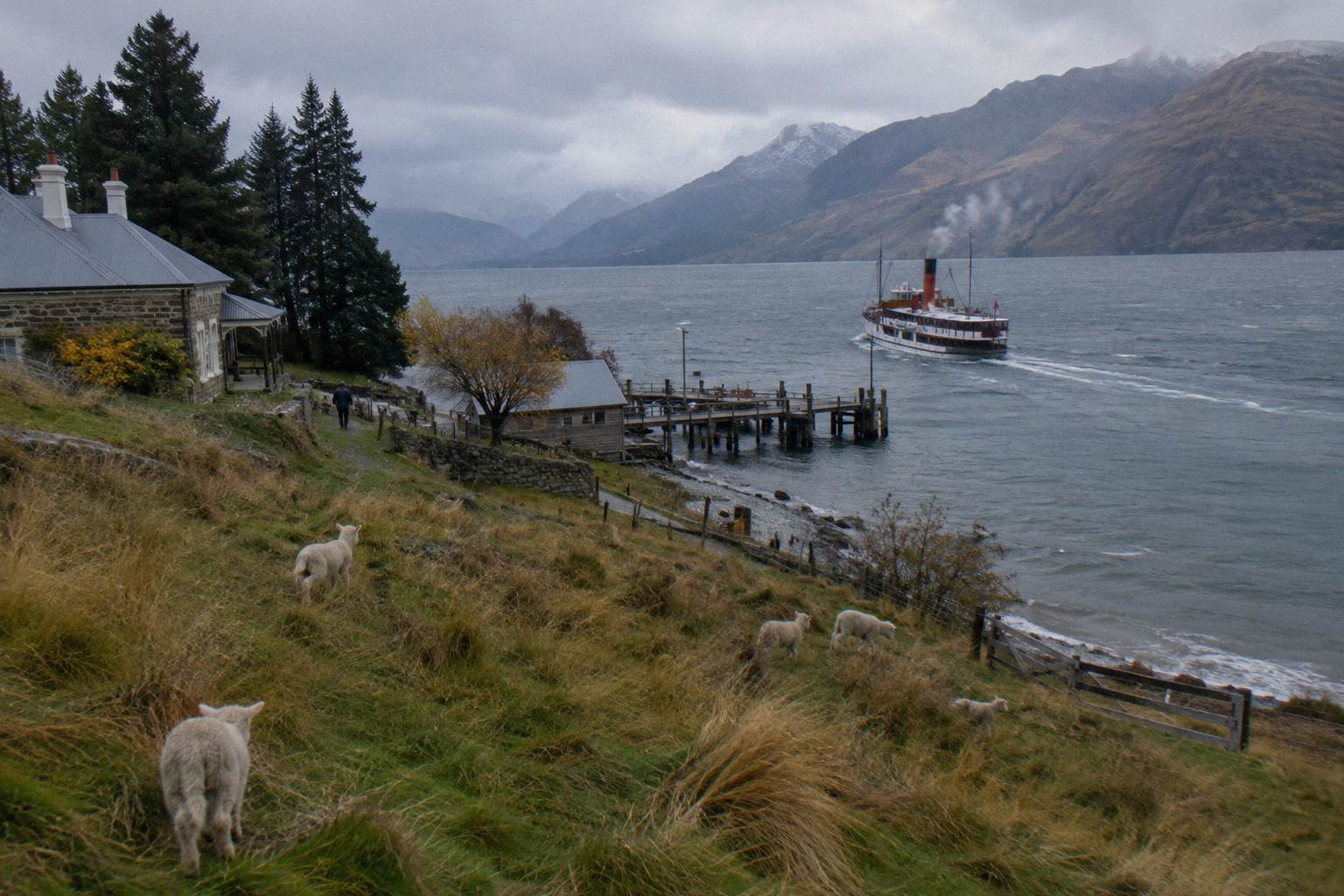
One more planning habit pays off: booking ahead. Vessel space is limited, and RealNZ recommends advance booking, with dining sittings filling first in school holidays and peak summer. The answer to whether you need to book in advance goes deeper, but the short version is that same-day space on a summer sailing is a gamble. For a wider map of the choices, Walter Peak Farm Tours keeps the full decision guides alongside this one, including the lunch or dinner timing question once the sailing decision is made.
Common Questions About The TSS Earnslaw
What Does TSS Earnslaw Stand For?
TSS stands for Twin Screw Steamer, meaning a steamship driven by two propellers, called screws in older maritime language. The Earnslaw carries the prefix because she is exactly that: a coal-fired steamship with a propeller on each side, built in Dunedin in 1912 and still running the Lake Wakatipu crossing for RealNZ today.
Is TSS A Company Or A Tour Brand?
No. TSS is a ship prefix in the same family as RMS or HMS, describing the vessel's machinery rather than naming any business. The Earnslaw is operated by RealNZ, and bookings are made through the card for the sailing or farm day you choose.
Does The Steamship Cruise Include The Farm?
The 1.5 hour return cruise aboard the Earnslaw is a sailing only, with no farm landing. To set foot on Walter Peak High Country Farm, book a card that pairs the crossing with a farm tour, such as the guided farm tour or the lake cruise and farm visit options.
How Long Is The Crossing To Walter Peak?
About 45 minutes each way on the Earnslaw, according to RealNZ. The modern catamaran Spirit of Queenstown covers the same route in about 30 to 35 minutes when she takes over during the steamship's maintenance periods.
Can You Visit The Engine Room On Board?
Yes, visitors can go below to the engine room and stoker room, where the coal-fired machinery works in full view. The space is warm and loud. There is also a small onboard museum, a cafe and a licensed bar on the passenger deck.
When Was The TSS Earnslaw Built?
She was built in Dunedin in 1912 by John McGregor and Company for New Zealand Railways, taken apart, carried by rail to Kingston, and reassembled on the shore of Lake Wakatipu. Her maiden voyage came in 1912, the year she was completed.